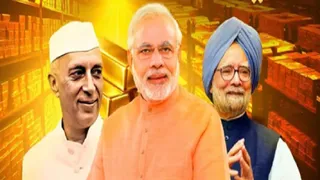
PM Modi's No Gold Appeal: Prime Minister Narendra Modi's appeal to "avoid buying gold for a year" has sparked a flurry of discussions about gold in the country. PM Modi's appeal aims to protect India's foreign exchange reserves and strengthen the economy amid the Middle East crisis.
India is among the world's largest importers of gold. However, the country currently needs crude oil more than gold. Rising oil prices in the global market are causing the country to need additional funds, so the government wants people to reduce their investment in gold.
Gold, In Pas As Well, Emerged As A Key To Support The Economy
PM Modi has appealed to the nation not to buy gold for the next one year. This isn't the first time that the country's prime minister has looked at gold to protect the nation's economy. Whenever India faced an economic crisis, the yellow metal played a key role. Looking back, from the Pandit Jawaharlal Nehru government to the current government led by Prime Minister Narendra Modi, the ruling establishment used gold to rescue the country from crisis.
ALSO READ: Global Fuel Crisis: PM Modi's Appeal Aims To Prevent Energy Austerity Amid Middle East Hostility
Since independence, governments have faced situations that have forced the Central government to take tough decisions. Let's explore the times when gold has helped the country overcome crises.
Decision On Gold During the India-China War
The first economic crisis since independence occurred during the 1962 India-China War. The war impacted the country's foreign exchange reserves. The then Finance Minister, Morarji Desai, implemented the Gold Control Act, which prohibited the production of gold jewellery with a purity higher than 14 carats. The government hoped this would curb the black marketing of gold, but the decision backfired and significantly harmed the Indian economy.
Pledging Gold To Rescue India's Economy In 1991
Whenever the common man needed money, the only option left for him was to mortgage his gold. The decision to mortgage gold is a difficult and one goes for it only after no other option is left. A similar situation occurred with the Indian government in 1991. During the tenure of Prime Minister PV Narasimha RaoRao, the country faced a situation where its foreign exchange reserves were completely depleted. The country had only enough money for two weeks of imports.
The government, like the common man, had only one option: it mortgaged 47 tons of gold with the Bank of England and the Union Bank of Switzerland. The mortgage initiative led by economist-turned-politician and Finance Minister Manmohan Singh faced a lot of criticism from the Opposition leaders, but it was the decision that gave birth to economic liberalisation.
The Rupee Crisis In 2013
In 2013, the country faced a similar problem, forcing the Manmohan Singh government to make a major decision regarding gold. The rupee was rapidly falling against the dollar in 2013. This was largely due to the indiscriminate import of gold into the country. To address this, the government increased the import duty to 10%. The Reserve Bank of India and the then Manmohan Singh government implemented the 80:20 scheme to control gold imports. This meant that if 100 kg of gold was imported, only 80 kg of it was allowed to be sold within the country, while 20 kg had to be exported.
ALSO READ: ‘Avoid Buying Gold, Use Less Fuel, Attend Online Classes’: PM Modi Doubles Down On Retraint Appeal
This decision by the UPA government helped reduce the current account deficit (CAD). However, as soon as the government changed and the Bharatiya Janata Party-backed NDA government, led by PM Modi, came to power, the government abolished the scheme. The government claimed that the policy had led to reports of increased gold smuggling.
Govt Once Again Looks Up To Gold
Meanwhile, the Middle East war once again poses a challenge for the country, and India has once again put gold at the forefront to overcome this crisis. Prime Minister Modi appealed to the countrymen, saying, "If possible, avoid buying gold for the next one year." If people reduce their gold investments, the country will be relieved of the additional pressure to purchase gold, and foreign exchange reserves can be used to import crude oil from abroad.
(With Jagran.com Inputs)