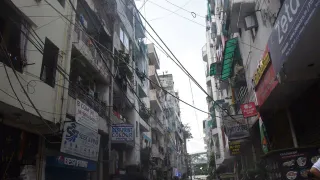
Jagran Correspondent, South Delhi: Behind Delhi’s gleaming buildings and bustling streets, an illegal paying guest (PG) business is thriving with little attention to fire safety norms or building bylaws. Backed by growing political patronage, the unregulated sector has grown into a Rs 20,000 crore business in the capital. Students are being charged substantial sums for food, electricity, internet, and laundry services, but this does not translate into any increase in government revenue. This indicates that the PG business is unorganised, with no centralised regulation or registration process.
Residential Houses In MCD Map
Most PGs appear to be four or five storey buildings from the outside. Even on MCD maps, they are listed as residential housing, but inside are small rooms, with three to four boys or girls housed in each room. They charge between Rs 8,000-15,000 per bed.
The condition is evident in areas such as Mukherjee Nagar, Laxmi Nagar, Rajendra Nagar, Ber Sarai, Katwaria Sarai, Satya Niketan, Vivek Vihar, Hauz Khas, and Model Town.
Kitchens are being built in parking spaces, balconies are being demolished, and additional rooms are being constructed by adding tin sheds to the roofs. These buildings lack fire NOCs or building structure certificates.
Apart from this, electricity theft is also rampant in these PGs, under the protection of departmental officers. On a 2 kV domestic connection here, the AC, geyser, and induction are all running. This means the load is approximately 15 kV.
PG Operators Resort To Fraudulent Practices
Due to systemic flaws, the PG business in Delhi is becoming a parallel economy to the state's economy. PG operators resort to fraudulent practices to defraud government departments.
According to Jagran sources, a significant portion of the revenue generated from PGs is being pocketed by everyone from the MCD to police officers in the form of convenience fees. This is why, despite knowing everything, everyone from the MCD junior engineer to the police remain silent.
How PGs Are Functioning
-Rent Agreement: PG owners do not enter into written rent agreements with students. Even if they do, they typically list rents of Rs 5,000 to 10,000 (below the income tax threshold), while the remaining amount is collected in cash for amenities (food, air conditioning, Wi-Fi).
-Decentralisation of accounts: Rent is collected in cash. If rent is collected online, the money goes into the accounts of employees, relatives, or caretakers, rather than the business account, to avoid the radar of the Income Tax Department.
-Lack of a digital footprint: This money, taken in cash, is often invested in property, gold, or informal transactions. Since the money is not deposited in a bank, it does not create a digital footprint.
Ruled Ignored By PGs
-PG is a commercial activity, whereas tax evasion is done by showing it as a residential property.
-If the PG is running in a building taller than nine metres in a residential area, a fire NOC is mandatory.
ALSO READ: Delhi Building Audit: MCD To Demolish 30 Houses In Pitampura, Residents Fear Overnight Homelessness
-A PG with 20 or more people requires a fire NOC.
-These PGs cannot run in A and B category colonies.
-Electricity and water meters should be commercial but are installed in the private category.