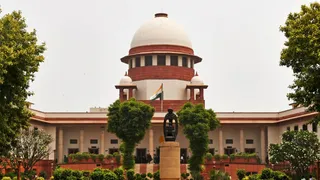
The Supreme Court on Thursday scheduled the hearing of petitions challenging the Citizenship Amendment Act (CAA) 2019 for May 5, 2026. The CAA facilitates the expedited process of granting Indian citizenship to non-Muslim migrants from Afghanistan, Bangladesh, and Pakistan. A Bench led by Chief Justice of India, Surya Kant, presided over the proceedings.
The Court has allocated one-and-a-half days for petitioners, including the Indian Union Muslim League (IUML), to present their arguments, while the Centre will have one day to respond.
Regarding the anti-CAA petitions, the Court proposed to conclude hearings by May 12. The Court also instructed all parties to submit any additional documents or submissions within four weeks from Thursday. It said it will hear pleas related to pan-India application of CAA first and take note of petitions pertaining to Assam, Tripura later.
The petitioners will be heard on May 5 and for a half-day on May 6. The respondents will be heard in the latter half of May 6 and on May 7. Rejoinder submissions will take place on May 12.
The Citizenship Amendment Act 2019 permits non-Muslim migrants from Pakistan, Bangladesh, and Afghanistan who entered India without travel documents before December 31, 2014 to apply for Indian citizenship. They are not classified as "illegal migrants" and are eligible to seek Indian citizenship.
ALSO READ: India AI Impact Summit 2026: Sam Altman Says 'AI Will Definitely Impact The Job Market, But..'
The CAA has been challenged as unconstitutional for excluding Muslims from the category of migrants, and for not accounting for refugees fleeing persecution from other neighbouring countries. In March 2024, the Union Government issued rules to implement the Citizenship Amendment Act and established committees at the state or union territory level to process applications under the Act. While the CAA Rules 2024 were also challenged, the Court did not hear the matter, as reported by Live Law.