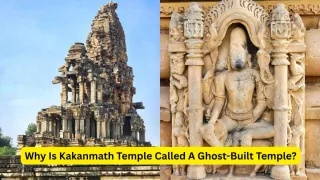
Located in the village of Sihoniya in Morena district of Madhya Pradesh, Kakanmath Temple is one of the most famous temples in India. This ancient temple dedicated to Lord Shiva is famous for its architectural design and mysterious construction story.
It is believed the temple was built by ghosts. Also, unlike typical ancient temples built with cement, lime, or other binding agents, this temple was crafted by stacking stones upon stones with extreme precision.
Let's understand in detail the mystery behind this temple and whether it was really built by ghosts.
The Ghost Legend: Why Locals Believe Spirits Built Kakanmath Overnight?
According to folklore, once there was an ardent devotee of Lord Shiva named Krittiraja, who was the king of the Kachchapaghata dynasty in the 11th century AD. He wished to construct a temple of Lord Shiva. However, due to hurdles, it became very difficult for him to fulfil his wish.
He prayed to Lord Shiva day and night to help him. One day, Lord Shiva appeared in his dream and agreed to fulfil his wish, but on one condition: that no human being should witness the construction of this temple.
The King agreed and passed strict orders that no living person should step out of their houses or look out of their windows. However, a child living close by, out of curiosity, opened a window and as soon as he looked out, all the construction stopped, and the artisans disappeared, leaving the temple incomplete.
Sceptics say this story is baseless and does not have solid proof behind it. But one question remains: why the temple was not completed is still a mystery.
Kakanmath Temple is believed to have been built overnight by ghosts (Image: Facebook/ilovemybharat)
How Does Kakanmath Stand Without Mortar Or Cement?
Another unique mystery that surrounds the temple is how the stones remained stacked one on top of another without using cement or mud.
Some people credit the stone’s durability to an extraordinary, unseen force that shields it from harm. Others believe the sheer precision and expertise in stone stacking allowed it to stand against extreme weather conditions.
The temple is built with stones stacked one on top of another without using cement or mud (Image: Facebook/ilovemybharat)
ALSO READ: How To Set Up A Puja Room At Home: Vastu Directions, Mandir Placement And Must-Haves
Traveller’s Guide: How To Visit Kakanmath Temple In Sihoniya
Best Time to Visit: October and March are the best times to visit the temple, as the weather is pleasant during this time.
How to Reach from Gwalior / Morena: There are two ways to reach Kakanmath Temple from Gwalior. There is one route through Morena, and another one is via Malanpur. The distance from Gwalior to Kakanmath Temple via Morena is about 70 km.
ALSO READ: 7 Things You May Not Know About Guruvayur Temple And Its Unique Religious Traditions
The Kakanmath Temple isn't just an architectural wonder. It draws many pilgrims to its 120 ft. Shivling that stands in the centre of the temple, which has not been affected by any harsh weather conditions, unlike the other temples that have been destroyed.
FAQs
1. Who is traditionally credited with building the Kakanmath Temple?
King Kirtiraja of the Kachchhapaghata dynasty, who is historically associated with its construction, and the approximate period.
2. Is there any historical proof that Kakanmath Temple was built overnight?
No, there is a lack of direct historical proof of an overnight construction.