
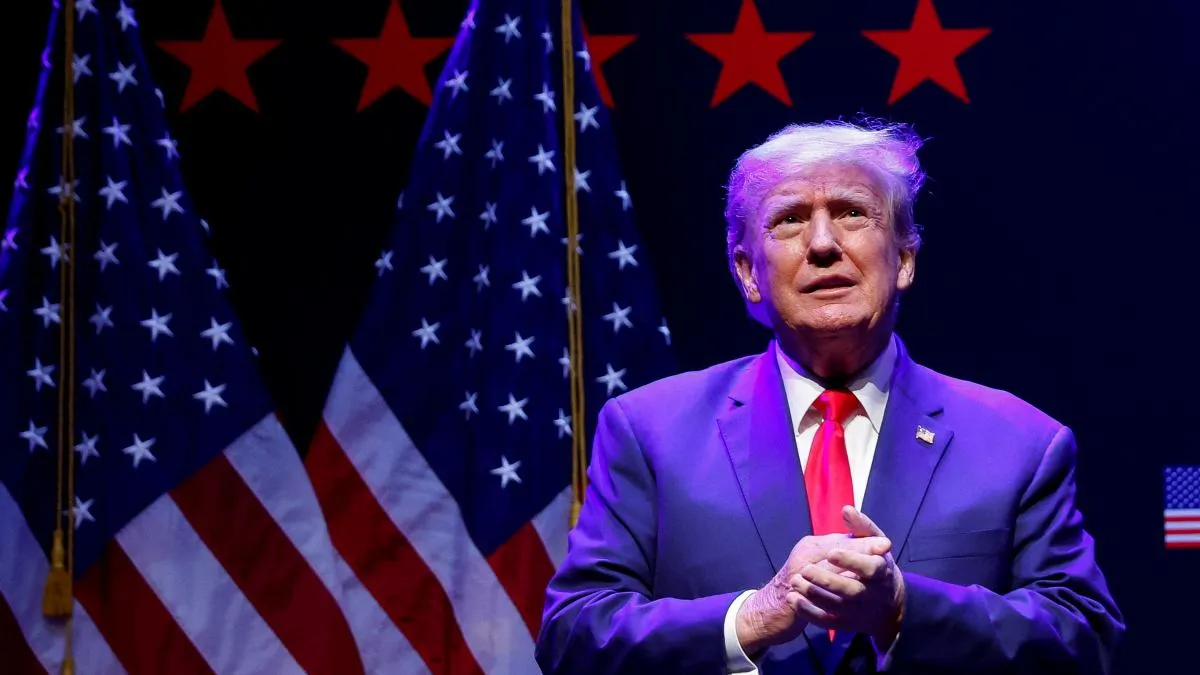
After President Donald Trump warned that the US would take “very strong action” if Iran executed protesters, Iran's judiciary has denied that it scheduled the execution of a man arrested in connection with the country's recent protests. The judiciary said he faced charges of "colluding against national security" and "propaganda activities against the establishment", which are not punishable by the death penalty and reports by foreign media organisations that Soltani faced execution was a "blatant act of news fabrication". Iranian Foreign Minister Abbas Araghchi confimed there was "no plan" to hang people. Trump also said that "very important sources on the other side" had informed him "the killing in Iran is stopping, and there's no plan for executions" even as his administration announced new sanctions against Iranian individuals and entities that it alleges drove the crackdown on protesters and laundered the proceeds of oil sales to foreign markets.
Iran is witnessing its most significant domestic upheaval in decades. What began on December 28, 2025, as a localized strike in Tehran’s Grand Bazaar has rapidly transformed into a nationwide "proto-revolution" spanning all 31 provinces. The unrest is driven by a volatile mix of economic collapse, systemic corruption, and a fundamental rejection of the clerical establishment. The movement quickly evolved from economic grievances to an outright challenge of the Islamic Republic’s legitimacy. Protesters have targeted the symbols of the regime, directly criticizing Supreme Leader Ali Khamenei. A significant driver is the public’s anger over "crony capitalism," where billions in oil revenue are allegedly lost to corruption or diverted to religious institutions and regional proxies (such as Hezbollah and Hamas) while domestic infrastructure, including water and energy systems, fails.
The timing of the unrest is linked to a weakened Iranian "Axis of Resistance." Following the June 2025 conflict with Israel, which severely damaged Iran’s nuclear and defense infrastructure, and the 2024 fall of the Assad regime in Syria, the Iranian public increasingly views the state's regional ambitions as both costly and futile.
Recommended For You
The Iranian regime has responded with an unprecedented crackdown, involving a nationwide internet blackout and lethal force. However, the scale of the 2026 movement suggests a society that has reached a breaking point, viewing the current system as irreformable. In January 2026, President Donald Trump’s response to the escalating protests in Iran has been characterized by a high-stakes "maximum pressure" rhetoric, fluctuating between direct military threats and conditional diplomatic pauses.
As reports surfaced of a massive crackdown and death tolls potentially exceeding 2,000, President Trump issued stark warnings to the Iranian leadership. Using his Truth Social platform and television interviews, he stated that the US was “locked and loaded” to intervene. He explicitly warned of “very strong action” if the regime proceeded with the hanging of protesters, citing the 2024–2025 airstrikes on Iranian nuclear facilities as a precedent for his willingness to use kinetic force.
Departing from the more cautious diplomatic tone of previous administrations, Trump openly encouraged the uprising. He repeatedly assured demonstrators that the US would "act accordingly" to rescue them. In mid-January, he urged "Patriots" to "take over your institutions" and advised them to record the names of security forces for future accountability. He cancelled all meetings with Iranian officials, declaring that no dialogue would occur until the "senseless killing" stopped.
ALSO READ: US Intervention In Venezuela: A Global Order At Risk | Opinion
By January 14, 2026, Trump shifted his tone after reportedly receiving assurances from "important sources on the other side." He claimed that the "killing has stopped" and that planned executions had been halted. While this led to a temporary pull-back from immediate strike threats—and caused a 3 per cent drop in global oil prices—he emphasised that the US would "watch and see," keeping military options on the table.
Beyond military posturing, Trump proposed a 25 per cent tariff on any country continuing to do business with Iran, aiming to internationally isolate the regime during its internal crisis.
President Donald Trump’s policy toward Greenland also transitioned from a rhetorical curiosity of his first term into a centerpiece of his administration's "National Security Strategy." Often framed as the “Donroe Doctrine,” his approach treats the Arctic territory as a vital strategic asset that must be brought under American control—one way or another.
The administration justifies this push through the lens of Great Power Competition. Trump has repeatedly claimed that Greenland is "surrounded" by Russian and Chinese vessels, arguing that Denmark lacks the military capacity to prevent an adversarial takeover. Specifically, the policy is tied to the "Golden Dome"—a proposed multi-layered missile defense system—for which Greenland’s geography is indispensable.
Furthermore, the policy is heavily influenced by resource security. Greenland holds some of the world's largest deposits of rare earth minerals and uranium, which are critical for the "green transition" and advanced military hardware. While Trump publicly insists the move is about "security, not minerals," his appointment of a Special Envoy to Greenland and the promotion of the "Make Greenland Great Again Act" in Congress suggest a deep interest in these untapped assets.
The administration is employing a three-pronged strategy. The White House seems to be weighing "direct payments" to Greenlanders, ranging from USD 10,000 to USD 100,000 per person, to encourage a secession referendum from Denmark. In 2025, Trump moved Greenland from the US European Command (EUCOM) to the Northern Command (USNORTHCOM), effectively categorizing the island as part of the "homeland defense" zone. Following the U.S. intervention in Venezuela in early January 2026, Trump has explicitly stated that while he prefers a “real estate deal,” military force is "always an option" to prevent Russia or China from gaining a foothold.
This policy has pushed relations with NATO allies to a breaking point. Danish Prime Minister Mette Frederiksen has warned that any attempt at annexation would signify the “end of NATO.” In response, France and Germany have begun rotating troops into Greenland to bolster Denmark's presence, creating a unique situation where U.S. forces at Pituffik Space Base are essentially being "monitored" by their own allies.
In 2026, the second Trump administration has fundamentally reconfigured the American "threshold for force", replacing the traditional liberal doctrine of "last resort" with a model of unapologetic, transactional kineticism. Analyzing this shift through the lens of strategic realism reveals that military force is no longer viewed as a systemic failure of diplomacy, but rather as a routine tool of enforcement.
The most striking strand of this policy is the blurring of military action and law enforcement. The January 2026 capture of Nicolás Maduro in Caracas, framed as a "narcoterrorism" arrest rather than a regime-change invasion, exemplifies this. By characterizing sovereign states as criminal enterprises, the administration justifies unilateral strikes and special operations without the traditional constraints of international law or congressional war powers, effectively creating a "Trump Corollary" to the Monroe Doctrine.
Trump's use of force in 2026 is driven by a desire to re-establish "fear-based" deterrence. Strikes on Iranian nuclear sites and support for Israeli missile-defense operations signal a move away from "forever wars" toward high-impact, low-footprint kinetic events. The deployment of a destroyer to the Caribbean to intercept "drug boats" and ensure supply chain security demonstrates that military assets are now directly tethered to domestic economic metrics like gas prices.
While Trump remains allergic to nation-building, his 2026 policy is far from isolationist. It is a selective interventionism where force is used quickly and decisively to "clear the path" for American commerce or to secure the "Golden Dome" missile defense shield. In this worldview, allies are expected to match this aggression through increased spending, or risk losing the American security umbrella entirely.
(The writer is the Vice President at the Observer Research Foundation. Views expressed are personal.)