

Rudraksha and Bhadraksha both hold immense spiritual significance in Hinduism. These seeds are known for their healing properties and are often worn as beads embedded in malas or bracelets.
While Rudraksha beads are considered sacred tools of devotion, meditation, and healing, Bhadraksha does not possess similar spiritual potency.
Let's understand the difference between the two and what happens when Bhadraksha is used instead of Rudraksha .
Feature | Rudraksha | Bhadraksha |
Botanical name | Elaeocarpus ganitrus | Elaeocarpus tuberculatus |
Shape | round or naturally oval | naturally flat, moon-shaped, or eye-shaped |
Surface texture | deep grooves, Mukhis, running end-to-end | shallower, smoother grooves; often artificially carved |
Bio-magnetic effect | high electromagnetic properties | weak or negligible electromagnetic signature |
Spiritual impact | auspicious; associated with Lord Shiva | neutral or inauspicious for dedicated Sadhana |
Primary market role | authentic spiritual bead | counterfeit substitute for 1-Mukhi half-moon Rudraksha |
What is Rudraksha?
Rudraksha is a seed that grows on the Elaeocarpus ganitrus tree, predominantly available in the Himalayan region, Nepal, Indonesia, and parts of Southeast Asia.
According to spiritual texts, when Lord Shiva opened his eyes after deep meditation, tears fell to the earth and became Rudraksha seeds. That is why it holds a sacred place in Hindu spirituality and is believed to carry divine energy.
Key Traits: Brown, rough-textured seeds with natural grooves called mukhi.
Spiritual Significance: Helps in meditation, reduces stress, and balances chakras.
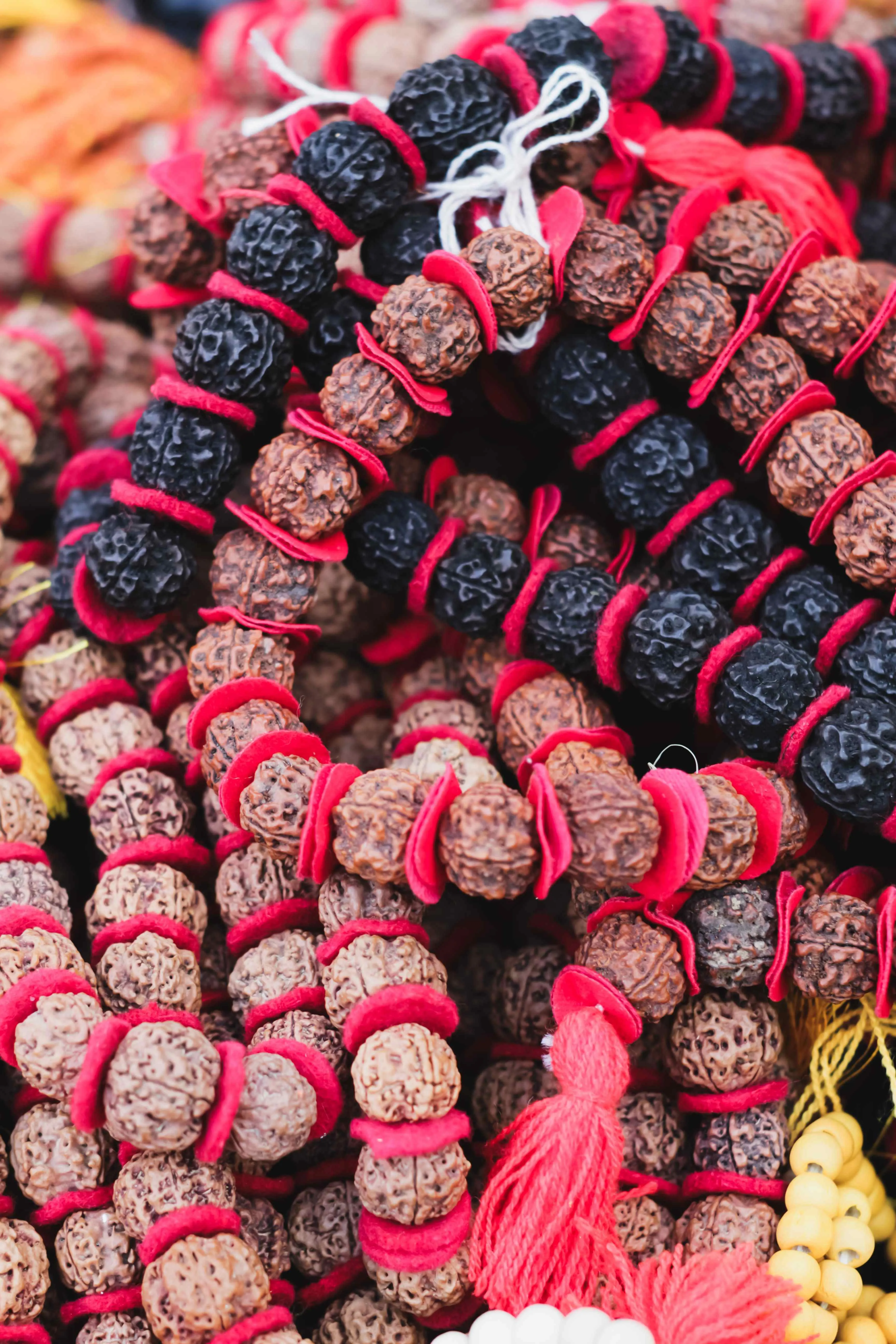
Rudraksha is a seed that grows on the Elaeocarpus ganitrus tree (Image: Pexels)
What is Bhadraksha?
Though similar in appearance, Bhadraksha comes from the seeds of trees belonging to the Goodeniaceae family, such as Scaevola taccada, Lanceaefolius, and Sikkimensis.
This seed grows abundantly in South India (Western Ghats) and Sri Lanka. Bhadraksha is often associated with Lord Bhadrakali, a form of Goddess Kali.
Key Traits: Flatter profile, eye-shaped, smooth contour, lacking natural interior compartments typical of high-mukhi Rudrakshas.
Spiritual Significance: Protects against negative energies, enhances focus, and deepens meditation practices.
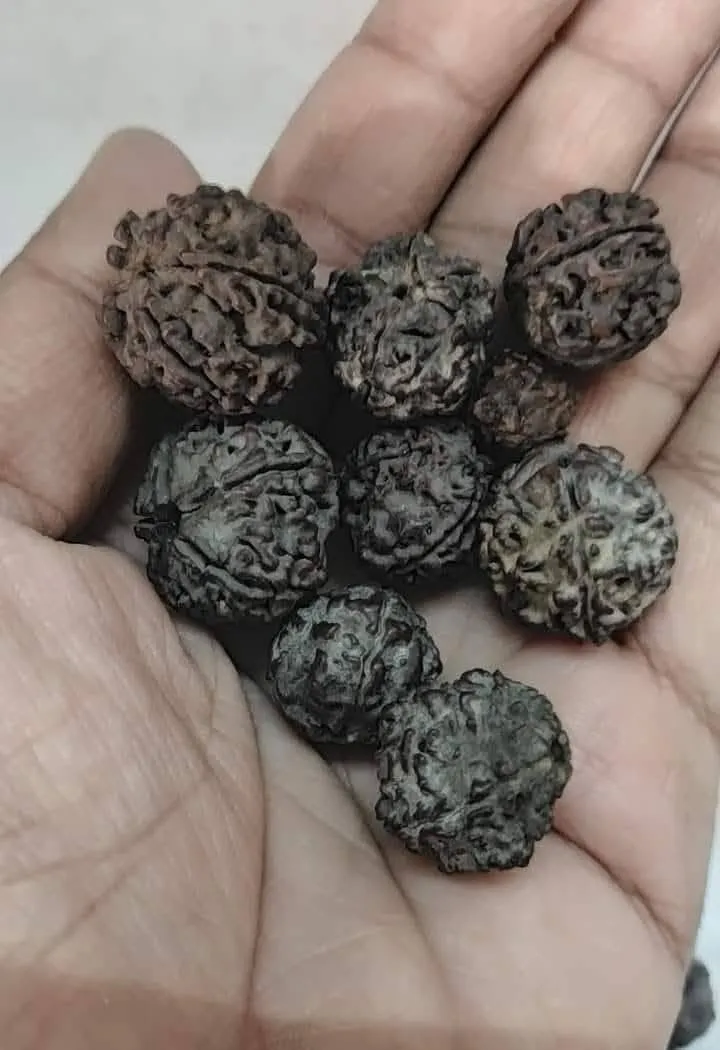
Bhadraksha comes from the seeds of trees belonging to the Goodeniaceae family (Image: Facebook/ ashapuracollecteblelalitramani)
5 Vital Physical Differences
1. The Shape And Contour Test
Rudraksha: Round (3–21 Mukhi) or cashew-shaped with a distinct natural bulge (authentic 1-Mukhi Ravan/Java). Bhadraksha: Flat like a kidney bean, crescent moon, or flat eye. Lacks volume.
2. The Groove (Mukhi) Continuity
Rudraksha: Grooves run cleanly from top to bottom without abrupt artificial stopping points.
Bhadraksha: Grooves are often shallow, uneven, or artificially deep-cut with metal tools to mimic Mukhis.
3. The X-Ray Or CT Scan Test
Rudraksha: An X-ray reveals internal seeds matching the exact number of external Mukhi lines
Bhadraksha reveals either a solid central core or mismatched internal chambers when subjected to X-ray analysis.
4. Density And Water Test
Busting the Myth: Floating in water does not prove authenticity; density varies based on dryness and oiling.
The Truth: Real Rudraksha seeds are denser and sink consistently when fresh, but dry Bhadrakshas can also sink. Rely on X-ray and copper coin conductivity tests instead.
ALSO READ: What Is A Japa Mala? A Beginner’s Guide To Spiritual Focus
What Happens If You Wear Bhadraksha Instead of Rudraksha?
Wearing Bhadraksha, thinking it is a rudraksha, will not have much spiritual benefit. It carries no positive energy, does not balance any planet and does not carry healing vibrations like the Rudraksha.
ALSO READ: Rudraksha: 5 Things You Should Never Do While Wearing This Sacred Bead
Rudraksha and Bhadraksha are more than just beads. Rudraksha is linked to Lord Shiva, while Bhadraksha, connected to Goddess Kali, brings a sense of protection and courage,
FAQs
1.Is Bhadraksha dangerous to touch or wear?
No. Bhadraksha is simply a seed from a different tree species. It isn't toxic or hazardous, but it lacks the spiritual and neurological benefits of authentic Rudraksha and is often overpriced due to fraudulent marketing.
2. Does a genuine 1-Mukhi round Rudraksha exist?
True round 1-Mukhi Rudrakshas from Nepal are extraordinarily rare, almost mythic. 99.9% of Round 1-Mukhi beads sold online are either carved Bhadrakshas, altered 2-Mukhi beads, or synthetic mould fabrications.