
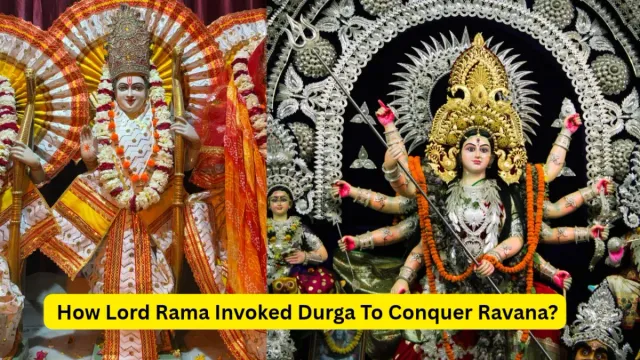
Lord Rama's worship of Maa Durga is one of the most revered episodes in the Hindu tradition in Krittivasa Ojha’s 15th-century Bengali Ramayana.
According to it, to defeat Ravana, Lord Rama needed the blessings of Shakti because Ravana was a supreme devotee of Lord Shiva and protected by divine boons.
To overpower him, Lord Rama performed Akal Bodhan and offered 108 blue lotus flowers, including his own eye, when one flower went missing.
Let's understand what Akal Bodhan is and why Lord Rama needed Maa Durga's blessings to defeat the demon.
What Is 'Akal Bodhan'? The Meaning Behind The Ritual
Akal Bodhan is derived from two words: ‘Akal’ meaning untimely or off-season and ‘Bodhan, ’ meaning awakening or invocation. Traditionally, gods and goddesses are invoked during Vasant (Spring).
Autumn is considered the period of Dakshinayana, the six-month phase when deities rest in divine sleep.
Because the war with Ravana was fought in autumn, Lord Rama performed Akal Bodhan to invoke the blessings of Adi Shakti and gain the strength to defeat Ravana and restore Dharma, establishing the tradition of Sharad Navratri and Durga Puja celebrated across India today.
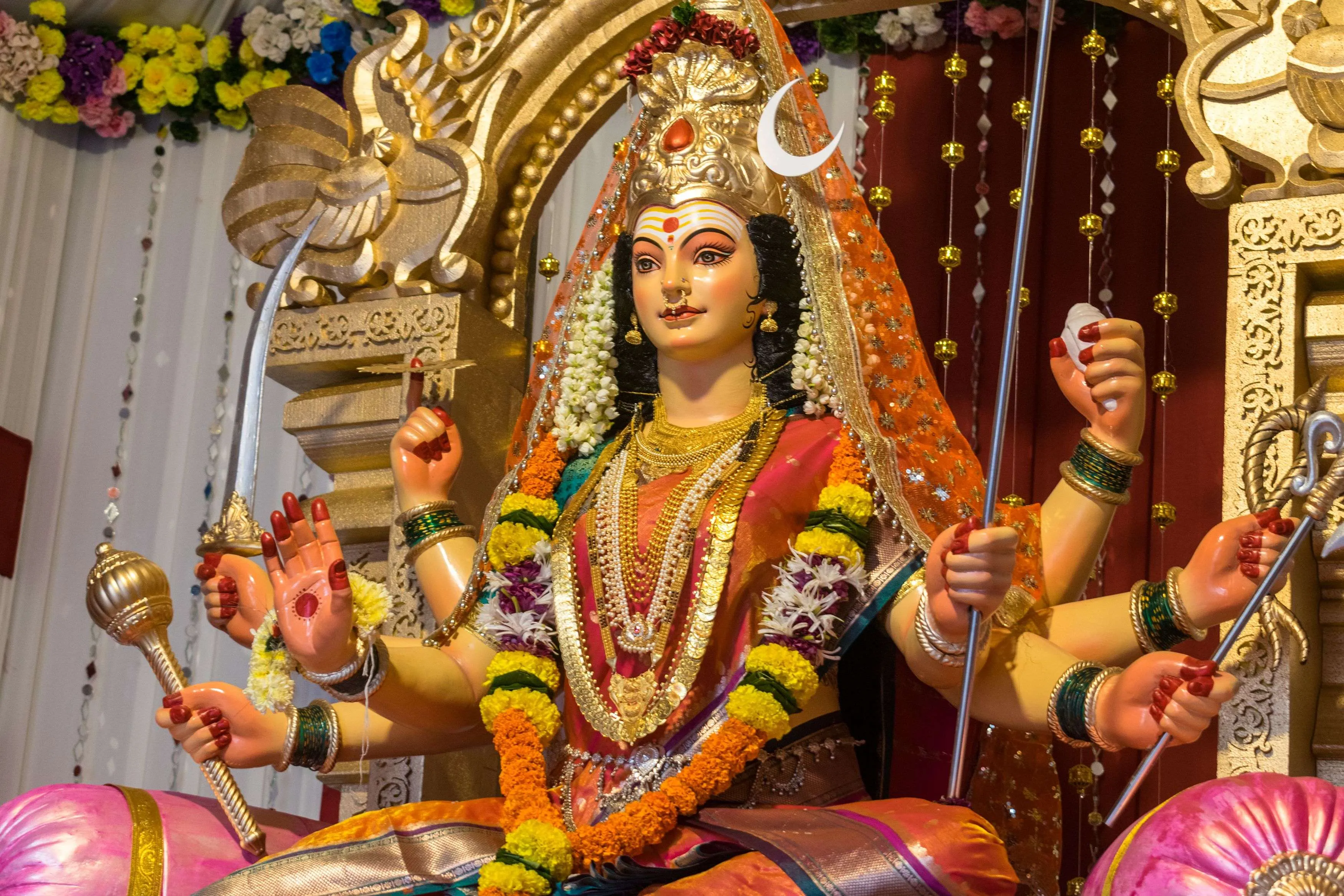
Lord Rama performed Akal Bodhan to invoke the blessings of Adi Shakti (Image: Pexels)
Why Ravana Could Not Be Defeated Easily?
Ravana was not merely a powerful demon king. He was a great scholar and an ardent devotee of both Lord Shiva and Goddess Durga (Chandi). During the battle of Lanka, Ravana organised a massive Chandi Yajna, a sacred fire ritual to seek Goddess Durga's protective shield around himself and his army.
Every weapon Lord Rama unleashed was repelled by the divine aura guarding Ravana. Seeing Rama’s army discouraged, Lord Brahma appeared and told him how Ravana’s army was being protected by Goddess Durga.
To defeat him, Lord Rama needed to perform a grand invocation to earn her divine grace; only then could he win this battle.
ALSO READ: Why You Should Chant The Aditya Hridayam In The Morning? Know The Untold Connection To Lord Ram
The Story Of The 108 Blue Lotuses
As the period of Krishna Paksha was prevailing (the time when deities are asleep), to invoke the Goddess, Lord Rama appointed Lord Brahma as priest of the ritual to perform a puja for the awakening (bodhana) of the goddess.
Recommended For You
However, the ritual demanded 108 rare Blue Lotuses (neelkamal). Lord Rama asked Lord Hanuman to retrieve these flowers from the sacred Devi Daha lake in the Himalayas, and he returned with exactly 108 lotuses.
As the final prayer approached, Goddess Durga decided to test Rama’s devotion and resolve. Using her divine powers, she secretly removed one blue lotus from the altar, leaving only 107.
When Rama saw that one flower was missing, he realised that the ritual would be incomplete and invalidate the entire worship, giving Ravana total victory.
Why Rama Offered His Own Eye Without Hesitating?
Since everyone called Lord Rama Rajeev-Lochan (the lotus-eyed one), he thought to offer one of his own eyes to complete the count of 108. Lord Rama drew a sharp arrow, aimed it at his blue lotus-shaped eye, and prepared to pluck it out as his ultimate offering.
However, before the arrow could touch his skin, Goddess Durga manifested before him. Deeply moved by his sincere devotion, truthfulness, and selfless dedication to righteousness, she restored the 108th lotus, blessed Lord Rama with divine weapons, and declared that a great war between Rama and Ravana would occur between Shukla Saptami and Shukla Navami.
On Saptami, she announced that she would enter Rama's bow and arrows. When Ashtami (eighth day) ends and Navami (ninth day) begins, she would end Ravana.
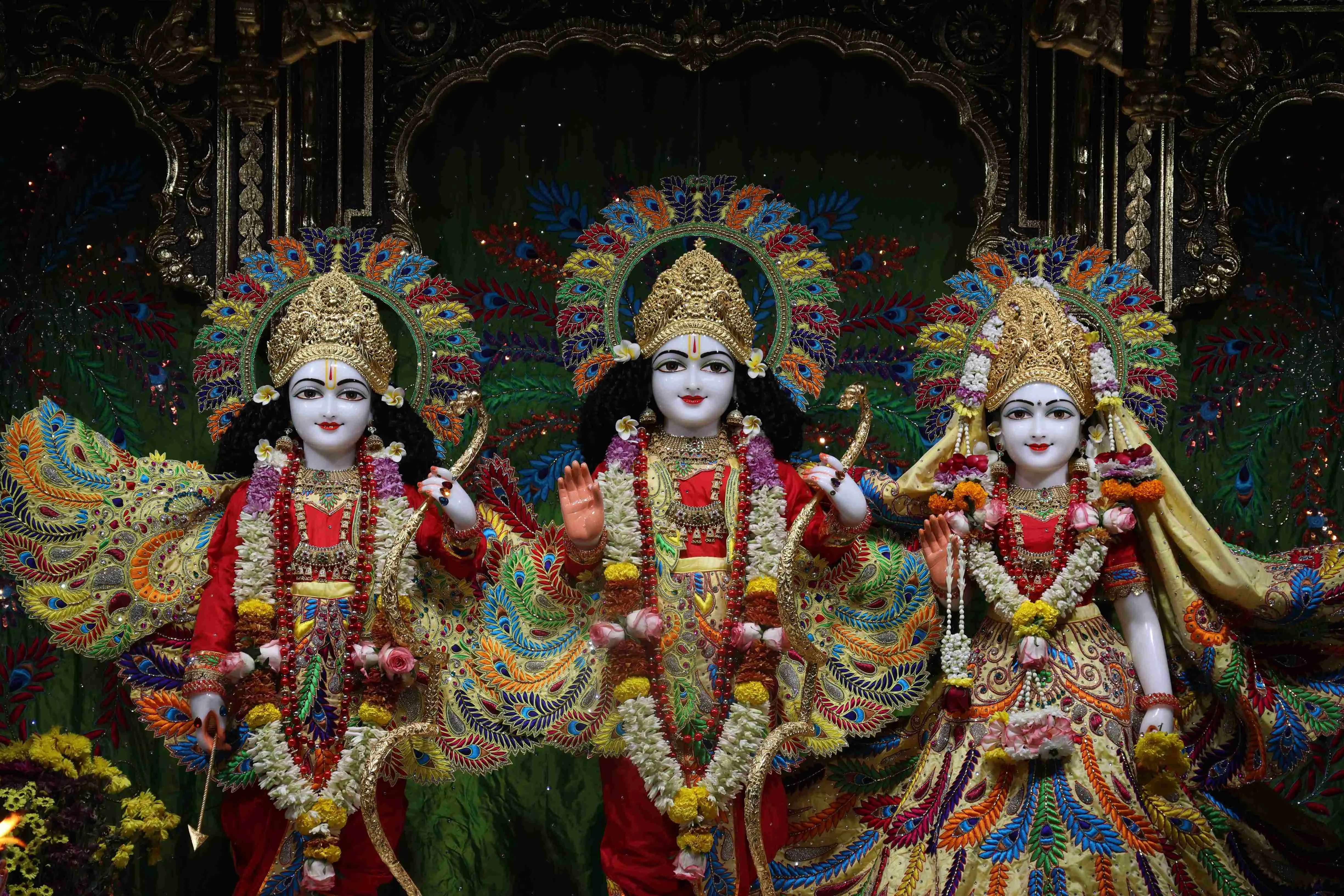
Since everyone called Lord Rama Rajeev-Lochan (the lotus-eyed one), he thought to offer one of his own eyes (Image: Pexels)
Krittivasi vs. Valmiki Ramayana
It is important to note that this incident is mentioned in the Krittivasi Ramayana and not in the Valmiki Ramayana.
Feature | Valmiki Ramayana (Sanskrit Original) | Krittivasi Ramayana (15th-Century Bengali) |
Primary Divine Invocation | Sage Agastya gives Rama the Aditya Hridayam Stotram to worship the Sun God (Surya) | Brahma advises Rama to invoke Goddess Durga via Akal Bodhan |
108 Lotus Incident | Not mentioned | Central plot point emphasising Rama's sacrifice |
Cultural Impact | Foundation of Dussehra rituals in Northern/Western India | Birth of the modern Durga Puja traditions in Bengal and Eastern India |
ALSO READ: 6 Powerful Ramcharitmanas Quotes With Meanings That Offer Life Lessons, Wisdom And Inner Peace
From this story, one can learn that devotion without righteousness is temporary. Ravana had power, but Rama had pure intent.
FAQs
1. What is Akal Bodhan and why is it called 'Akal' (untimely)?
The meaning of 'Akal' is the untimely awakening of Maa Durga during autumn, normally worshipped in spring, and the specific circumstances that necessitated it for Rama.
2. Who advised Lord Rama to perform Akal Bodhan?
Lord Brahma advised Lord Rama to perform Akal Bodhan.