
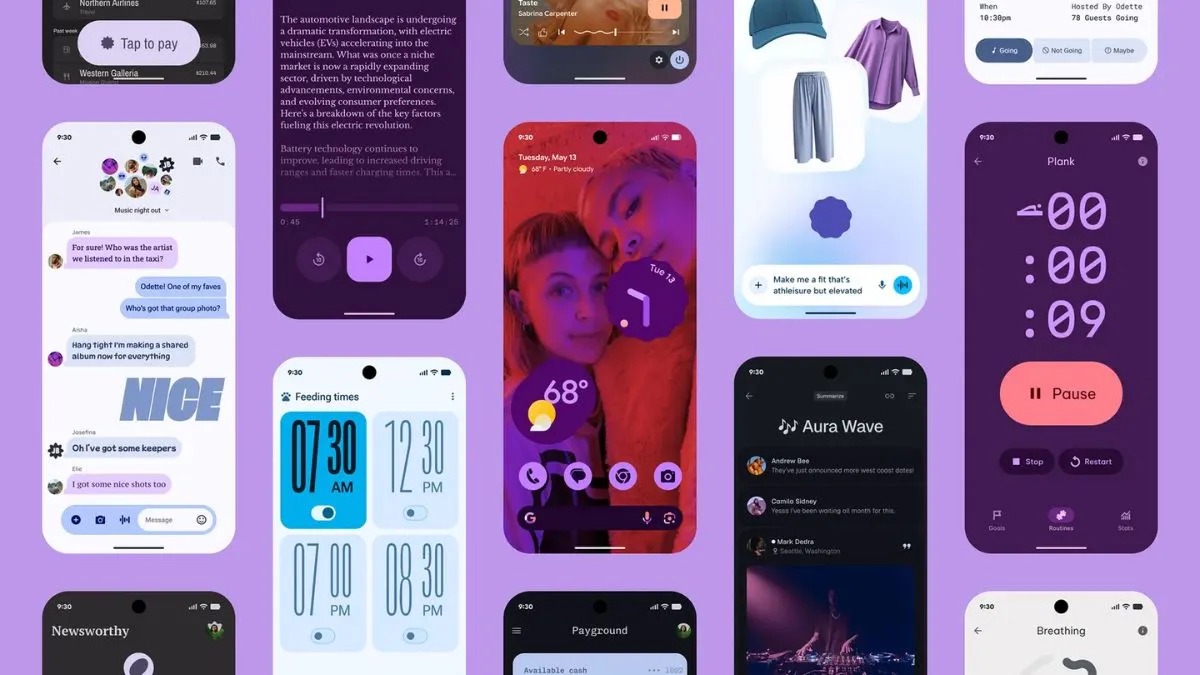
Android’s 2025 transition doesn’t arrive with loud redesigns or dramatic one-off features. Instead, it unfolds through slow, deliberate shifts that deepen consistency across devices, reshape how AI runs on smartphones, and strengthen the link between hardware, software, and ecosystem behaviour. It feels like a year where Android isn’t chasing spectacle—it’s tightening the fundamentals that quietly change how the platform behaves in everyday use.
Material 3 Expressively Strengthens Visual Identity Without Losing Clarity
Material 3 Expressive marks a noticeable shift in how Android approaches design cohesion. Beyond colour theming and accent transitions, the new direction emphasises depth, motion and a gentler hierarchy that makes UI elements feel more grounded and intentional. More system apps now mirror the same design rhythm, and third-party developers are nudging interfaces toward layouts that look visually aligned rather than fragmented.
Instead of relying on bold contrasts or experimental shapes, the design language leans into readability, subtle shading and smoother state transitions. It avoids the visual fatigue that some earlier design refreshes created, and it turns Android’s interface into something that evolves as you interact with it rather than simply appearing themed.
Recommended For You
On-Device AI Moves From Novelty Toward Everyday Utility
AI on Android in 2025 shifts from headline features to practical, privacy-minded functionality. With Gemini Nano handling more operations locally, features like transcription, summarisation, classification and accessibility tools reduce dependence on cloud pipelines. This matters not only for privacy but also for responsiveness, especially in regions where connectivity isn’t guaranteed.
The shift doesn’t eliminate cloud-based AI — and not every device has the hardware headroom to mirror Pixel-class performance — but it signals a broader intention. AI becomes a layer that supports user action instead of trying to replace it, nudging Android toward a model where intelligence sits quietly in the background rather than acting as a front-and-centre selling point.
Adaptive Apps Push Large Screens Toward Real Productivity
Large-screen Android devices have often promised versatility without fully realising it. Universal resizability and adaptive layouts begin to change that. Apps that previously existed in stretched phone mode now transition into multi-column formats that treat tablets and foldables as intentional form factors instead of enlarged displays.
Developers gain more predictable layout behaviour across orientations and window sizes, which reduces the friction between foldable cover screens, tablet modes and desktop-style setups. The shift doesn’t entirely solve fragmentation, but it narrows long-standing gaps that shaped user perception of Android on bigger screens.
Pixel Hardware Raises The Baseline Without Overstating The Leap
Pixel hardware in 2025 doesn’t try to reinvent the lineup—it refines the baseline. Improvements such as more reliable telephoto performance on non-Pro models, stronger durability across hinges and frames, and Qi2 alignment for accessories subtly influence expectations for upcoming Android flagships.
Rather than driving change through exclusive hardware tricks, the updates function as reference points for the ecosystem. They set a direction for partners to iterate around, reinforcing the idea that Android’s hardware evolution this year feels more coordinated than competitive.
Universal Resizability Points Towards a Post-Phone Interface Future
Universal resizability isn’t just a developer convenience — it hints at a future where Android isn’t tied to a single device identity. The ability to stretch, collapse and reform UI structures across displays suggests a platform preparing for environments beyond phones and tablets.
Whether that leads toward hybrid computing, extended desktop modes or entirely new device categories remains unanswered — but the groundwork feels intentional rather than experimental.
Cross-Platform Sharing Softens Everyday Barriers
Quick Share compatibility with AirDrop doesn’t dissolve ecosystem walls, but it softens them. It makes routine exchanges less restrictive and removes some of the friction that historically defined Android–iPhone interaction. The change is subtle, but it shifts expectations around how closed and open systems coexist in everyday workflows.
ALSO READ: Weekly Tech Wrap Up December 2025: Xiaomi 17 Ultra, Asus AiO Copilot+ PC And More
Conclusion
Android’s 2025 evolution doesn’t hinge on a single breakthrough. Instead, it builds momentum through layered refinements—design that feels more grounded, AI that moves closer to the device, hardware that guides rather than competes, and cross-device behaviour that steadily grows more unified. The result is a platform that feels steadier, more deliberate and quietly positioned for changes that may reveal their real significance over time.