
- By Prateek Levi
- Tue, 31 Mar 2026 11:58 AM (IST)
- Source:JND
Vivo has expanded its flagship lineup in China with the launch of the Vivo X300 Ultra and Vivo X300s on March 30, 2026, and the focus this time is clearly on pushing smartphone photography further. While both devices lean heavily into imaging, the Ultra model stands out with a setup that’s hard to ignore.
At the centre of the conversation is the Vivo X300 Ultra, which becomes the first smartphone to feature two 200MP cameras, one handling primary shots and the other dedicated to periscope zoom. It’s an unusual approach, especially at a time when most brands balance sensors with software processing. Vivo, however, is doubling down on raw resolution and optics.
ALSO READ: YouTube Background Playback Comes To Android Auto: Play, Pause, Skip, But There's A Catch
The X300s takes a more familiar route but still keeps things premium, offering a 200MP main sensor paired with additional cameras that align with what you’d expect from a flagship. Across both devices, Vivo continues its collaboration with Zeiss, which influences everything from lens construction to colour science and overall image output.
Camera System Takes Priority
The X300 Ultra pairs its dual 200MP sensors with a 50MP ultrawide lens, aiming to deliver consistency between standard and zoom shots rather than treating them as separate experiences. This puts it in direct competition with upcoming devices like the OPPO Find X9 Ultra, which is also confirmed to adopt a similar dual 200MP direction.
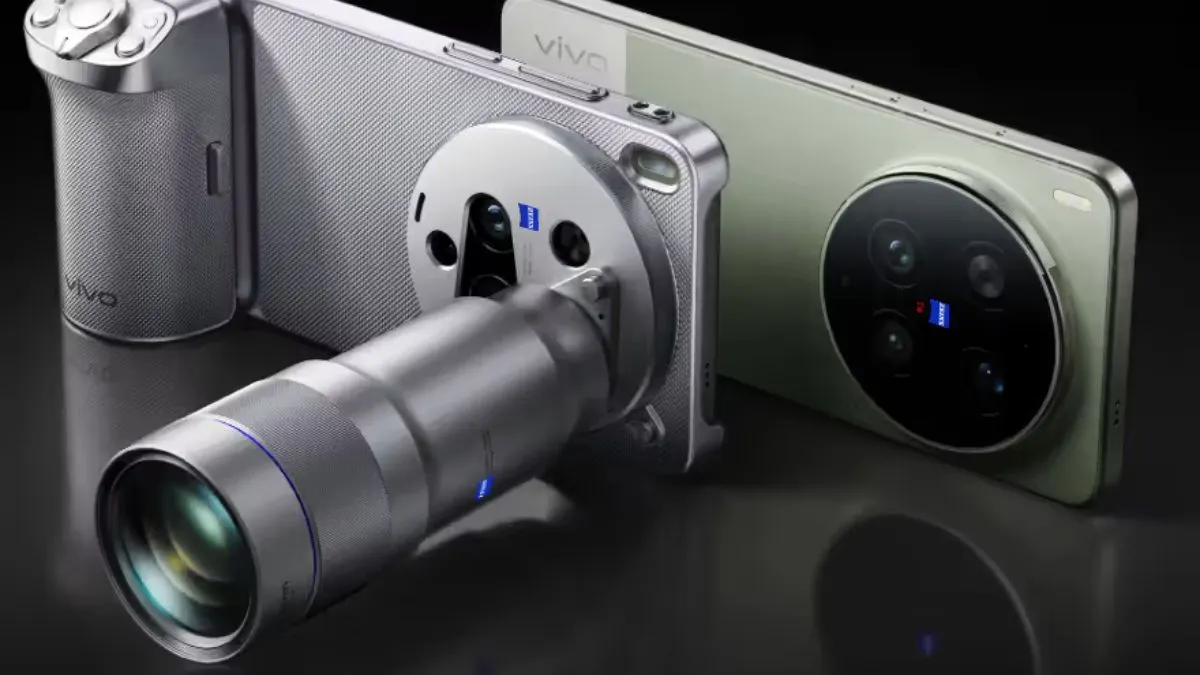
Vivo is also experimenting beyond built-in hardware. The company is introducing optional teleconverter accessories that extend zoom capabilities even further. The larger attachment can reach a 400mm equivalent focal length with up to 17.4x optical output, while a smaller version offers portability. It’s a clear attempt to position the phone as more of a modular camera tool rather than a fixed setup.
On the other hand, the X300s keeps things simpler. It includes a 200MP main camera, a 50MP ultrawide, and a 50MP periscope telephoto lens with up to 3x optical zoom. There’s still support for a compact teleconverter, but the overall setup is closer to mainstream flagship expectations.
Design Stays Clean, Camera Remains the Highlight
Both phones follow a similar design philosophy, keeping things minimal while letting the camera hardware take visual priority. The X300 Ultra uses a flat-edged frame and manages to house its dual 200MP system and a large battery without making the rear module feel excessive. It comes in film, green, silver-tone, and black finishes.
The X300s mirrors this design language but introduces slightly more expressive colours like Dream Core Purple alongside the standard options. The look is consistent on both devices, with thin bezels and the Zeiss logo discreetly placed on the rear of each device. The addition of these camera accessories provides another level of depth to the overall package.
Displays And Performance Are Separate, The Two
The X300 Ultra has a 6.82-inch LTPO OLED display with a 120Hz refresh rate. The X300s has a slightly smaller 6.78-inch display, but it is an AMOLED panel with a higher 1.5K resolution and a 144Hz refresh rate, making it more suitable for interactive use cases.
The Ultra has Qualcomm’s Snapdragon 8 Elite Gen 5 SoC, along with up to 16GB RAM and 1TB of storage, putting it in the highest echelon of Android devices. The X300s uses the MediaTek Dimensity 9500, which still sits in flagship territory but slightly below Qualcomm’s top offering. It also benefits from Vivo’s V3+ imaging chip for enhanced camera processing.
Battery And Charging: Keeping Up With The Trend
The capacity of the battery is in line with the current flagship standards. The device is fuelled by a 7,000mAh battery and supports 100W wired and 40W wireless charging. The device’s rival, the X300s, is slightly ahead in terms of battery capacity and supports a 7,100mAh battery and 90W wired and 40W wireless charging.
Pricing and Market Position
The price of the Vivo X300 Ultra is set between 6,999 CNY and 8,999 CNY and is comparable to other ultra-flagship devices such as the Xiaomi 17 Ultra. The X300s is priced lower in the range from 4,999 CNY to 6,999 CNY.
Vivo is launching some camera-centric accessories as well, including teleconverter bundles and a video kit designed in collaboration with SmallRig. These remain optional but can significantly expand the phone’s capabilities for users who want more control over their shooting experience.
What It Means For Buyers
The X300 Ultra is clearly built for users who prioritise zoom flexibility and are open to using external accessories to push the limits further. It’s a more specialised device that leans heavily into hardware.
The X300s, on the other hand, provides a more balanced flagship device experience with a high-resolution camera, quick display, and large battery without the need for add-ons. For those looking at different brands, the Samsung Galaxy S26 Ultra and the Xiaomi 17 Ultra can provide more consistent performance in different conditions. Vivo’s strategy shines in terms of high-resolution output and expandable zoom features.