
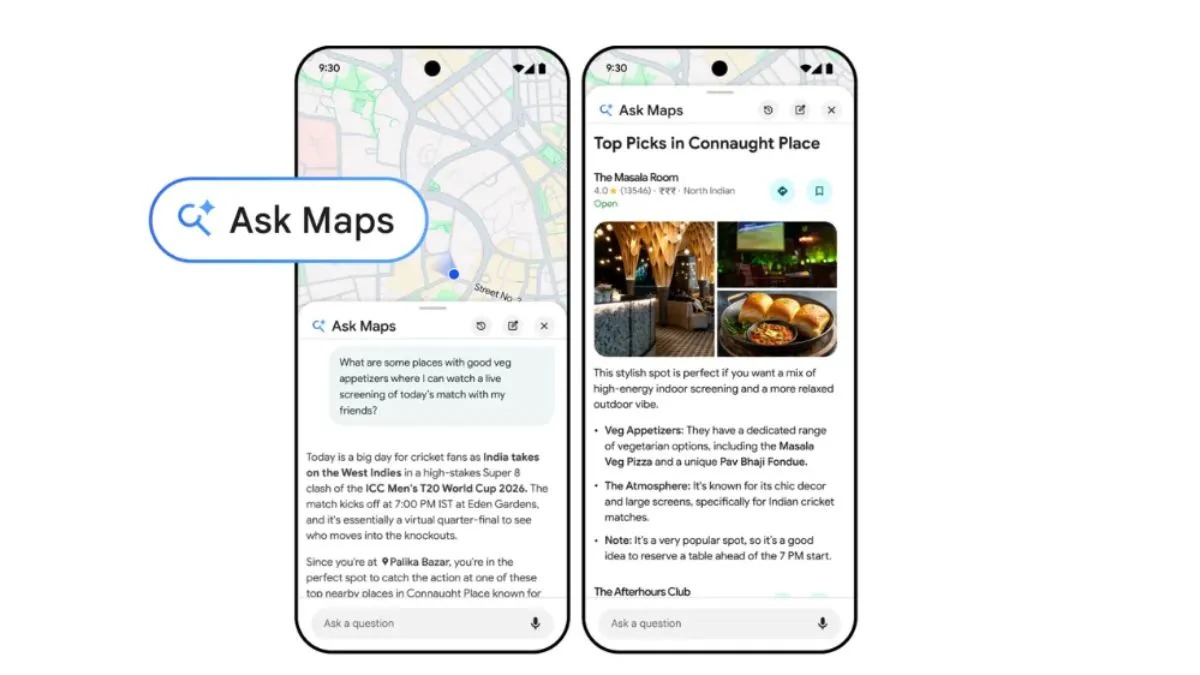
Ask Maps: The mountain-view tech giant Google just introduced something new in its Google Maps; this new update lets users prompt or ask questions in real-time about any area or place directly from the app itself. This new feature is being called 'Ask Map', and this gives users a chance to ask questions in natural language and get an answer which is ultimately AI-generated, based on Maps data. Additionally, Google has dropped another feature dubbed Immersive Navigation, and this the company has claimed is the biggest change that the app has received in a decade.
ALSO READ: Jio's Mid-Term Recharge Plan: Get 1.5 GB Data, 56 Days Validity And More, Check Price And Details
What Is Ask Maps?
This new feature combines two major nodes of Google's own platforms; its AI suite Gemini is linked with the massive and extensive database of Google Maps. This, the company claims, will give users the answers that the usual simple map that Google currently has cannot answer, giving users the chance to interact with what they are seeing or any place they are visiting. This new feature can be triggered through a dedicated button provided inside the Maps app itself, and users can either text it or use voice prompts to begin, the tech giant explained in its blog post.
For example, let's take a situation where the user is confused about whether they want to take the bus, metro, or just drive their own vehicle. With Ask Maps, users can now ask such queries directly within the app. The tech giant has claimed that this new feature uses its database, and Google Maps analyses the traffic conditions, estimated time required, and any nearby locations to give suggestions as the user travels along with navigation.
Recommended For You
Additionally, this new tool can come in handy while planning trips as well; for instance, if you want to know if there's a live sports screening happening with your preference of veg or non-veg food that you can enjoy. What Ask Maps does is that it scans its entire database to provide relevant suggestions and recommendations, like what's special on the menu or popular, the kind of weather and atmosphere there is during the match days or one thing that becomes a headache for most of us, parking.
The feature also learns from how a user typically interacts with the app. It looks at locations people have searched for earlier or places they have saved in Maps. For example, if someone regularly searches for vegetarian restaurants, the AI can prioritise similar options when recommending places to eat in a new city. This way, the suggestions feel more aligned with the user’s personal preferences.
Google says the experience is designed to feel conversational. Users can ask follow-up questions to narrow things down further. If a few options appear, someone can simply ask which venue has easier parking or which place is more accessible.
According to the company, Ask Maps relies on a massive dataset that includes information about more than 300 million places listed on Google Maps. It also draws insights from a global community of over 500 million contributors who share reviews, ratings, photos and updates about different locations.
The feature has already started rolling out in India and the US on both Android and iOS versions of Google Maps. At the moment, it supports English, while Hindi support is expected to arrive soon.
Immersive Navigation Introduced
Alongside Ask Maps, Google has also introduced Immersive Navigation, which it describes as the biggest update to driving in Google Maps in over a decade.
With this update, the app now offers redesigned visuals that aim to make navigation easier to understand. Drivers will be able to see a 3D view of their surroundings, including buildings, terrain and overpasses along the route.
Google Maps will also highlight important road elements such as lanes, crosswalks, traffic lights and stop signs whenever they become relevant during the drive. This enhanced spatial understanding is powered by Gemini models, which analyse real-world imagery collected from Street View and aerial photos.
The app will also give drivers a clearer preview of the road ahead so they can prepare for upcoming turns or lane changes. Even the voice navigation instructions have been updated to sound more natural and conversational.
In addition, Google Maps will help drivers compare alternate routes more clearly. For example, it might show a faster option that includes toll roads, or another route that may take slightly longer but has lighter traffic. The app will also alert users about disruptions such as road construction or crashes, using reports shared by its community of drivers.
Google says Immersive Navigation has started rolling out in the US and will gradually expand over the coming months. It will be available on supported Android and iOS devices, as well as vehicles that support CarPlay, Android Auto, and cars with Google built-in.