

- By Ridam Sharma
- Thu, 04 Dec 2025 01:27 PM (IST)
- Source:JND
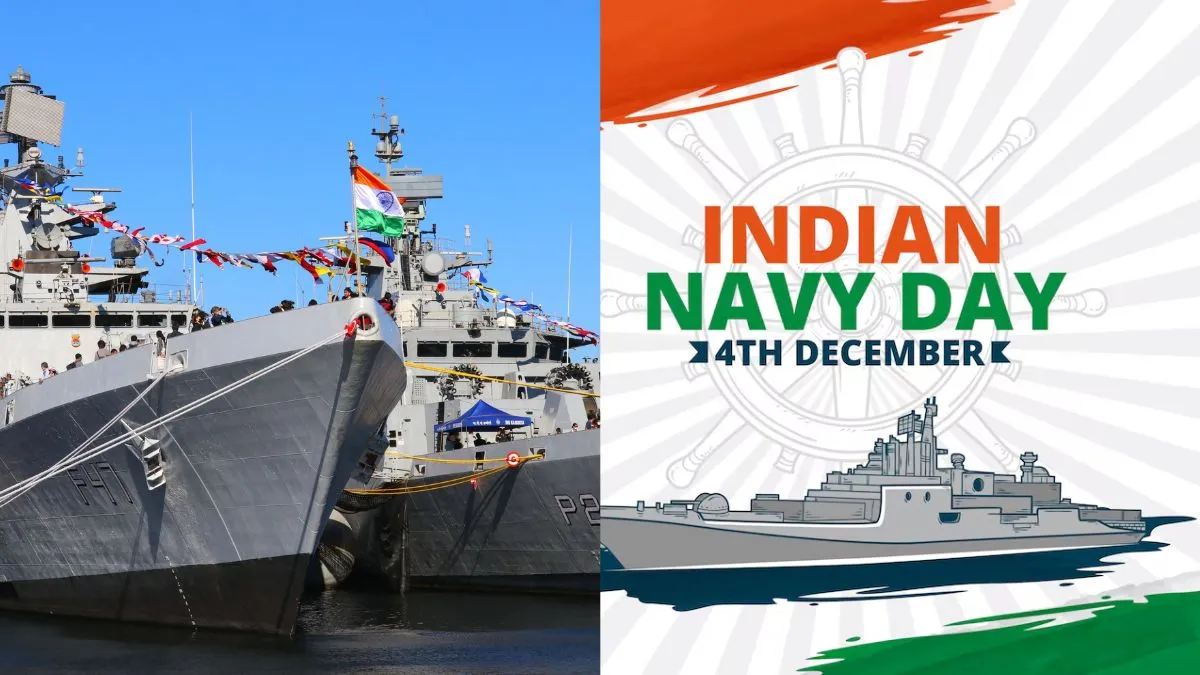
Lesser-Known Facts About the Indian Navy: The navy is the foundational aspect of a country’s security and safety. This armed force protects the nation’s water borders. Every year, to recognise the achievements and contributions of the Indian Navy and its soldiers, Indian Navy Day is celebrated on December 4th. Today, on the key occasion, let’s take a look at the list of more than 20 lesser-known facts about India’s naval power, according to the Joinindiannavy.gov.in. The list includes all important aspects of the Indian Navy, from its key operations to naval strength and much more.
List Of 20+ Lesser-Known Facts About The Indian Navy:
1. The roots of the Indian Navy can be traced back to 1612, when the East India Company started its own Marine to protect trade routes in the Gulf of Cambay, Tapti, and Narmada rivers while mapping the coasts of India, Persia, and Arabia.
2. In 1830, the Bombay Marine had been redubbed the Indian Navy; by 1845, the date of its conversion from sail to steam power, it was to participate in the First Opium War.
3. Andaman and Nicobar Command, set up in 2001, remains the only triservice command for India, uniting the Army, Navy, and Air Force for deep strategic functions extending across the eastern Indian Ocean.
4. INS Arihant is a nuclear-powered ballistic missile submarine built indigenously for second-strike deterrence, forming part of the nuclear triad, and was commissioned in 2016.
5. Navy Day on December 4 is held to commemorate Operation Trident in 1971, not the founding of the Navy, when missile boats struck Karachi harbour.
Also Read: Navy Day: PM Modi Extends Greetings, Recalls His Time Aboard INS Vikrant During Diwali
6. The first combat involvement for the Navy came in 1961 when Goa was annexed with Operation Vijay against Portuguese forces.
7. India's Naval Air Arm is Asia's oldest, starting as INAS 550 on May 11, 1953.
8. Having in its service both a leased Russian nuclear submarine, INS Chakra, 1988, and an indigenous one, the Navy uniquely operates a fleet of 15 submarines.
9. This elite marine commando unit is specially trained for combat diving, underwater demolition, guerrilla warfare, counter-terrorism, and hostage rescue.
11. Lt Commodore Devdutt Sharma set a Guinness World Record in 2023 for 82 consecutive full marathons, according to the indiannavy.gov.in.
12. INS Udaygiri, which was commissioned in 2025, is the 100th ship designed by the Navy's Warship Design Bureau.
13. Lt Commanders Dilna K and Roopa Alagirisamy completed a 25,400nauticalmile global circumnavigation on INSV Tarini as part of Sagar Parikrama in 2025.
14. Lt Commanders Pratibha Jamwal and Vartika Joshi led an all-woman crew on INSV Tarini for Navika Sagar Parikrama, crossing Cape Horn after 254 days.
15. During the 1971 war, Operation Trident sank three Pakistani vessels in a surprise Karachi attack.
16. In the 1999 Kargil War, the Navy blockaded Karachi to cut Pakistani sea supplies under Operation Vijay.
Also Read: Indian Navy Day 2025: 50+ Heartfelt Quotes And Messages To Honour India’s Brave Navy Officers
17. In 2013, Operation Rahat rescued over 20,000 people from the Uttarakhand floods using ships, helicopters, and divers.
18. Since 2008, the Navy has escorted over 3,000 merchant vessels in Gulf of Aden antipiracy operations.
19. MARCOS participated in Operation Black Tornado, 2008, to clear terrorists during the Mumbai attacks and covert Kargil ops.
20. INS Vikrant is the first indigenous aircraft carrier of India, launched in 2013.
21. The Navy maintains a Naval Aviation Museum in Goa, conserving maritime aviation history.
22. Saturation divers from INS Nireekshak created a national record in 2013 when they dove around 257 meters in the Arabian Sea off Kochi.
Each of the above-mentioned facts about the Indian Navy highlights its smooth functioning and efforts to keep the nation of billions safe. The day also honours the brave and selfless service of Indian naval officers, who protect the vast coastline of India. They are responsible for keeping the top-notch security at the water borders, especially during wars, emergencies like natural disasters, rescue missions and also at the time of international operations.