

Sunrises and sunsets are among some of nature's beautiful views. The sky often seems to be changing its colours, like yellow, orange, pink, or deep red, making people pause to admire the moment. There are many sunrise and sunset points in the world that represent breathtaking views of sky, sun, and horizon. However, have you ever thought about why sunlight turns reddish at dawn or dusk but feels bright white midday? That change isn't magic, but it's physics playing above our heads daily.
The reason behind this is very simple: how sunlight moves through our planet’s atmosphere. To know it better, let's explore the science and process behind this magical phenomenon.
What Is Sunlight Made Of?
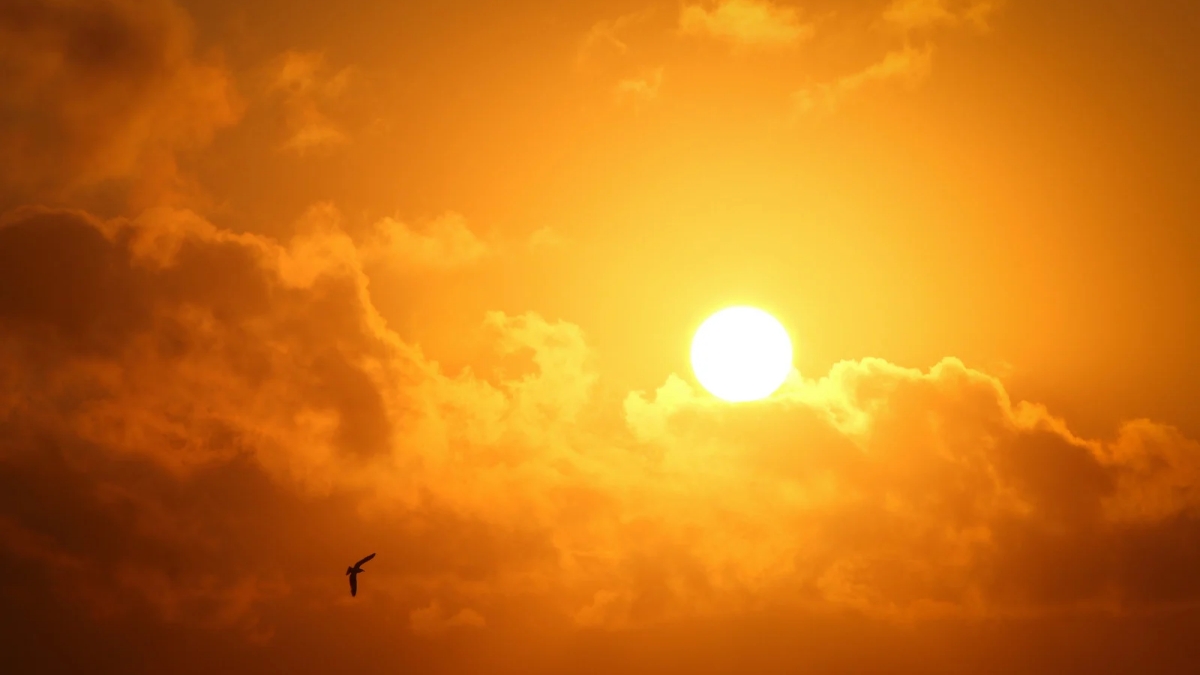
Sunlight colours ( Image: Canva)
Sunlight may look white in a day, but it is actually made up of seven colors: violet, indigo, blue, then green, followed by yellow, orange, and red. Every shade carries its own unique wavelength. Violet and blue have shorter waves. Red and orange carry longer waves. Those waves decide how colours act once sun rays enters into earth atmosphere.
What Happens When Sunlight Enters the Atmosphere?
When sunlight enters Earth’s atmosphere, it enters the air molecules, dust, smoke, and water particles. This causes a process called scattering.
* Shorter wavelengths (blue and violet) scatter easily.
* Longer wavelengths (red and orange) scatter less.
* This scattering decides what color we see in the sky.
ALSO READ: Did You Know Why Sky Appears Blue But Space Is Black? Know The Interesting Reason Behind This
Why Does the Sun Look Normal at Noon?
At noon, sunlight is almost straight overhead, and sunlight travels a short distance in the atmosphere. Because blue light has a short wavelength, it spreads across all the directions. That scatter is the reason why we see a blue sky. At noon, most colors reach our eyes, so the sun looks white or yellow.
Why Are Sunrises and Sunsets Red?
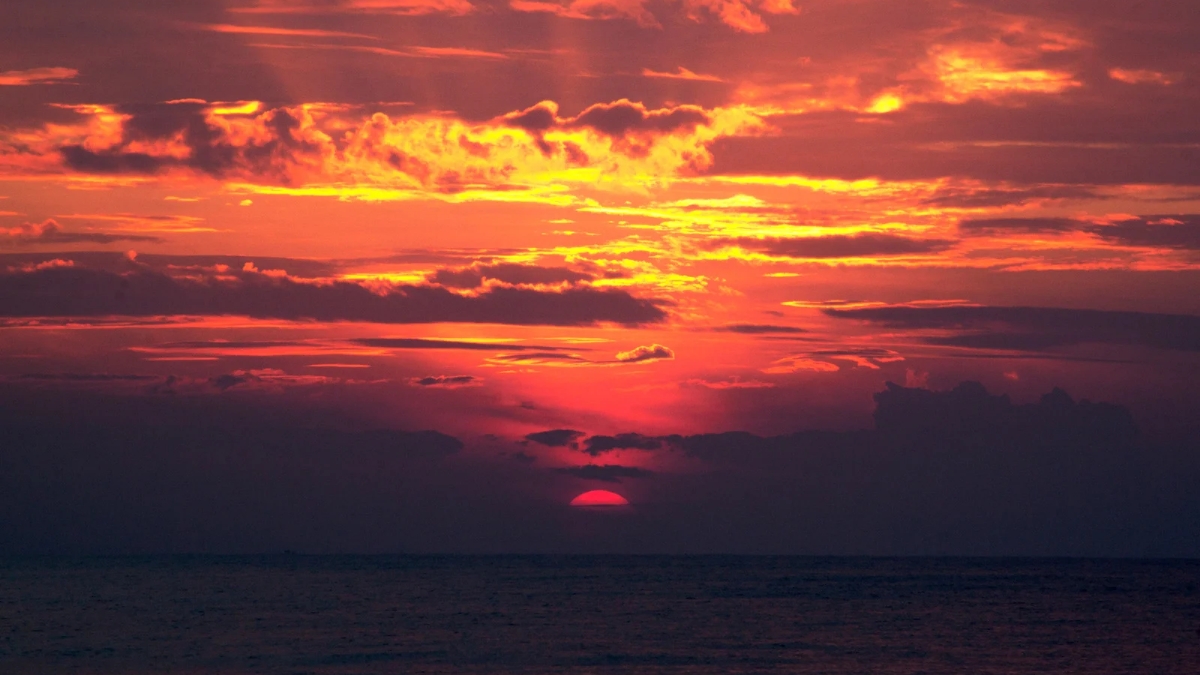
Why sunrises and sunset look red (Image: Canva)
During sunrise and sunset, the sun is low on the horizon.
* Sunlight travels a much longer distance.
* Blue and violet light scatter away before reaching our eyes.
* Red, orange, and pink light remain visible.
* This is why the sun and sky look reddish.
ALSO READ: Did You Know The World’s Largest Natural Mirror Is A Giant Salt Land: Here’s The Fun Fact
Role of Dust and Pollution
Dust, smoke, and pollution increase the red effect.
*Pollution or volcanic ash can produce deep red sunsets.
*Clear skies typically display softer colors.
* More particles = more scattering
The amount of dust in the air, the weather, the humidity and pollution levels, and seasonal variations all affect the colors of sunrises and sunsets. Because of this, no two sunsets are exactly alike.