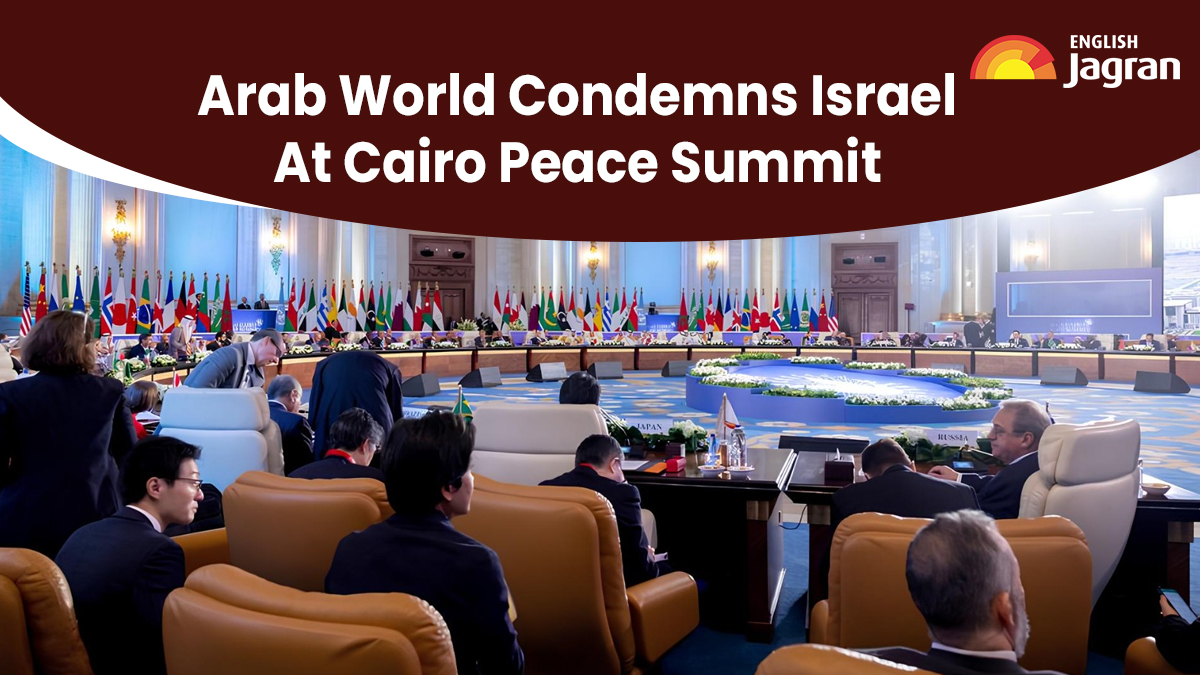
At the recently held Cairo Peace Summit Arab leaders strongly condemned Israel's two-week bombardment of Gaza and called for renewed efforts to promote peace in the Middle East and put an end to the long-standing cycle of violence between Palestine and Israel.
Western Leaders' Absence Casts Shadow On Summit's Outcome
The summit, which took place in Cairo, Egypt, saw the participation of leaders from Egypt, Iraq, Jordan, the United Arab Emirates, Palestine, Italy, Spain, and other countries. Notably absent were leaders from Western countries, including German Chancellor Olaf Scholz, British Prime Minister Rishi Sunak and French President Emmanuel Macron. Iran was also absent from the summit. Iran’s role is significant due to its funding of both Hamas and Hezbollah. The discussions at the summit largely revolved around ending the war, protecting civilians, releasing hostages, delivering humanitarian aid, and working towards a two-state solution for Israelis and Palestinians.
The United States sent a Chargé d'Affaires ambassador from its Egypt embassy, but no senior officials from President Joe Biden's administration were present. Biden, a long-time ally of Israel, has supported Israel's right to defend itself while urging restraint in its response. The US recently vetoed a United Nations resolution calling for a pause in the fighting to allow humanitarian assistance into Gaza, citing the resolution's failure to mention Israel's self-defence.
The absence of major Western leaders has dampened hopes for the summit. Diplomats familiar with the matter revealed that issuing a joint statement would be challenging, as any call for a ceasefire would be sensitive, and there might be no consensus on whether the statement should mention Hamas' attacks on Israel and Israel's right to self-defence.

Jordan's King Abdullah II Criticises Global Inaction on Israeli-Palestinian Conflict
During the summit, Jordan's King Abdullah II criticised the global silence surrounding Israel's attack on Gaza and called for a fair perspective on the Israeli-Palestinian conflict. He emphasised that the Palestinian lives are as important as Israeli lives. King Abdullah II also highlighted that forced displacement is considered a war crime under international law and is an insurmountable red line for Arab countries.
Palestinian President Abbas Calls for End to Israeli Occupation
Palestinian President Mahmoud Abbas reiterated in his statement that Palestinians would not leave their land. He emphasised the importance of a two-state solution, which entails ending Israel's occupation of Palestinian territory. The clashes between Israel and Hamas, which began on October 7, have resulted in a significant increase in civilian casualties. The Gaza Strip, subjected to relentless airstrikes, is now facing a severe humanitarian crisis.
The Crisis Worsens: Urgent Aid Needed, UN Warns
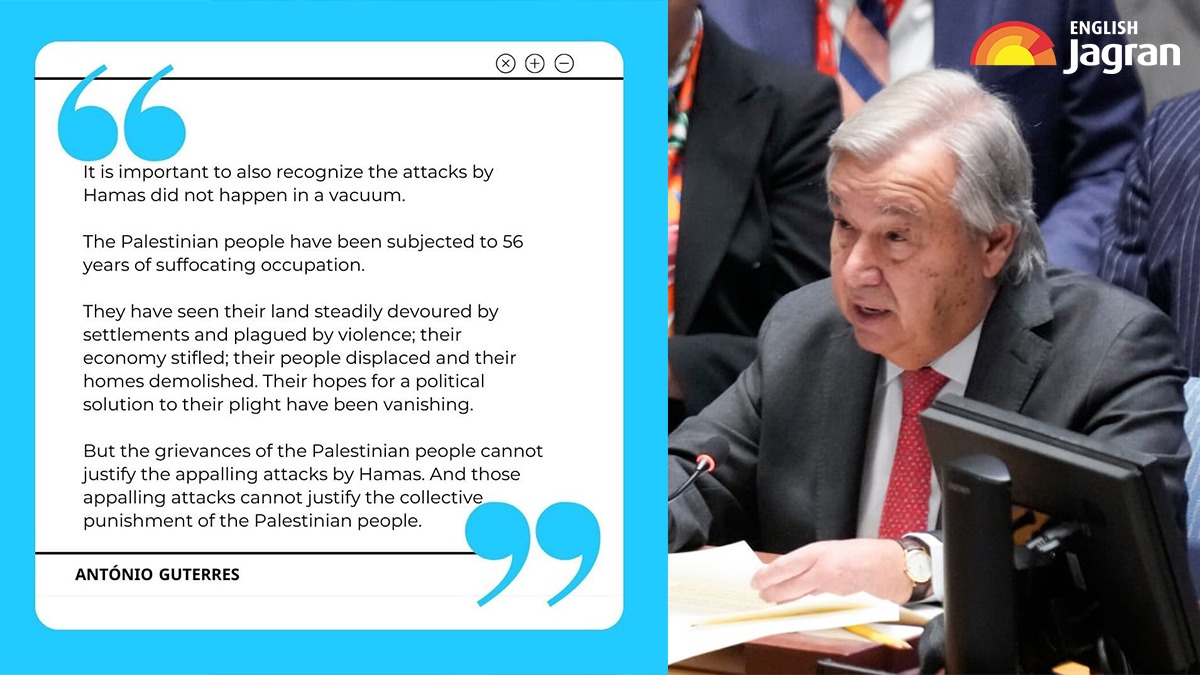
During the summit, United Nations Secretary-General Antonio Guterres urged Israel and Hamas to achieve a "humanitarian ceasefire" and called on the international community to take action to end the ongoing nightmare. Guterres highlighted the dire situation in Gaza, where 2.4 million Palestinians are experiencing a humanitarian catastrophe, with thousands dead and over a million displaced. Ahead of the summit, the first aid trucks entered southern Gaza from Egypt. However, the United Nations warned that the situation on the ground is deteriorating rapidly, and approximately 100 trucks are needed daily to deliver essential aid supplies. Guterres stressed the urgent need to scale up relief efforts and provide more assistance to address the growing crisis. In appreciating the facilitation of the first aid convoy's entry into Gaza through the Rafah border crossing, he considered it a significant step forward, though emphasising the need for further actions in this regard.
UN Secretary General Calls For Upholding International Humanitarian Law
The UN Secretary General stressed the importance of upholding international humanitarian law, including the protection of civilians and the avoidance of attacks on hospitals, schools, and UN premises currently providing shelter to half a million people. Additionally, he has called for a steadfast focus on achieving a two-State solution for Israelis and Palestinians as the only viable foundation for genuine peace and stability. The UN Chief also expressed gratitude for the Emir of Qatar's invaluable efforts in securing the release of two Americans who were held hostage in Gaza. He reiterated his call for the immediate and unconditional release of all hostages while advocating for unrestricted humanitarian access, full compliance with international law, the protection of civilians, and international measures to prevent the conflict from escalating further. Acknowledging Egypt's hosting of the Cairo Summit, the UN Special Coordinator for the Middle East Peace Process commended the political engagements initiated by the United Nations with relevant parties. Stressing the need to end the bloodshed and avoid additional loss of civilian lives, he emphasised the importance of a political solution and echoed the concerns regarding the conflict expanding beyond its current boundaries.
The summit concluded without a joint statement or documented goals, highlighting the divide among world leaders. The absence of the warring parties and their backers further complicated the situation, leaving uncertainty about the next steps and the effectiveness of the summit.