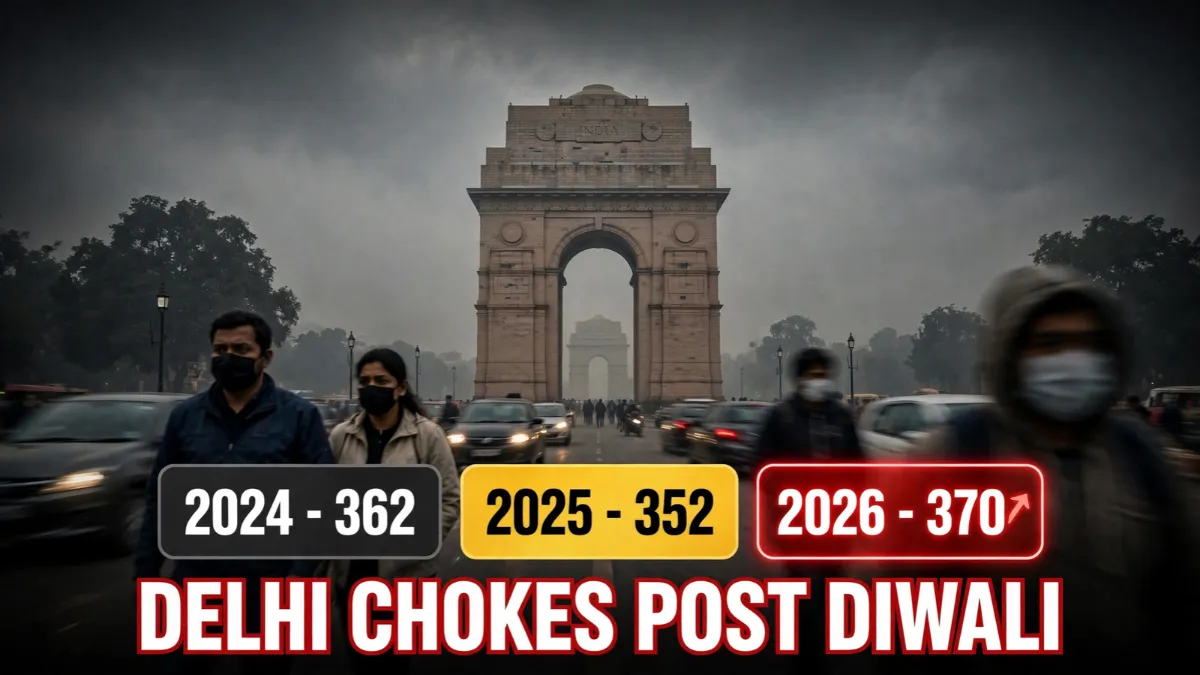
- Delhi's post-Diwali AQI 2026 reached 370, 'very poor'.
- Air quality worsened compared to 2024 and 2025 levels.
- Firecrackers, weather, emissions contributed to severe pollution.
A day after Diwali celebrations across India, the national capital remained one of the worst-affected cities, with its air quality slipping into the 'very poor' category. A thick grey haze engulfed the skyline, reduced visibility on roads and caused irritation in the eyes and throat as Delhi residents woke up to alarmingly high pollution levels on Monday. This came after firecrackers were burst across the city well beyond the permitted hours on Diwali night.
As of 8 am, Delhi's overall Air Quality Index (AQI) stood at 370, placing it in the 'very poor' category. The air quality is expected to deteriorate further and enter the 'severe' category during the day.
The Delhi Technological University (DTU) and Burari Crossing monitoring stations recorded the worst air quality, with an AQI of 437 each. Four other stations recorded 'poor' air quality, while the remaining stations were in the 'very poor' category.
Several areas, including Bawana, Burari, Jahangirpuri, Sonia Vihar, Punjabi Bagh, Okhla and Rohini, recorded 'severe' air quality.
According to open-source air quality monitoring platform AQI.in, Delhi's AQI surged to 2,283 after Diwali. On Monday morning, the AQI stood at 637, which the platform classified as "hazardous", PTI reported.
Despite restrictions on firecrackers, residents burst fireworks across the city well beyond the permitted hours on Diwali night. A similar pattern was witnessed last year, when Delhi's air quality deteriorated sharply after the festival.
Post-Diwali AQI 2026 vs 2025 vs 2024: Did Delhi's Air Quality Improve or Worsen?
No. Air pollution in the national capital has reached a three-year high, despite the Supreme Court allowing only certified green firecrackers to be burst during specific hours on November 2 ruling.
Delhi began Diwali 2026 with higher pollution levels than in 2024 and 2025. The situation remained almost as bad the following morning, with more areas recording 'severe' air quality.
A comparison of AQI levels recorded at 8 am on the morning after Diwali over the past three years, according to the Central Pollution Control Board (CPCB), shows the following:
- Delhi, November 9, 2026: 370 - 'Very Poor'

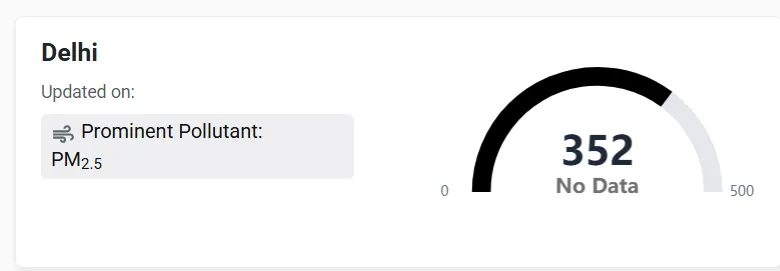
- Delhi, October 26, 2025: 352 - 'Very Poor'
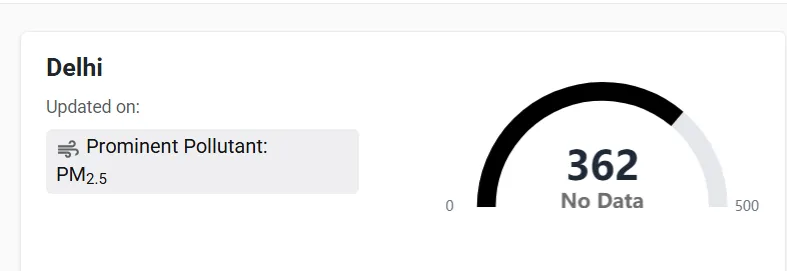
- Delhi, November 1, 2024: 362 - 'Very Poor'
According to the CPCB, an AQI between 0 and 50 is classified as 'good', 51 and 100 as 'satisfactory', 101 and 200 as 'moderate', 201 and 300 as 'poor', 301 and 400 as 'very poor', and 401 and 500 as 'severe'.
Recommended For You
However, the situation in 2026 was already concerning even before Diwali. Delhi recorded an average AQI of 391 on Friday, two days before the festival.
The data highlights how the national capital continues to struggle with seasonal pollution around Diwali. Smoke from firecrackers adds to the existing pollution burden and can push AQI levels into the 'severe' category, increasing health risks for residents.
Why Did Delhi Witness 'Very Poor' AQI?
Unfavourable meteorological conditions, vehicular emissions and stubble burning in neighbouring states are likely to have contributed to the deterioration in air quality.
According to the Air Quality Early Warning System, a ventilation index below 6,000 square metres per second, combined with an average wind speed of less than 10 kmph, creates unfavourable conditions for the effective dispersion of pollutants.
ALSO READ: Delhi Chokes After Diwali As Air Quality Plunges; AQI At 368, 12 Areas Record 'Severe' Pollution
On Diwali night, firecrackers were burst across the capital despite restrictions on their use. Twenty monitoring stations recorded 'severe' air quality, with Sonia Vihar registering the worst AQI at 463, followed by Jahangirpuri at 450.
The city's average AQI settled at 376 on Sunday. Of the 59 monitoring stations that recorded data at 10 pm on Diwali, 20 were in the 'severe' category, six in the 'poor' category and the remaining 33 in the 'very poor' category.