
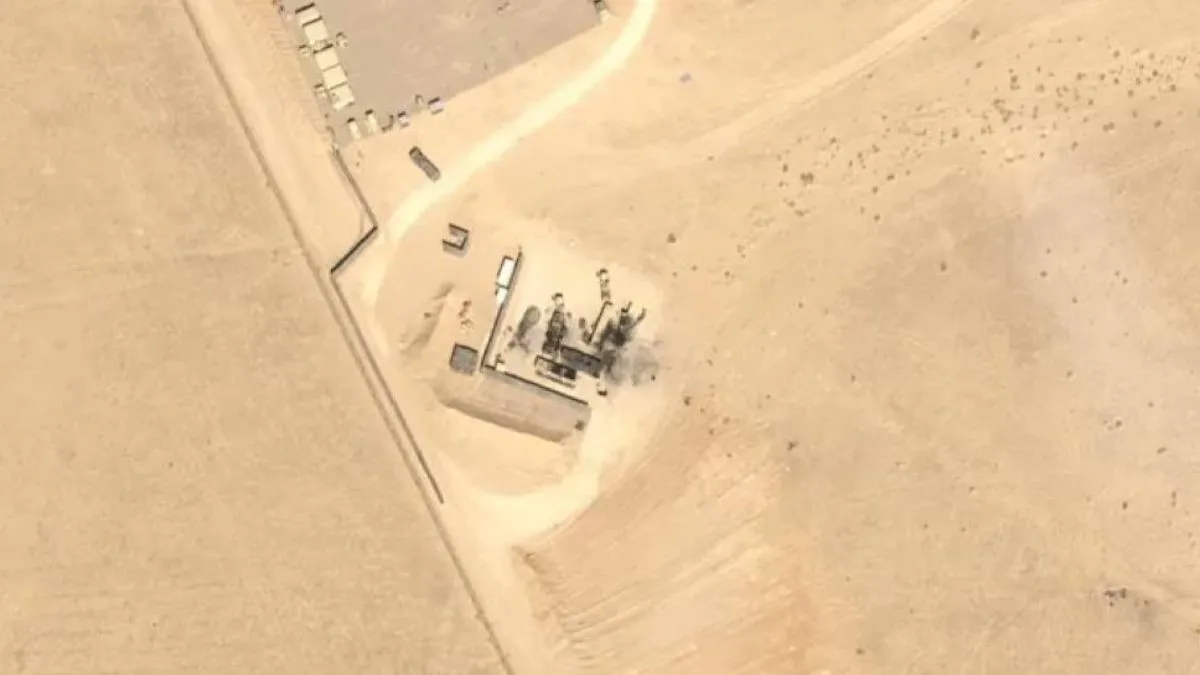
Tensions in the Middle East have reached a critical flashpoint following reports that Iranian strikes have successfully targeted high-tech radar installations in Jordan and the United Arab Emirates. These systems, developed by the United States, are vital components of the region's missile defense shield.
New satellite imagery analysed by CNN reveals significant damage to military facilities across the Arabian Peninsula. The data suggests that Iran is deliberately attempting to blind regional air defenses by neutralising the radar networks that detect incoming drones and missiles.
By disabling these "eyes in the sky," the Iranian offensive aims to degrade the effectiveness of the Terminal High Altitude Area Defense (THAAD), a sophisticated system designed to intercept ballistic missiles mid-flight.
Satellite imagery from Airbus Defence and Space reviewed by CNN appears to show an AN/TPY-2 X-band radar, used with the U.S. Army’s THAAD missile defense system, damaged or possibly destroyed in an Iranian drone or missile strike on Muwaffaq Salti Air Base in Jordan. The imagery… pic.twitter.com/NrPIIVLPdz
— Mossad Commentary (@MOSSADil) March 6, 2026
Key Targets: Jordan And The UAE
Jordan: Images from Monday confirm that a THAAD missile battery's radar system at the Muwaffaq Salti Air Base was struck and destroyed. This base is located over 500 miles from Iran.
ALSO READ: 'Won't Repeat China Mistake, Will Keep America First': Top US Official On India-US Trade Deal
Recommended For You
UAE: At least two sites in the United Arab Emirates containing similar radar infrastructure were targeted. While the buildings show signs of impact, the full extent of the damage to the internal equipment is still being assessed.
Reports indicate the presence of craters approximately 13 feet wide, suggesting the sites were hit multiple times to ensure the equipment was put out of commission.
Why These Radar Systems Matter
The radar is the most critical element of high-end interceptor networks. Without the data provided by these sensors, interceptor missiles cannot be guided toward their targets.
A THAAD system is highly complex, with its radar components typically spread across several 40-foot trailers. This explains why multiple precision strikes were likely required to fully disable the units. Currently, the US operates eight THAAD batteries, while the UAE holds two and Saudi Arabia holds one.
Timeline Of Escalation
The THAAD battery in Jordan had been stationed there since mid-February to bolster regional security. However, satellite evidence indicates the successful strike occurred between March 1 and March 2, marking a significant escalation in Iran's military capabilities and its willingness to strike US-allied infrastructure directly.