
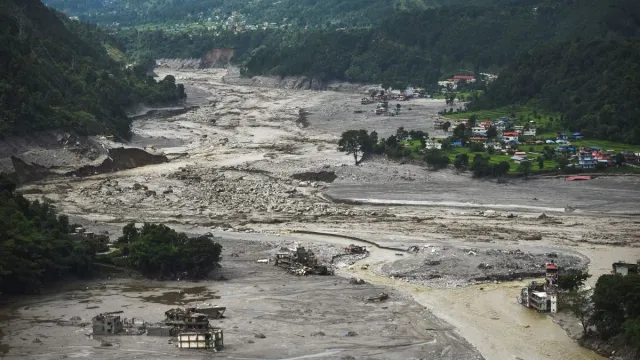
- Warning signs visible days before deadly glacier collapse.
- Satellite images showed glacier instability, meltwater changes.
- Weak early-warning systems contributed to high casualties.
Nepal Flash Floods: As rescue operations continue in flood-hit Nepal, new reports indicate that warning signs had appeared several days before a deadly glacier collapse caused devastating floods along the Nepal-Tibet border. The findings have now raised questions about whether better disaster preparedness and early-warning systems could have saved lives, especially hundreds of workers at hydropower projects downstream.
Warning Signs Seen Before Glacier Collapse
According to the HiRISK report, prepared on August 28, there were signs of possible instability in satellite images before the disaster. During the assessment, scientists found several changes in the glacier before it collapsed. Satellite images particularly showed changes on the glacier’s surface and suggested that water inside the glacier was moving faster.
VIDEO | Nepal Floods: Visuals from worst-hit Trishuli region as relief and rescue efforts using helicopters continue.#NepalFloods #Trishuli #NepalFloodNews
— Press Trust of India (@PTI_News) September 2, 2026
(Full video available on PTI Videos - https://t.co/d8jp61yd2p) pic.twitter.com/rzhY8sacGl
The report also found that meltwater had turned visibly brown in satellite images taken on August 24. Researchers also noticed a crack spreading into the nearby bedrock slope, which could have been another warning sign of instability. “In hindsight, there were some pre-event indications," the scientists said.
ALSO READ: Nepal Floods: Video Captures Glacier Collapse At 5000-Metre Height Causing Deadly Floods | Watch
Recommended For You
Early-Warning Systems Were 'Weak'
The disaster which has claimed over 1000 lives has also raised concerns about the lack of effective warning systems for people working and living downstream. According to Jakob Steiner, a geologist and co-author of the assessment, early-warning systems in the region were not strong enough. “Early-warning systems for workers in the region were very weak,” Steiner told ABC.
Nepal floods: Aerial footage shows the devastating aftermath.
— Weather Monitor (@WeatherMonitors) August 26, 2026
At least 97 people have been killed, while 403 people from 27 countries remain unaccounted for.
Among those reported missing are 62 Nepali citizens, 133 Indians, 47 Americans, and 33 Britons. pic.twitter.com/UyKMs2IJ1g
The report noted that the avalanche had moved extremely quickly. It stated that at the Nepal-China border checkpoint at Rasuwagadhi, also known as Gyirong Port, there may have been too little time to evacuate people using a conventional warning system.
Scientists said the situation was different farther downstream. In some areas, people may have had 10 minutes or more before the flood arrived. Steiner said that repeated disasters show why stronger preparation and better protection are needed for workers and communities located near hydropower infrastructure.
You May Also Like To Watch: