
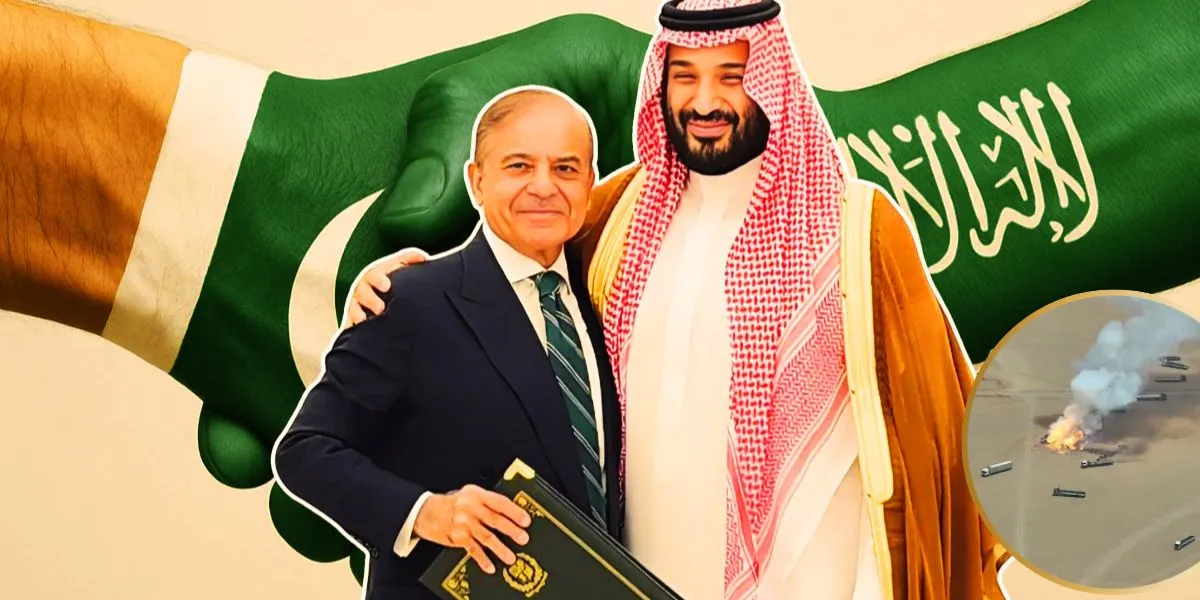
- Houthi rebels attacked Saudi energy facilities, wounding over 70.
- Attack occurred one month after Makkah defence pact activation.
- Pakistan and Turkiye remained silent despite defence agreement.
New Delhi: Yemen's Tehran-backed Houthis attacked energy facilities and cities in US ally Saudi Arabia on Tuesday, wounding more than 70 people. According to a report by CNN, airport and Aramco- a major oil sites of the Kingdom nation- were also targetted in the latest attack. Interestingly, the latest attack came exactly a month after the Makkah defence pact came into effect.
#Statement | Energy Sector Facilities Targeted in Saudi Arabia's Southern Region. pic.twitter.com/olZoupwH48
— وزارة الطاقة (@MoEnergy_Saudi) September 8, 2026
Makkah defence pact now in effect
It is worth noting that Pakistan, Saudi Arabia and Turkiye signed a key joint defence agreement on August 7 under which an "attack against one of them will be treated as an attack against all of them", amid rising security concerns following escalating tensions in West Asia.
Pakistan Prime Minister Shehbaz Sharif, Saudi Crown Prince Mohammed bin Salman and Turkish President Recep Tayyip Erdogan signed the pact after the Makkah Al-Mukarramah Summit for Joint Defence at the Al-Safa Palace in Islam’s holiest city of Mecca, according to a joint statement issued by the three countries.
The Makkah Joint Defence Agreement is "intended to strengthen collective deterrence against any act of aggression, and stipulates that any armed attack against any one of the three States shall be regarded as an attack against them all," the statement said.
Recommended For You
Experts compared the pact with Article 5 of the North Atlantic Treaty, which states that an armed attack against one NATO member in Europe or North America is considered an attack against all members.
Pakistan and Turkiye did not come to rescue Saudi
The attack on Tuesday marked a significant development, as the trilateral defence pact is now active. However, neither Pakistan nor Turkiye came to the rescue of one of its prominent members. In fact, as of writing this article, neither Islamabad nor Ankara has issued an official statement on the attack. The activation of the defence mechanism — an attack on one is an attack on all — has also not been reported by any local media organisations.
However, this was not the first time Islamabad failed to come to the aid of its partner under a defence pact. Earlier last year, Pakistan and Saudi Arabia signed a Strategic Mutual Defence Agreement in Riyadh with similar provisions in the event of an attack.
Why is the defence pact crucial for Saudi Arabia?
The enhanced defence ties come as Gulf Arab states grow increasingly wary about the reliability of the United States as their longstanding security guarantor. Israel’s attack on Qatar last year heightened those concerns.
Later this year, after the US attacked Iran, Tehran launched massive retaliatory strikes on Saudi Arabia. The attacks targeted upscale residential areas, hotels and airports. Even then, the Pakistan-Saudi Arabia defence agreement was not activated.
You may also like to watch