
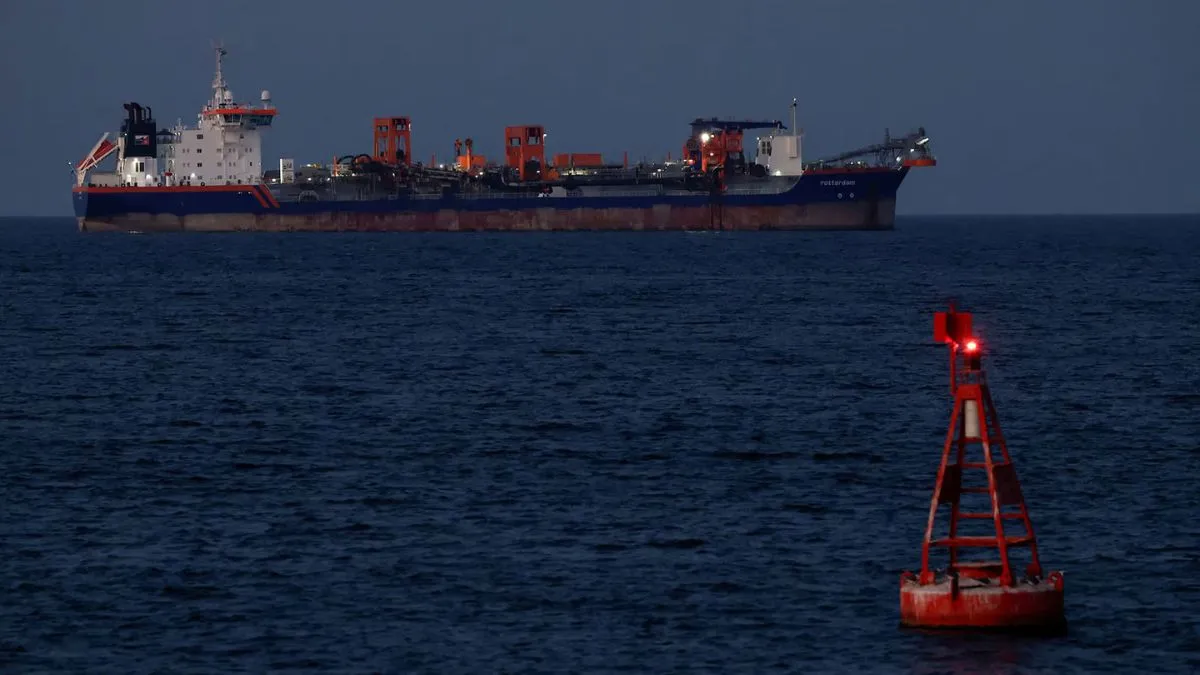
Iran-War Impact: The conflict between the United States, Israel and Iran has entered its 15th day on March 14 with no clear sign of de-escalation as missile strikes, drone attacks and air raids continue across the Middle East. Amid rising global energy concerns, a crude oil tanker carrying Saudi Arabian oil is expected to arrive in India on Saturday after successfully transiting the Strait of Hormuz, a key global energy corridor that has remained shut for two weeks since the conflict began.
According to a report by Reuters, citing four sources with direct knowledge of the matter, Iran has allowed two India-flagged liquefied petroleum gas (LPG) carriers to pass through the Strait of Hormuz despite the ongoing tensions in the region.
The report further said, citing two sources and shipping data from Lloyd's List Intelligence, that the crude oil tanker carrying Saudi Arabian oil had transited the Strait around March 1 and is now expected to reach India on Saturday.
Iran’s ambassador to India, Mohammad Fathali, on Friday confirmed that Tehran would allow vessels bound for India to pass safely through the Strait of Hormuz despite the conflict in West Asia, citing the longstanding ties between the two countries.
Iran said it would allow Indian-bound ships safe transit through the Strait, which is one of the critical routes for global energy trade. Fathali said, "Yes. Because India and I are friends. You can see the future, and I think that after two or three hours. Because we believe that. We believe that Iran and India are friends. We have common interests; we have a common fate."
ALSO READ: Trump Says US Bombed Kharg Island Amid Middle East Conflict; Why Is It Called Iran's 'Crown Jewel'?
Abdul Majid Hakeem Ilahi, representative of Iran's Supreme Leader in India, said that Iran never wanted the Strait to be blocked, but "some ships are still passing".
Meanwhile, the Union Petroleum Ministry on Friday said that the supply of LPG to domestic households across India remains uninterrupted, with consistent deliveries also being ensured for hospitals and educational institutions.
Joint Secretary (Marketing & Oil Refinery) at the Ministry, Sujata Sharma, stated that domestic LPG production has increased by 30 per cent compared to March 5. She noted that the country's refineries are currently producing 30 per cent more LPG to strengthen supply.
Recommended For You
"Uninterrupted supply to domestic households has been ensured. Similarly, LPG supplies are also being provided to hospitals and educational institutions. Domestic production of LPG has increased by 30 per cent as of today; compared to March 5, our refineries are currently producing 30 per cent more LPG. Regarding commercial cylinders, these have been placed at the disposal of the state governments to facilitate priority distribution. We are requesting the state governments to determine the priority criteria and ensure that these commercial cylinders effectively reach the intended consumers," said Sujata Sharma.
Sharma informed us that the central government has also approved an extra allocation of 48,000 kilolitres of kerosene over the regular quota. States have been asked to identify specific distribution points within their districts to facilitate their supply. The government has urged citizens to remain calm and avoid panic booking of LPG cylinders.
The Middle East conflict started following the killing of 86-year-old Iran's Supreme Leader, Ayatollah Ali Khamenei, in joint military strikes by the US and Israel, after which Iran, in its retaliation, targeted Israeli and US assets in several Gulf countries and Israel, causing disruption in the waterway and affecting international energy markets and global economic stability since February 28.
Due to the conflict in the region, the Strait of Hormuz, a critical transit route for global energy supply, has reportedly been inoperable.