
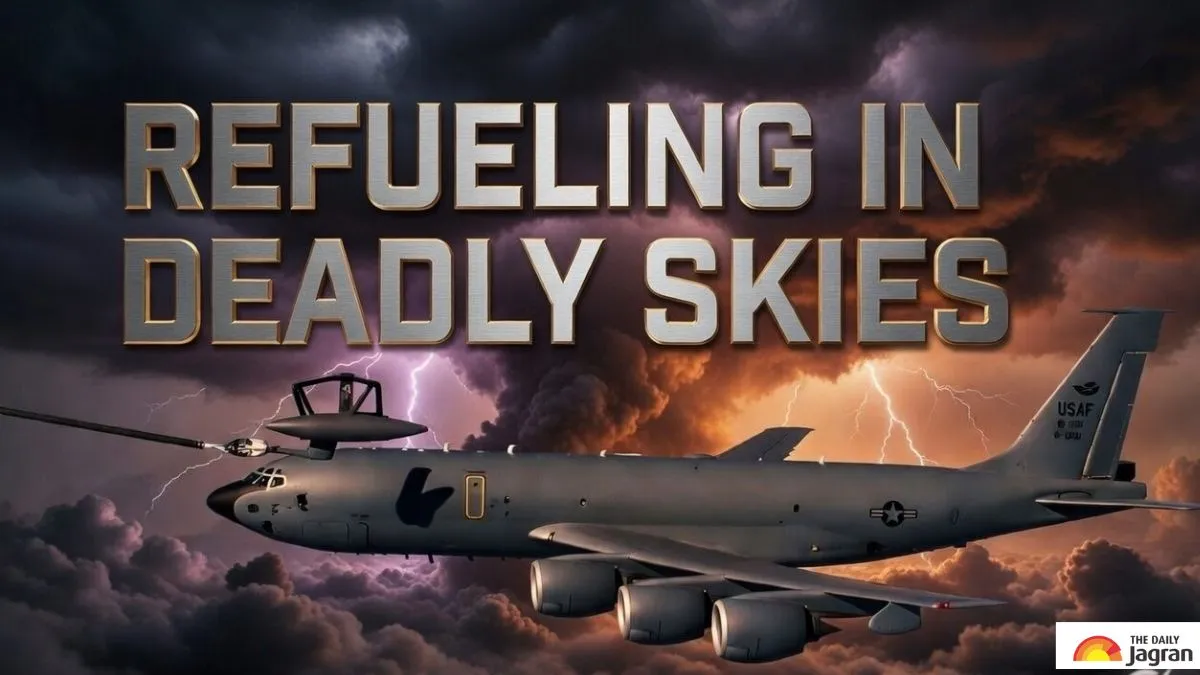
- Four US crew members died in Iraq plane crash.
- Aircraft crashed during critical mid-air refueling mission.
- Despite risks, aerial refueling is vital for military.
A US military aircraft crashed during a refuelling mission in Iraq on Thursday, resulting in the killing of at least four crew members. US Central Command (CENTCOM) has now said four of the six crew members on board have been confirmed dead.
Earlier today, Iranian media claimed a Tehran-led resistance group was behind the shootdown of the US military refuelling plane. It said the group fired missiles towards the aircraft, resulting in the crash; however, CENTCOM rejected the claims.
Four Confirmed Deceased in Loss of U.S. KC-135 Over Iraq
— U.S. Central Command (@CENTCOM) March 13, 2026
TAMPA, Fla. – At approximately 2 pm ET on March 12, a U.S. KC-135 refueling aircraft went down in western Iraq. Four of six crew members on board the aircraft have been confirmed deceased as rescue efforts continue.
The…
What is mid-air fueling?
Mid-air refueling is a critical but high-risk operation in military aviation, allowing aircraft to extend their range, remain airborne longer, and execute strategic missions without needing to land. This practice, while essential, comes with significant dangers, as history has shown.

One of the most deadly accidents occurred in 1966, when a B‑52 nuclear bomber collided with a KC‑135 refuelling tanker over Palomares, Spain. The crash killed seven crew members and scattered nuclear bombs on land and sea, highlighting the extreme stakes involved in aerial refuelling. Despite this, militaries continue the practice because the benefits often outweigh the risks.
Recommended For You
Why do pilots choose mid-air fueling?
Mid-air refuelling allows bombers, fighter jets, and transport aircraft to operate across continents and over conflict zones where landing options are limited. For nuclear-capable aircraft or long-range strategic bombers, refuelling mid-flight is the only practical way to reach distant targets or maintain a continuous airborne presence. It also provides tactical flexibility, enabling rapid redeployment, prolonged air patrols, and faster response times during crises.
How risky is mid-air fueling?
Even modern incidents, such as recent crashes involving US military refuelling aircraft, underscore the inherent hazards. Pilots must maintain precise formation under challenging conditions, often at high speeds, in varying weather, and sometimes at night. Minor miscalculations can lead to catastrophic collisions.
Why do pilots choose such a bold risk mid-air?
Despite these risks, training, technological improvements, and rigorous safety protocols have made mid-air refuelling a standard practice for air forces worldwide. The ability to refuel mid-flight enhances operational reach, supports allied forces, and sustains missions that would otherwise be impossible.
From the 1966 B‑52 disaster to today’s recent crashes, the lesson remains clear: aerial refuelling is dangerous but indispensable. The strategic advantages it offers make it a calculated risk that militaries accept to maintain global reach and operational superiority.
(With inputs from agency)