

Hamas Political Bureau chief Ismail Haniyeh was killed in an attack in Iran's capital Tehran on Wednesday, the Islamic Revolutionary Guard Corps (IRGC) announced on Wednesday. The IRGC stated that Haniyeh and one of his bodyguards were killed when their residence was targeted in Tehran.
"With condolences to the heroic nation of Palestine and the Islamic nation and the combatants of the Resistance Front and the noble nation of Iran, this morning (Wednesday) the residence of Ismail Haniyeh, the head of the political office of the Islamic Resistance of Hamas, was hit in Tehran, and following this incident, he and one of his bodyguards were martyred," the IRGC statement read.
Who Was Ismail Haniyeh?
Ismail Haniyeh was a prominent figure in Palestinian diplomacy, known for his tough rhetoric but considered a moderate within the Iran-backed group. Appointed as Hamas' top leader in 2017, Haniyeh operated from Turkey and Qatar, avoiding the travel restrictions of the Gaza Strip. This allowed him to engage in ceasefire negotiations and maintain relations with Hamas' allies, including Iran.
Haniyeh was born in the al-Shati refugee camp in Gaza in 1962. He studied at the Islamic University of Gaza, where he became involved with Hamas and graduated with a degree in Arabic literature in 1987. His political career began in earnest in 1997 when he was appointed to head a Hamas office.
Ismail Haniyeh's Rise In Hamas
During the First Intifada in 1987, Haniyeh was imprisoned for protesting Israeli occupation. He was later deported to southern Lebanon with other senior Hamas leaders but returned to Gaza after the Oslo Accords. Haniyeh became a close aide to Hamas co-founder Sheikh Ahmed Yassin and rose to prominence within the organisation.
In 2001, amid the Second Intifada, Haniyeh solidified his position as a key political leader. He survived an Israeli assassination attempt in 2003 and continued to lead after Yassin was killed in 2004. Ismail Haniyeh's advocacy for Hamas' political engagement led to his appointment as Palestinian prime minister in Gaza following the group's 2006 electoral victory defeating Fatah.
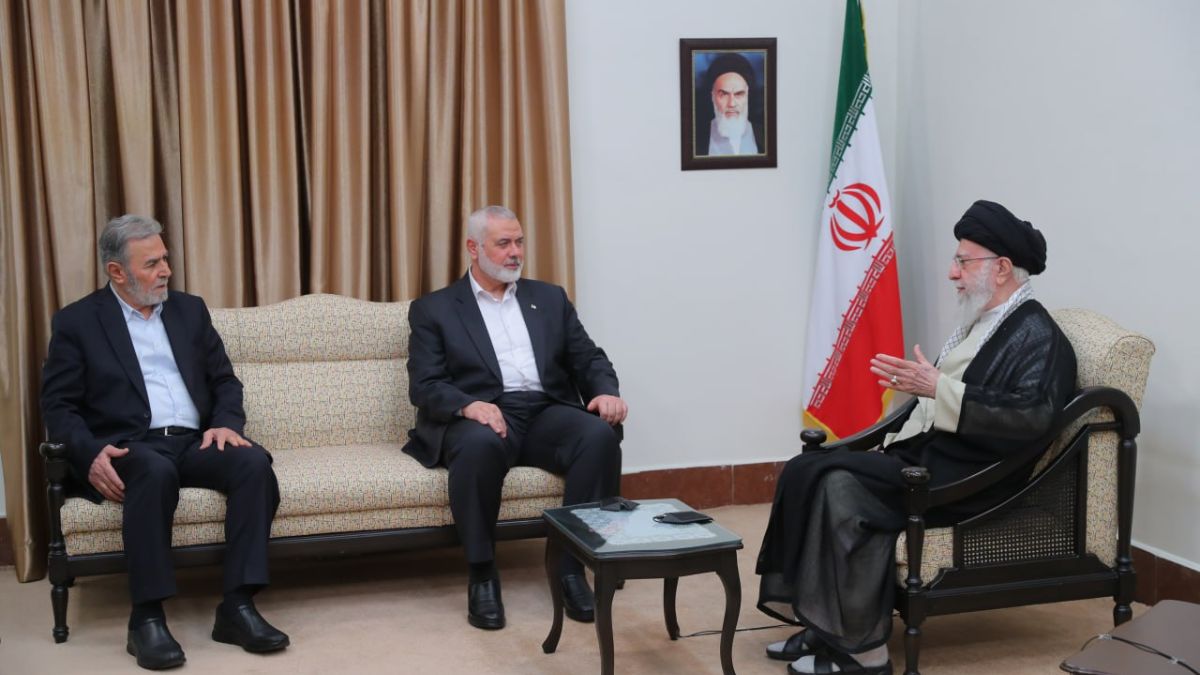
Ismail Haniyeh Leadership
Hamas took control of Gaza in 2007. In 2013, Haniyeh affirmed that the group's resistance would continue in all forms, including political and military efforts. However, after the “Operation Al-Aqsa Flood” on October 7, 2023, Israel's military campaign in Gaza resulted in the death of over 35,000 Palestinians, led Ismail Haniyeh at the forefront of global diplomacy, whose continued efforts for the Palestinian interests made headlines since the Israeli aggression on Gaza began.
Ismail Haniyeh's personal losses were significant in the Israel-Hamas War. In April 2024, three of his sons and four grandchildren were killed in an Israeli airstrike. Despite these tragedies, Haniyeh maintained that the Palestinian people's interests were paramount.
Ismail Haniyeh's Death: Impact On Israel-Hamas War
Ismail Haniyeh's death marks a significant shift in Hamas' leadership. Known for his shuttle diplomacy, he had been negotiating ceasefire deals and prisoner exchanges. His probable successor, Yahya Sinwar, is seen as a hardliner with strong military credentials. Sinwar, who spent over two decades in Israeli prisons, has taken a more aggressive stance compared to Haniyeh.
-1722403387255.jpg)
Ismail Haniyeh's death could further escalate tensions in Gaza and complicate ongoing diplomatic efforts. Haniyeh had been leading the political battle for Hamas, maintaining close ties with both hardline figures and the group's military wing. The loss of Ismail Haniyeh is a critical blow to Hamas, potentially altering the course of the conflict in Gaza.
(With Agency Inputs)