

- Protests demand systemic reforms, not condoning academic irregularities.
- Students seek accountability and improved mental health support after tragedy.
- Call for impartial inquiry, student-led reforms, rejecting external influence.
IIT Bombay Student Suicide Case: Amid the 20-year-old student suicide protest, Student representatives from IIT Bombay issued an official statement clarifying that their recent campus protests were not intended to defend or justify academic irregularities. While expressing grief over the tragic death of second-year B.Tech student Sahil Wakode, the representatives emphasised that the movement was a collective effort to highlight long-standing systemic flaws, ensure institutional accountability, and demand major structural reforms to prevent such tragic incidents in the future.
Clarifying their stance on the case of Professor Suryanarayana Doolla, the student body stated that they do not consider him guilty and support him as a faculty member; however, to ensure an impartial inquiry, they demanded that he be temporarily relieved of his administrative responsibilities as Dean. The representatives also rejected external political interference, asserting that reforms should be student-led and driven entirely from within the institute's community.
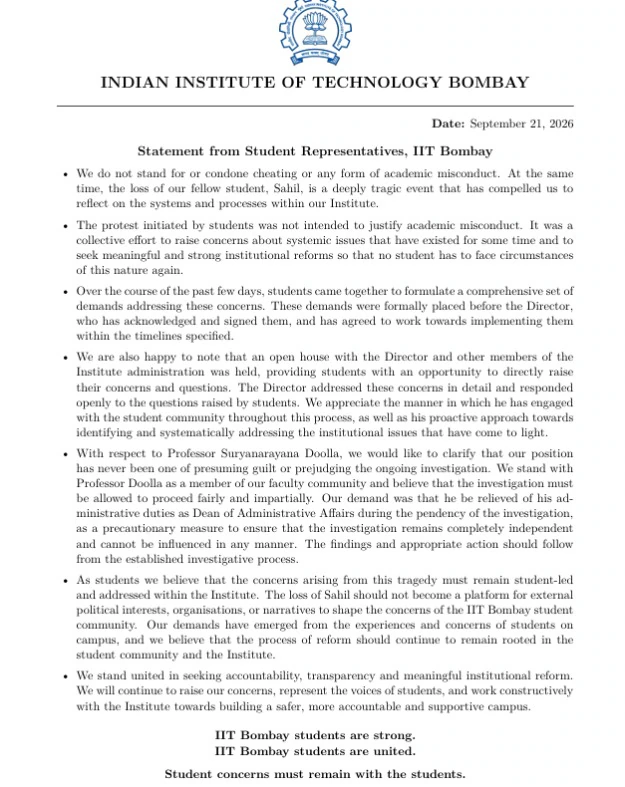
Protests Driven by Systemic Concerns, Not Misconduct:
Addressing widespread public discourse surrounding the incident, the student representatives stated unequivocally that they do not stand for or condone cheating in any form. However, they highlighted that Sahil's death compelled the student community to reflect on underlying institutional pressures, mental health infrastructure, and administrative handling of academic distress.
After an open-house session with Director Shireesh Kedare, administration officials acknowledged the charter of demands submitted by students and committed to actionable timelines for systemic reform.
Position on Professor Doolla and Investigation Integrity:
The statement also addressed the administrative action concerning Professor Suryanarayana Doolla, who served as the course invigilator during the exam. Student representatives clarified that they stand with Prof. Doolla as a member of the faculty and have never presumed his guilt before the completion of official investigations.
They explained that demanding his removal as Dean of Administrative Affairs was strictly a precautionary step intended to ensure the ongoing legal and institutional probes remain completely independent and free from administrative influence.
Rejection of External Political Narratives:
Emphasising campus autonomy, the student body pushed back against external organizations attempting to frame the tragic event through outside political lenses. The representatives asserted that the loss of a fellow student should not be exploited as a platform for external political interests or agendas.
They reiterated that all concerns, demands, and ongoing reform measures must remain strictly student-led, transparent, and deeply rooted within the IIT Bombay campus community.