
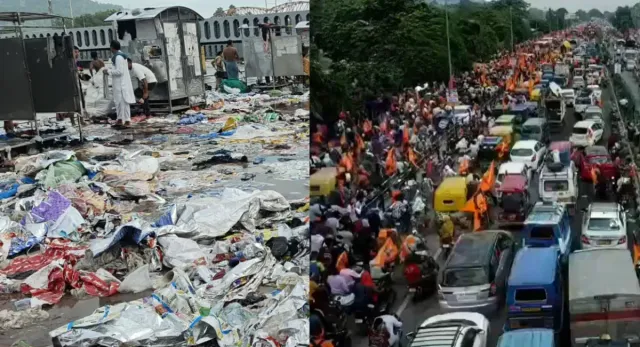
- Kanwar Yatra's changing nature poses new challenges.
- Traffic violations, security risks, and massive waste observed.
- States need coordinated policy for future Kanwar Yatras.
The Kanwar Mela is one of the biggest religious pilgrimages in North India, with Haridwar and Rishikesh serving as its main centres. Every year, millions of Shiva devotees travel to these destinations to collect Ganga water and carry it back to their respective places.
The scale of the pilgrimage has grown significantly over the years. This year, around 4.8 crore devotees reached Haridwar in just 12 days. However, alongside the increasing participation, the yatra's changing nature has emerged as a major challenge for the police and administration.
Traditional Kanwar Yatra Gives Way To New Trends
Earlier, the Kanwar Yatra was largely associated with disciplined walking pilgrimages, devotees chanting “Jai Bhole” and “Bol Bam” while carrying Ganga water in traditional Kanwars. However, in recent years, new trends such as Dak Kanwar, heavy Kalash Kanwar, modified vehicles and large sound systems have become increasingly common.
Recommended For You
The growing use of bikes without silencers, modified vehicles, loud DJs and riders violating traffic rules has created difficulties for authorities managing the massive movement of devotees.
Traffic Violations And Security Concerns Rise
During the final days of the Kanwar Mela, the number of Dak Kanwar processions increased sharply. Temporary parking areas had to be created at several locations, while bikes and other vehicles were seen parked along highways.
Many Kanwar pilgrims camped near roads, while vehicles with loud DJs, modified structures and bikes carrying three to five people without helmets became common sights.
Authorities also reported incidents involving minor collisions and disputes. In some cases, pilgrims were seen breaking barricades, crossing dividers illegally and using unsafe methods such as climbing down from flyovers with ropes and wires.
Over 7,000 Metric Tonnes Of Waste Left Behind
The movement of millions of devotees also created a major sanitation challenge in Haridwar. Large quantities of plastic waste, food packaging, bottles and other garbage accumulated along routes and ghats.
Despite additional sanitation arrangements, controlling single-use plastic remained a challenge, especially around areas near Har Ki Pauri. The Kanwar Yatra this year left more than 7,000 metric tonnes of waste in Haridwar city.
Need For Joint Policy By States
With the number of devotees increasing every year, officials believe that Uttarakhand, Uttar Pradesh, Haryana and Delhi will need to prepare a coordinated policy for future Kanwar Yatras.
ALSO READ: Delhi Traffic Alert: Heavy Rain And Kanwar Yatra Restrictions Snarl NH-9; Advisory Issued
The policy could include regulations on Dak Kanwar vehicles, vehicle types, DJ sound limits, passenger capacity, helmet rules, parking arrangements, routes and speed limits. Authorities also suggested that pilgrims should be informed about these rules before entering Haridwar.
Haridwar District Magistrate Mayur Dixit said that efforts were made to control loud DJs, unruly behaviour and vehicles without silencers, adding that a detailed report with suggestions for improving future arrangements would be submitted to the government.
Haridwar SSP Navneet Singh Bhullar said that faith and discipline must go together during the Kanwar Yatra. He added that police have taken action against traffic violations and that future security and traffic plans will be strengthened through better coordination between states.