
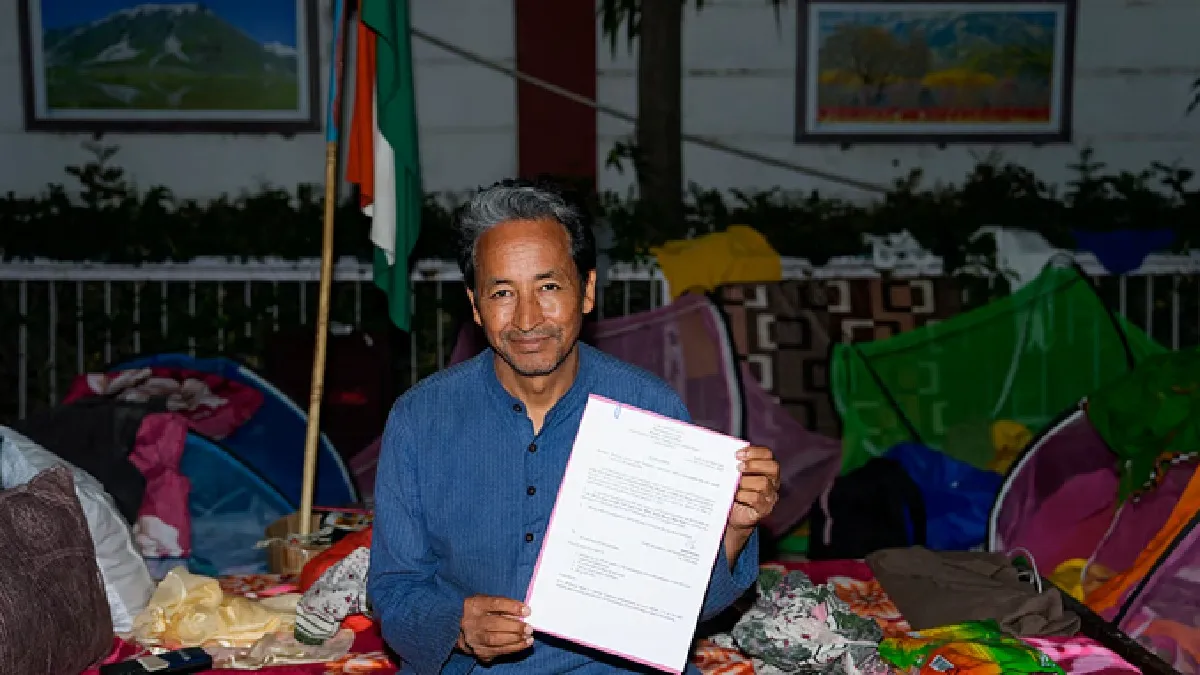
The government on Saturday issued a statement saying it has decided to revoke with immediate effect the detention of climate activist Sonam Wangchuk under the National Security Act. Wangchuk was detained on September 26 last year, two days after violent protests demanding statehood and Sixth Schedule status for Ladakh left four people dead in the Union territory. The government accused him of inciting the violence.
Centre's Move Comes After SC Reserves Order
The Centre's move comes three days after the Supreme Court said it would watch videos of Wangchuk's speeches this week and reserved its order on March 17 on a plea filed by the jailed climate activist's wife Gitanjali J Angmo challenging his detention under the National Security Act (NSA).
ALSO READ: 'In AI Era, Precision Should Be 98%': SC Pulls Up Centre Over Translation Of Sonam Wangchuk's Speech
A bench of justices Aravind Kumar and PB Varale said the judges would watch the videos this Thursday and they have requested the registrar to make arrangements for the screening.
"The judges will be watching the videos on Thursday. First we will watch the videos independently and then both the judges will watch the videos together," Justice Kumar said. Additional Solicitor General KM Nataraj, appearing for the Centre and Union Territory of Ladakh administration, said Solicitor General Tushar Mehta was unwell and had requested for adjournment of the hearing in the matter.
Recommended For You
Centre Opposed Wangchuk's Bail On Health Condition
Earlier, the Centre had opposed Wangchuk's plea, seeking release on health grounds. When the top court asked the Centre if there was any possibility for the government to have a relook at the detention of Wangchuk, considering his health condition, the government denied his release, saying he was responsible for violence in Leh on September 24 last year, in which four people died, and 161 were injured.
What Were Charges Against Wangchuk?
The Centre and the Ladakh administration had alleged that Wangchuk was detained for instigating people in a border area where regional sensitivity was involved. The Centre had said that Wangchuk tried to instigate the Gen Z for protests similar to Nepal and Bangladesh. Justifying Wangchuk's detention, Mehta had told the bench that all procedural safeguards were followed while ordering his detention under the NSA. The NSA empowers the Centre and states to detain individuals to prevent them from acting in a manner prejudicial to the defence of India. The maximum detention period is 12 months, though it can be revoked earlier.
(With PTI inputs)