
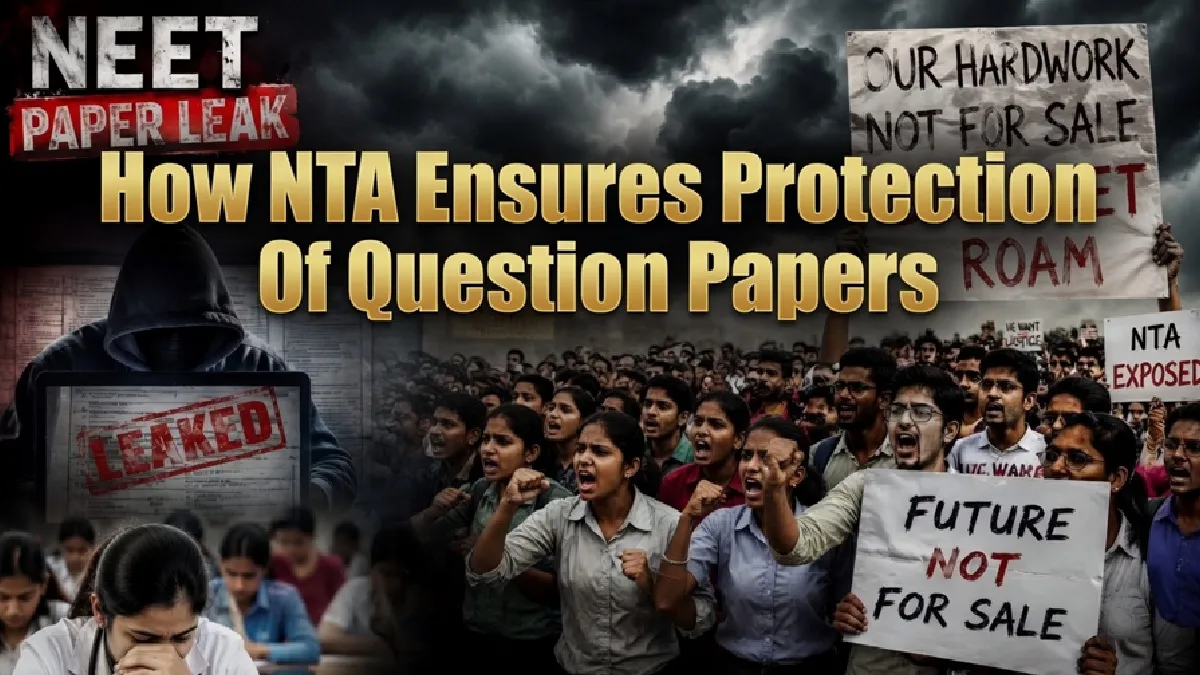
NEET UG Paper Leak Row: The National Testing Agency (NTA) drew severe criticism after the paper leak menace hit the prestigious NEET (National Eligibility cum Entrance Test), prompting the authorities to cancel the examination and order a CBI probe. After 2024, this is the major paper leak in the entrance test for the medical colleges. The NTA on Tuesday announced the cancellation of NEET (UG) 2026, conducted on May 3, saying the examination will be re-conducted on dates to be notified separately.
It is yet to be probed how, despite a multi-layer security system in place to conduct the NEET-UG 2026 exam, the papers were leaked. The examination was held across 551 cities in India and 14 cities abroad for over 22.79 lakh candidates.
ALSO READ: NEET-UG 2026 Paper Leak Row: CBI Cracks Down With FIR, Multi-City Raids
Safety During Transport Of The Question Papers
NTA follows strict multi-layer protocols for transporting NEET question papers to examination centres. Question papers are moved in specially equipped, GPS-tracked vehicles for real-time monitoring. The vehicle gets full police protection, and escort teams accompany it throughout the journey. Digital locks are installed on the boxes containing the question papers.
Recommended For You
Aiming to crack down on ‘solver gangs’, the testing agency makes AI-based Facial Recognition and Digital e-KYC mandatory, and the photograph captured during the registration process, after cross-matching with the student's actual face inside the examination hall. 5G Jammers and Smart Surveillance are deployed to completely make mobile data, Bluetooth, and Wi-Fi signals within the vicinity of the examination centre ineffective.
ALSO READ: 'Crime Against Future Of Youth': Rahul Gandhi's Scathing Attack On Govt Over NEET UG Cancellation
How NTA Ensures the Safety Of Question Papers
- The NTA puts a multi-layered security framework to ensure a fair and transparent examination. End-to-end secure handling of confidential materials (question papers) to designated locations under sealed protocols.
- CCTV surveillance at all examination centres, with feeds linked to centralised control rooms.
- Mandatory frisking through high-sensitivity metal detectors before entry, with strengthened manpower and equipment at every centre.
- Aadhaar-based biometric authentication to prevent impersonation.
- Real-time monitoring through centralised control systems.
Monitoring of Social Media
In addition, active monitoring of social media platforms is being undertaken to curb misinformation and prevent malpractice. More than 65 Telegram channels have been blocked for circulating fake question papers and false rumours intended to mislead and defraud candidates. NTA has filed complaints with cybercrime authorities and is taking strict action against those involved.
Provision For Biometric Verification Exceptions
As per NTA’s advisory dated 29 April 2026, candidates whose biometric verification cannot be completed at the examination centre due to technical malfunction of devices, poor fingerprint quality, UIDAI connectivity issues, or any physical inability will not be denied entry to the examination hall. Such candidates will be required to sign a written undertaking — the format of which will be made available at the centre with the Centre Superintendent or Observer and will then be permitted to write the examination without disturbance during the main exam window. Manual identity verification will be carried out using valid documents in such cases.