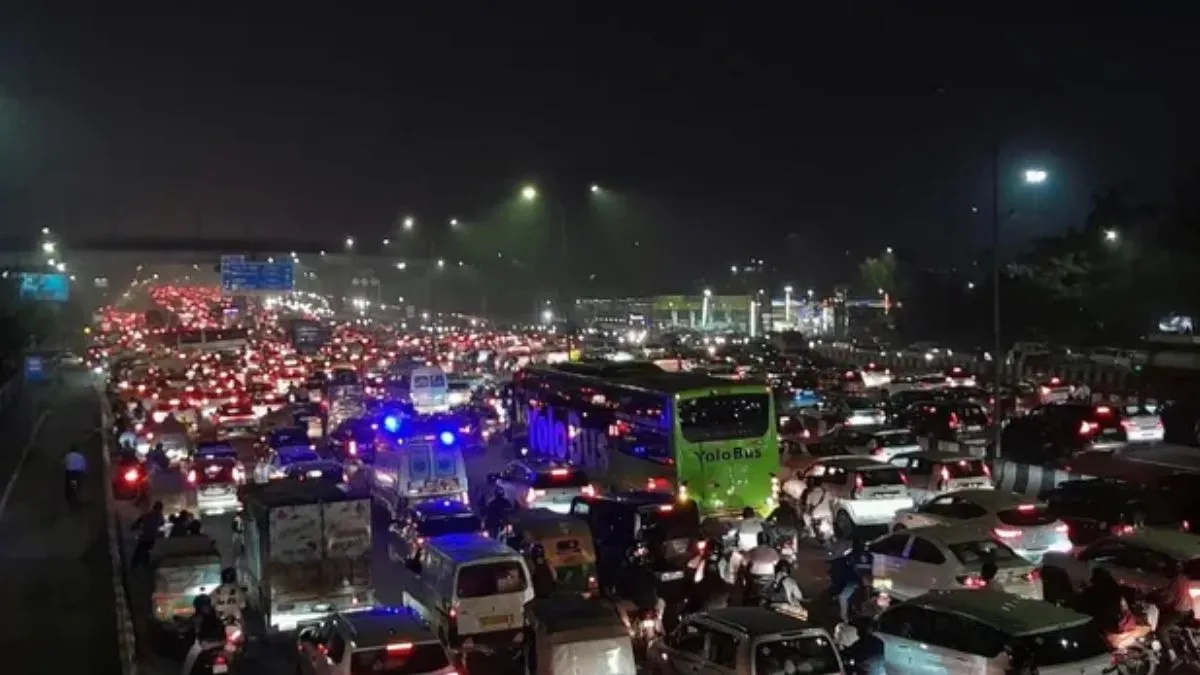
- Vehicular emissions are a major contributor to Delhi's worsening air quality.
- Traffic congestion significantly increases harmful carbon dioxide and other emissions.
- Air quality expected to further deteriorate post-Diwali, posing health risks.
Delhi Air Pollution: The air quality of Delhi-NCR has significantly deteriorated ahead of Diwali, leading to concerns among the residents and the authorities. While there are several major contributors to the situation, vehicular emissions to a large extent have severely worsened the air quality, multiple reports suggest. The dangerous gases and pollutants cause damage to respiratory organs and are extremely dangerous for children and elders.
Surge In Vehicular Emissions
Ahead of the major festivals Diwali and Chhath Puja, the residents of Delhi and nearby cities are travelling in record numbers for shopping purposes. The traffic congestion in the crowded regions and at the vehicle checking centres cause a surge in emissions of the harmful gases. The emission of carbon dioxide, carbon monoxide, and nitrogen oxides chokes the surface air, leading to a dip in visibility and health concerns.
Traffic Congestion: A Major Concern
The heavy traffic congestion has emerged as a significant concern as the functioning of engines during congestion increases fuel consumption and carbon dioxide emissions. The reports suggest that a petrol car's running engine during the congestion emits approximately 30.7 grams of carbon dioxide per minute. The magnitude of the issue can be understood by an example – if 400 cars remain stuck at the Sarhaul border with their engines running for 10 minutes, it will emit about 123 kg of carbon dioxide.
Recommended For You
How Lethal Are Chemicals?
As per TERI's 2021 draft emissions inventory, vehicular emissions accounted for about 47 per cent of Delhi's PM 2.5 emissions, 78 per cent of nitrogen oxides, and 49 per cent of non-methane volatile organic compounds. The reports suggest that vehicular emissions' contribution to air pollution in winter is around 15 to 20 per cent.
Anumita Roy Chowdhury, Executive Director of the Centre for Science and Environment (CSE), stated that while it is necessary to check the old polluting vehicles, the authorities must also ensure that the process does not lead to traffic congestion, reported Jagran.com. As per the reports, the air quality of the region is likely to further deteriorate in the coming weeks, especially after Diwali.