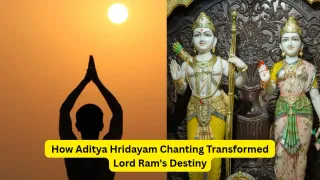
The Aditya Hridayam is a hymn of the Yuddha Kanda of Valmiki Ramayana (the chapter of war) and is dedicated to the Sun God (Surya). Great sage Agastya recited this hymn to Lord Rama on the battlefield when he was extremely tired and feeling anxious.
It is believed that chanting this hymn daily brings happiness and absolves karmic sins, troubles and sorrows.
Let's understand what the Aditya Hridayam hymn is, why it was recited to Lord Rama on the battlefield, and how one can chant it in the morning.
What Is Aditya Hridayam Hymn?
Aditya Hridayam Stotram is a powerful 31-verse hymn that glorifies the Sun God, known as the Heart of Aditya. The word 'hridayam' refers to the one (ayam) who is shining or dwelling in the heart (hridi).
Aditya is derived from ‘ad’, meaning ‘to enjoy’ or to perceive all sense objects like sound, touch, form, taste and smell, after entering the heart.
Aditya Hridayam Stotram is a powerful 31-verse hymn that glorifies the Sun God (Image: Pexels)
How Is It Connected To Lord Rama?
In Chapter 105 of the Yuddha Kanda in Valmiki’s Ramayana, Lord Ram experiences physical and mental exhaustion mid-battle. Seeing this, Sage Agastya approached him and revealed the Aditya Hridayam.
Sage Agastya described the hymn as:
- Sarva Shatru Vinashanam- destroyer of all enemies, both external obstacles and internal doubt.
- Jayavaham Ghanakshayam- the grantor of victory and the eliminator of sorrow.
By invoking Surya, the eternal source of energy, light, and cosmic order, Lord Ram regained his energy, got mental clarity and was able to defeat Ravana.
Why Aditya Hridayam Stotram Should Be Chanted In The Morning?
Chanting this strotram early in the morning has both spiritual and scientific benefits:
1. Dissolves Self-Doubt And Mental Fatigue
Just as it restored Lord Ram’s resolve on the battlefield, reciting the hymn at Brahma Muhurat is believed to clear mental brain fog.
2. Harnesses Solar Energy For Health And Vitality
In Ayurveda and Vedic astrology, the Sun governs the heart, eyes, bones, and overall vitality. Chanting the hymn facing the morning sun combines sound vibration with early-morning sunlight, boosting natural circadian rhythms and vitamin D absorption.
3. Provides Protection
While Lord Ram fought physical demons, in today's world people face inner battles like anxiety, procrastination, anger, and fear. Chanting this hymn helps to build focus purely on duty and righteousness.
Just as it restored Lord Ram’s resolve on the battlefield, reciting the hymn at Brahma Muhurat is believed to clear mental brain fog (Image: Pexels)
4. Cultivates Universal Gratitude
The stotram praises the Sun not just as a deity, but also highlights its importance, without which there is no life on earth. Starting your day with this perspective fosters deep humility and cosmic connection.
5. Karmic Protection
Helps neutralise negative planetary influences associated with an afflicted Sun in one’s horoscope.
ALSO READ: September 2026: 50+ Morning Affirmations To Start The New Month With Positive Energy
How To Chant Aditya Hridayam Correctly?
To gain the maximum benefit from this ancient hymn, follow these simple guidelines
Time: Ideally, it should be chanted during sunrise (or early morning after bathing).
Direction: Face East toward the rising Sun.
Offerings: Offer water in a copper vessel toward the Sun while standing.
How Many Times To Chant: Recite the full stotram 3 times daily for maximum energy with sincere devotion.
ALSO READ: Why Do Hindus Look At Their Palms After Waking Up? Know The Meaning Of Karagre Vasate Lakshmi
The Aditya Hridayam isn't just an ancient prayer. By starting your morning with the same hymn Lord Ram used to conquer dark energies, you align yourself with clarity, strength, and unwavering energy for whatever battles your life offers you.
FAQs
1. Can women chant Aditya Hridayam?
Absolutely. Spiritual texts and Vedic scholars confirm that anyone seeking clarity, health, and courage can chant the Aditya Hridayam regardless of gender or background.
2. What if I cannot pronounce Sanskrit correctly?
While accurate Sanskrit pronunciation creates beneficial acoustic vibrations, sincere intent (Bhava) matters most. Listening to high-quality audio renditions while reading the translation is an effective starting point.