
Moving into a new home represents a new beginning and a new chapter for a family. While Griha Pravesh (housewarming ceremony) marks the initial entry, performing a Satyanarayan Puja after that is considered most important.
People perform this puja to express gratitude, seek Lord Vishnu's divine blessings and invite peace and prosperity in the household.
Let's understand what Satyanarayan Puja is and why it is performed when moving into a new house.
What Is Satyanarayan Puja?
The word Satyanarayan is derived from two Sanskrit words: Satya, meaning truth, and Narayan, referring to Lord Vishnu (the preserver of the universe). It is a ritual dedicated to Lord Vishnu.
Satyanarayan Puja is performed on special occasions during housewarmings, births and other significant life events to seek blessings and express gratitude to Lord Vishnu.
According to Skanda Purana, Narad Munni once descended to Earth and saw people suffering. Deeply saddened, he asked Lord Vishnu to end people's miseries. Lord Vishnu then explained the power of Satyanarayan Puja that can help them overcome struggles and bring success.
People also sometimes perform Satyanarayan Katha to express their gratitude towards the divine for their achievements and success.

Satyanarayan Puja is dedicated to Lord Vishnu (Image: Facebook/ Lordvishnu)
Significance Of Performing Satyanarayan Puja In A New Home
Satyanarayan Puja holds immense spiritual importance. Here's how:
1. Expresses Gratitude
Buying a home is viewed not just as a personal achievement, but as a divine grace. Families perform the puja to express gratitude to Lord Vishnu for providing shelter, protection, and the resources to build or buy the property.
2. Cleansing Space And Vastu Remedy
Before a house becomes a home, it has leftover energies from construction, previous residents or the land itself. Chanting sacred Sanskrit mantras and performing Havan purifies the space.
It is also believed to neutralise minor Vastu dosh caused by design or directional placement of certain things without needing physical structural changes.
3. Invokes Prosperity And Stability
Lord Vishnu is the divine consort of Goddess Lakshmi (the deity of wealth and abundance). By worshipping Lord Vishnu in his Satyanarayan form, families also invite Goddess Lakshmi into the household.
4. Accessible To All
According to the Reva Khanda of the Skanda Purana, anyone can perform Satyanarayan katha irrespective of background, gender, or social status. The prayer focuses more on genuine devotion than perfection, making it ideal for modern households looking for a meaningful ceremony.
Recommended For You
ALSO READ: Griha Pravesh Ritual: Why Is Milk Boiled In A New Home For The First Time?
5. Community Bonding And Sharing Prasad
The Satyanarayan Puja traditionally ends with two vital community elements:
1. Hearing the Katha (Moral Stories): The priest recites five short stories emphasising truthfulness, humility, and the keeping of vows.
2. Distributing prasad: A simple, specific sweet mixture made of wheat flour, sugar, ghee, milk, and banana is distributed to neighbours, extended family, and friends. This act transforms the living space into a welcoming host space for the community.
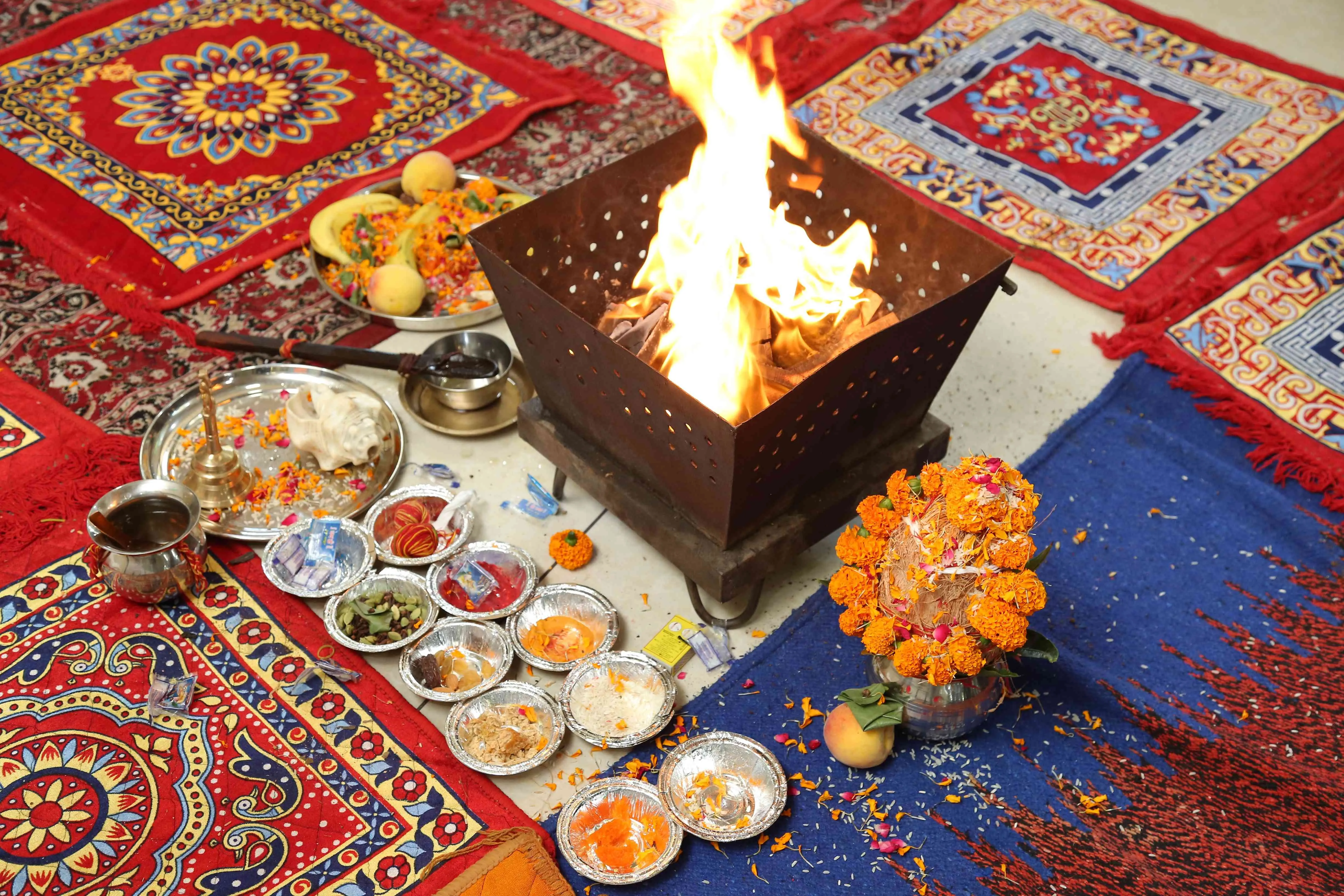
Chanting sacred Sanskrit mantras and performing Havan purifies the space (Image: Pexels)
ALSO READ: 5 Critical Rules For Griha Pravesh: Auspicious Timings, Vastu And Mistakes To Avoid
Performing a Satyanarayan Puja after moving is all about intention. It turns your house into a sacred space by filling it with gratitude, positive energy and communal harmony.
FAQs
1. When should Satyanarayan Puja be performed?
Many families prefer performing Satyanarayan Puja during auspicious occasions such as housewarming ceremonies, weddings, birthdays, anniversaries, and other important family milestones.
2. Why is Satyanarayan Puja performed?
Many families prefer performing Satyanarayan Puja at home because it creates a peaceful spiritual atmosphere and promotes communal harmony.
3. What is the importance of Satyanarayan Katha?
The Satyanarayan Puja is incomplete without the Katha. It contains five sacred stories about the importance of devotion, faith, sincerity, ethics and perseverance in one's relationship with the divine.