
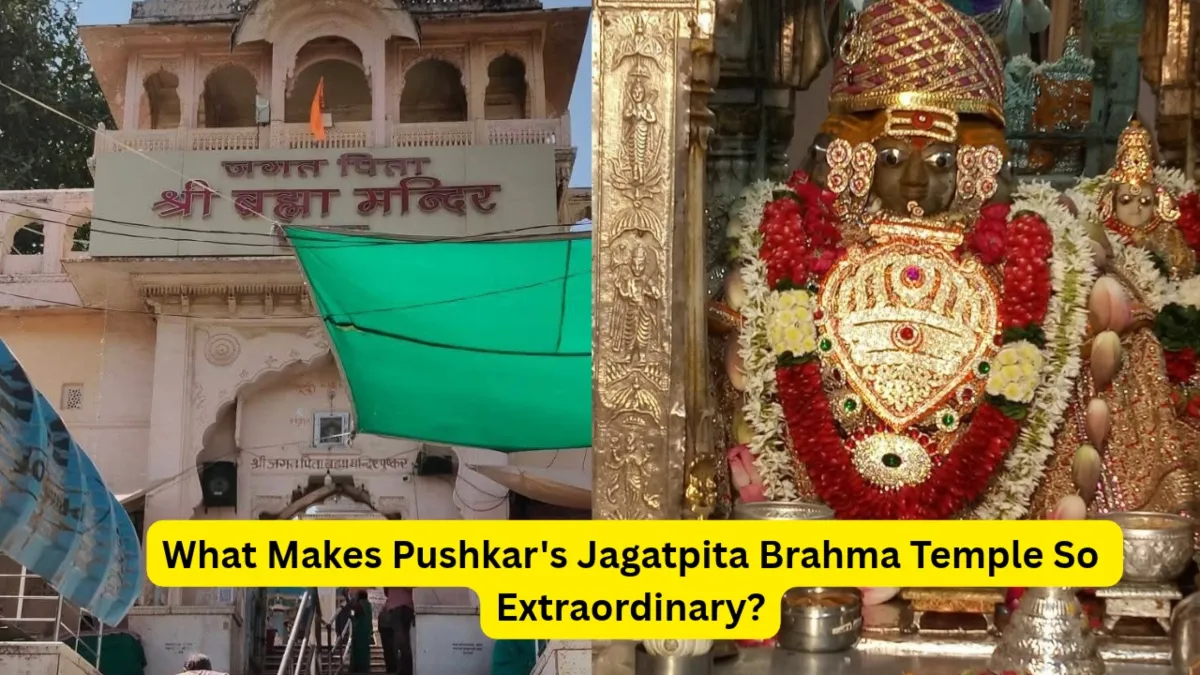
Located in the small town of Pushkar, Rajasthan, Jagatpita Brahma Temple holds immense importance for devotees and visitors, as it is one of the few temples in the world dedicated to Lord Brahma, the creator of the universe.
The temple is believed to be over 2000 years old and is primarily built of marble. The temple that stands today dates back to the 14th century.
Let’s take a look at five interesting facts about why Pushkar's Brahma Temple is so unique and unlike any other temple on Earth.
1. Goddess Savitri’s Unforgiving Curse
According to the Padma Purana, Lord Brahma performed a cosmic Yajna (fire sacrifice) in Pushkar to protect the Earth. To complete this ritual, he needed his wife, Goddess Savitri, by his side. However, she was running late, and the auspicious timing was slipping away.
So, to complete the ritual on time, Lord Brahma married a local milkmaid named Gayatri. When Goddess Savitri arrived and saw another woman in her place, she became furious and cursed Lord Brahma. She declared that he would never be worshipped anywhere on Earth except in the sacred valley of Pushkar.
2. The Architectural Anomaly: Red Spires, Swans, And Silver Turtles
When you visit the Lord Brahma temple and walk up the stone steps, the first thing that catches your eye is its bright red spire (shikhara) and a distinct statue of hamsa (a mythical swan or goose), Lord Brahma’s vehicle.
Recommended For You
As you walk into the inner sanctum (Garbhagriha), you will see a beautiful combination of marble and stone slabs. The floors are a black-and-white checkered marble pattern, and if you look closely, you will see hundreds of silver coins embedded into the marble floor and walls by devotees over centuries.
3. The Four-Headed Chaturmukhi Idol
Inside the marble-clad sanctum in the center seated in a lotus position the four-headed idol of Lord Brahma alongside his second consort, Gayatri.
Unlike other deities that face a single direction, the idol of Lord Brahma faces four cardinal directions, symbolising the four Vedas, the four Yugas, and the creation of the universe itself.
The atmosphere inside the sanctum is intensely spiritual but surprisingly peaceful compared to the bustling markets right outside the gates.
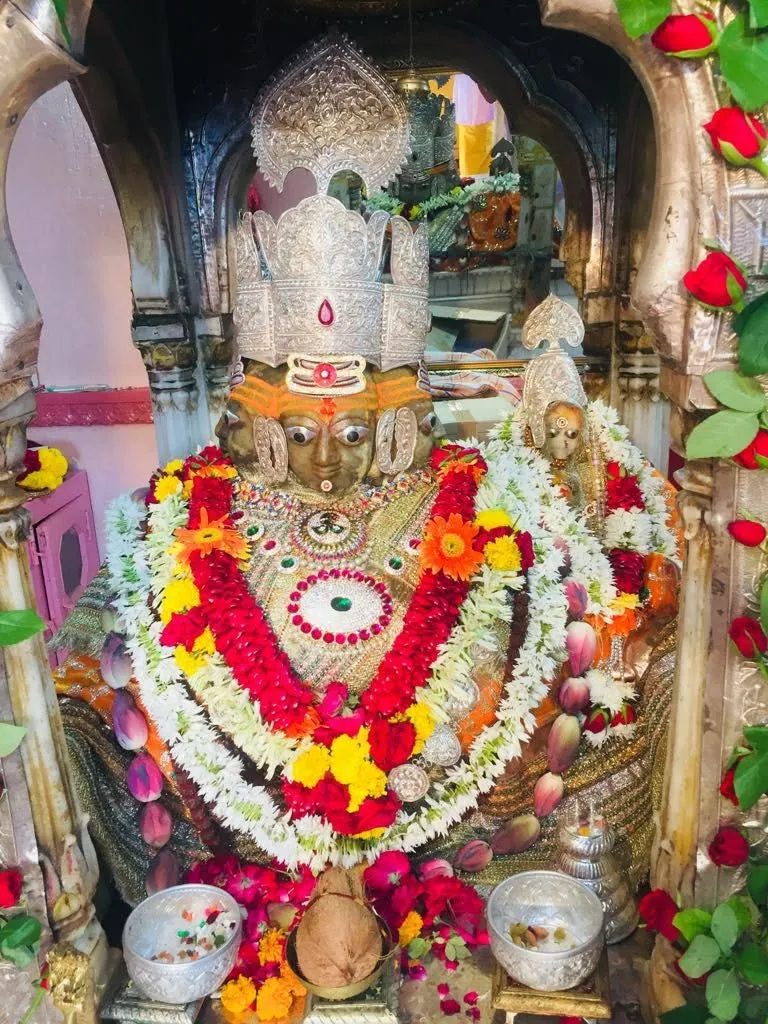
Inside the marble-clad sanctum in the center seated in a lotus position the four-headed idol of Lord Brahma (Image: Facebook/BrahmaTemplePushkar)
ALSO READ: Why Is 4 Mukhi Rudraksha Associated With Lord Brahma? Know Its Spiritual Significance
4. The Savitri Hill Counterweight
Perched on the highest peak of Ratnagiri Hill, sits the Savitri Temple, looking down on Lord Brahma’s temple below. To this day, ritual tradition mandates that devotees should visit the hilltop and pay their respects to the Goddess Savitri shrine before or after seeking blessings at the Brahma temple.
5. The Pushkar Lake
Just steps away from the temple lies Pushkar Lake, surrounded by 52 ghats, which holds immense religious significance for Hindus.
According to mythology, Pushkar was formed when Lord Brahma dropped a lotus flower from his hand, releasing three drops of divine nectar (amrit) that created the sacred Pushkar Lake.
Taking a dip in this sacred lake during Kartik Purnima is believed to erase a lifetime of bad karma and bring divine blessings.
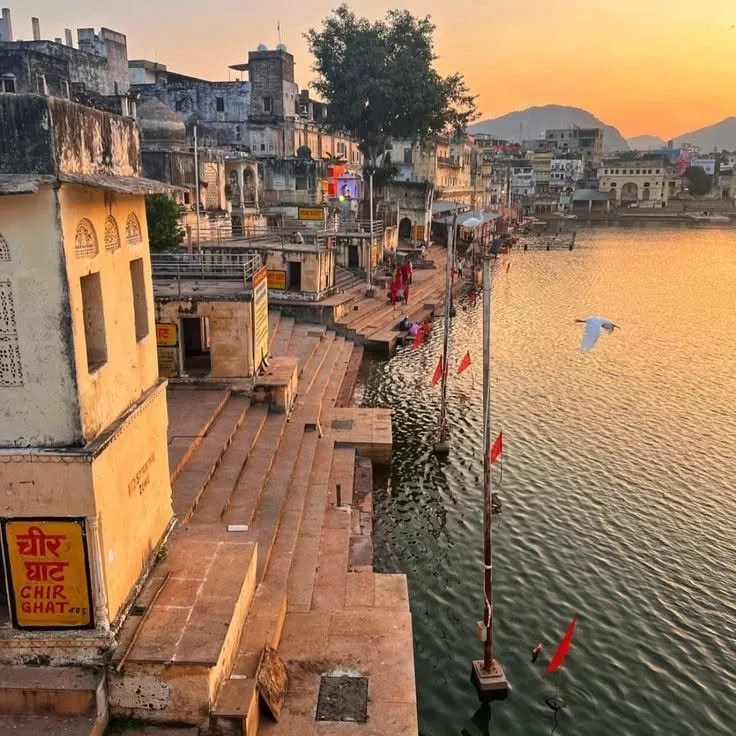
Pushkar Lake, surrounded by 52 ghats, holds immense religious significance for Hindus (Image: Facebook/MyBharat)
ALSO READ: 4 Reasons Why Lord Brahma Is Not Worshipped: Here’s What Hindu Scriptures Say
Best Time To Visit Pushkar Brahma Temple
The temple gates are open for all devotees and visitors year-round, but the best time to visit this temple is during Kartik Purnima, when Pushkar hosts its world-famous Pushkar Camel Fair. This fair is usually held in November and includes various cattle trading, cultural activities and religious ceremonies.
FAQs
1. Can non-Hindus visit the Jagatpita Brahma Temple?
Yes, non-Hindus can visit Jagatpita Brahma Temple. The inner sanctum itself is normally viewed from outside, as in most working Hindu temples in India.
2. Are there any specific rituals or offerings associated with visiting the Brahma Temple?
Common rituals such as taking a dip in Pushkar Lake and performing puja are associated with visiting the Brahma Temple