

You must have noticed that Lord Vishnu is often depicted with four arms, each carrying a deeper meaning. Because of his four arms, he is known as ‘Chaturbhuj’. It is believed that Lord Vishnu's four arms represent how the supreme power governs and preserves the creation without creating any imbalance.
Let's understand the meaning behind his four arms and discuss what each object and weapon that Lord Vishnu carries symbolises.
What Do Four Arms Symbolise?
The four arms of Lord Vishnu symbolise the four directions: north, south, east and west. They convey the message that Lord Vishnu is omnipresent, beyond time, and is constantly protecting his creation.
Apart from this, it also represents four stages of human life: Brahmacharya (Student), Grishastha (householder), Vanaprastha (Forest Dweller) and Sannyasa (renunciate). It is also said to represent the four goals of life, the four Vedas, and the four varnas.
Each arm carries a symbolic message:
- One arm preserves the creation.
- One arm preserves order
- One arm represents righteous action
- One arm leads towards liberation (moksha)
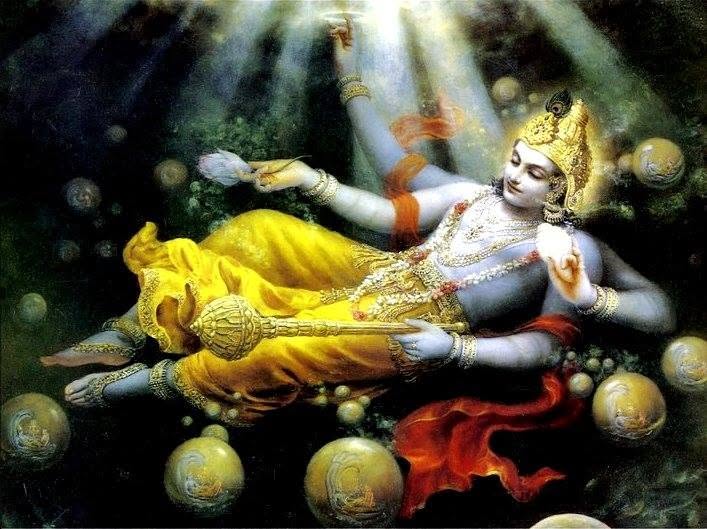
The four arms of Lord Vishnu symbolise the four directions: north, south, east and west (Image: Facebook/lordvioshnu)
ALSO READ: List Of 50 God Vishnu And God Shiva Mantras For Dev Diwali 2025
What Do The Objects In Lord Vishnu’s Arms Symbolise?
1. Conch (Shankha): The conch symbolises the origin of existence. Its shape is a spiral, starting at one point and evolving into spheres, representing the universe’s evolution. When blown, it produces the sound Om (AUM), which is associated with the creation of the universe. It is also believed to signify the creation and preservation of the cosmos.
2. The Discus (Chakra): The Sudarshan Chakra is the representation of time and the cosmic divinity of Lord Sri Hari. It symbolises the ‘Kaal-Chakra’ or the wheel of time. It symbolises Lord Vishnu's power to remove obstacles, protect his devotees and maintain cosmic order by removing evil and injustice.
3. The Mace (Gada): The mace is also known as Kaumodaki, and represents Lord Vishnu's strength, authority and moral courage. It establishes the fundamental truth that true strength must be guided by wisdom and moral clarity to make an individual follow the path of righteousness.
4. The Lotus (Padma): The lotus in Lord Vishnu's hands shows purity, detachment and spiritual awakening. Although lotuses are born in mud, they are considered pure; similarly, it symbolises that a person can attain liberation and spiritual growth from these material possessions.
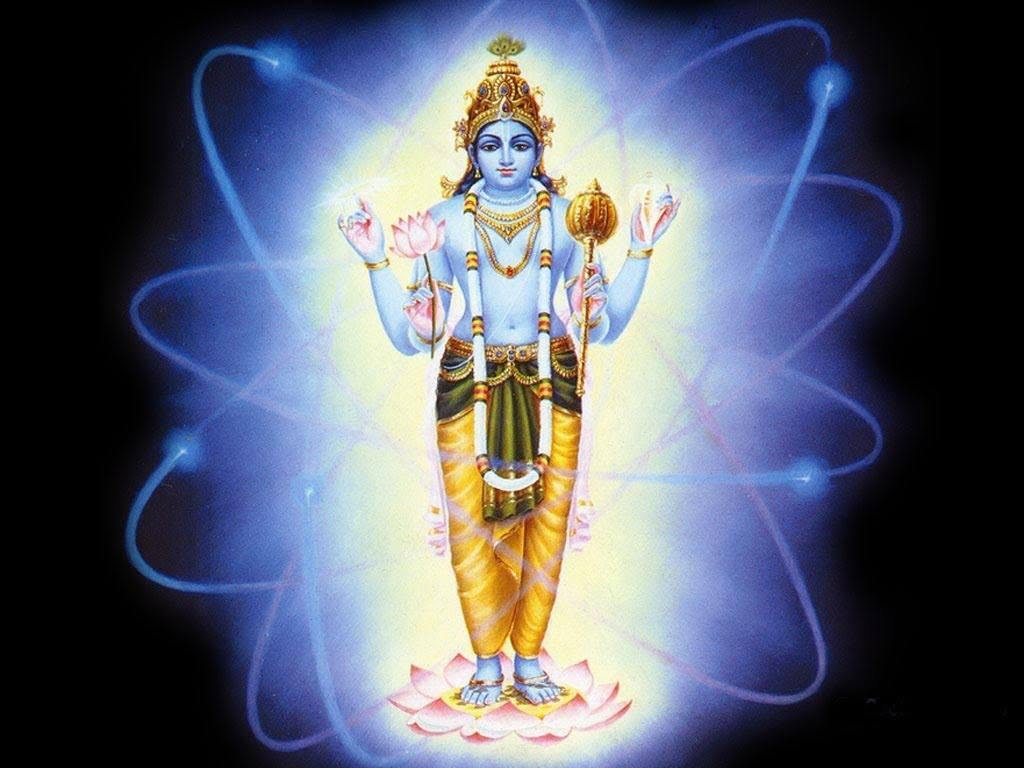
Lord Vishnu's four arms represent how the supreme power governs and preserves the creation without creating any imbalance (Image: Facebook/lordvishnu)
Lord Vishnu's four hands and the objects he carries hold importance in Hinduism. They represent Lord Vishnu’s role as the preserver of the universe, his commitment towards dharma and his divine qualities of strength and purity. Together, they remind devotees that Lord Vishnu is omnipresent, guiding people to lead purposeful and righteous lives.