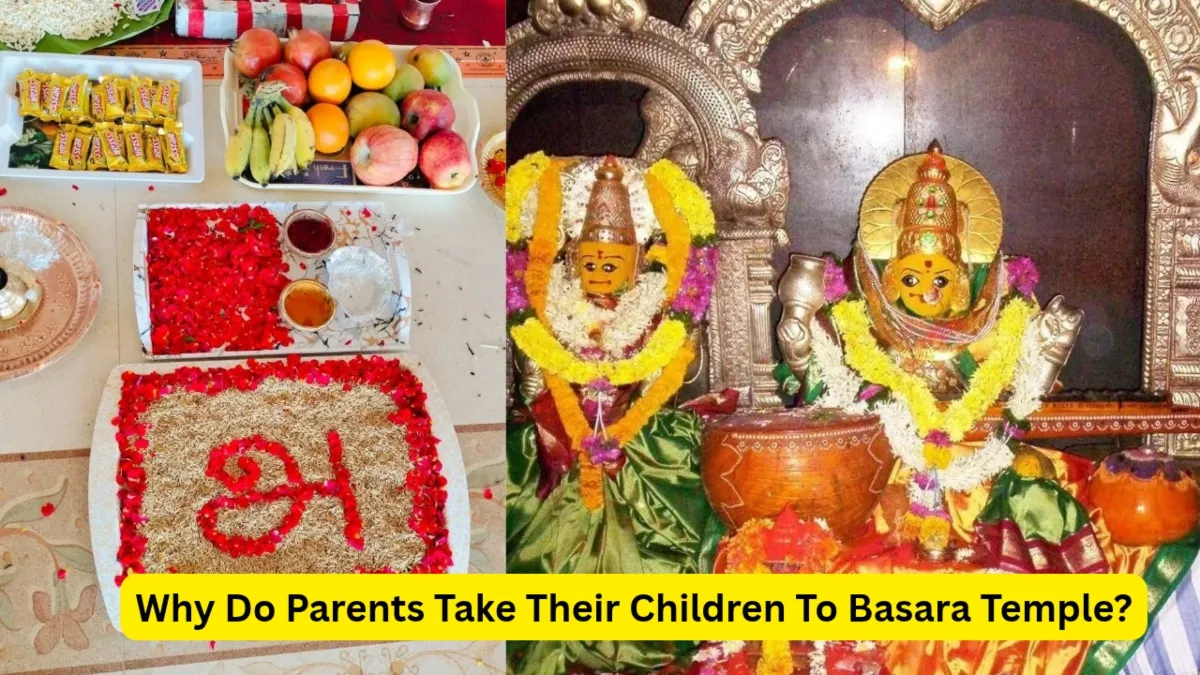
Aksharabhyasam, also known as Vidyarambham, is a sacred Hindu initiation ritual where a child writes their first letters. While some parents perform this ritual at home or in local temples across South India, Gnana Saraswati Temple in Basara is famous for it.
Parents travel from different parts of India to Basara to invoke Goddess Saraswati's divine blessings of intelligence and wisdom on their children.
Let's understand the significance of performing the Aksharabhyasam ritual at the Basara temple.
1. One Of The Two Historic Saraswati Temples
Unlike many major temples dedicated to Lord Shiva or Lord Vishnu, only a few temples are dedicated to Goddess Saraswati, the deity of knowledge, arts, music and speech.
This Basara temple is well-known as it is dedicated to Goddess Saraswati. Parents believe that if their child begins learning at this primary abode, the Goddess will protect them and guide them in their learning.
2. The Legacy Of Sage Vyasa
According to sacred texts, after the epic Kurukshetra War, Sage Veda Vyasa, seeking peace, resided on the banks of the river Godavari. He sculpted three divine idols, Goddess Saraswati, Goddess Lakshmi, and Goddess Kali, using three sand mounds daily.
Because of Ved Vyasa’s intense penance, the site came to be known as Vyasapuri, which later became Basara. Parents bring their children here for them to learn from this Vedic wisdom.
3. Spiritual Purification
The temple sits on the banks of the sacred Godavari River. According to tradition, parents take their child to take a holy dip in the river before the Aksharabhyasam Ritual. This act of spiritual purification is believed to remove negative energy and prepare the child's mind to absorb sacred mantras during their first writing experience.
Recommended For You
ALSO READ: 5 Reasons Why Pushkar’s Brahma Temple Is Unlike Anything Else On Earth
4. The Power Of The Aksharabhyasam Ritual
During the ceremony, temple priests guide the child’s hand to write the first letters of their name or draw sacred symbols like Om in a plate of raw rice grains or sand.
Raw rice represents prosperity and abundance of the mind, while drawing an Om is believed to awaken the child's cognitive and linguistic skills. This ritual is usually performed for toddlers between 2 and 5 years old, right before they begin playschool or formal education.
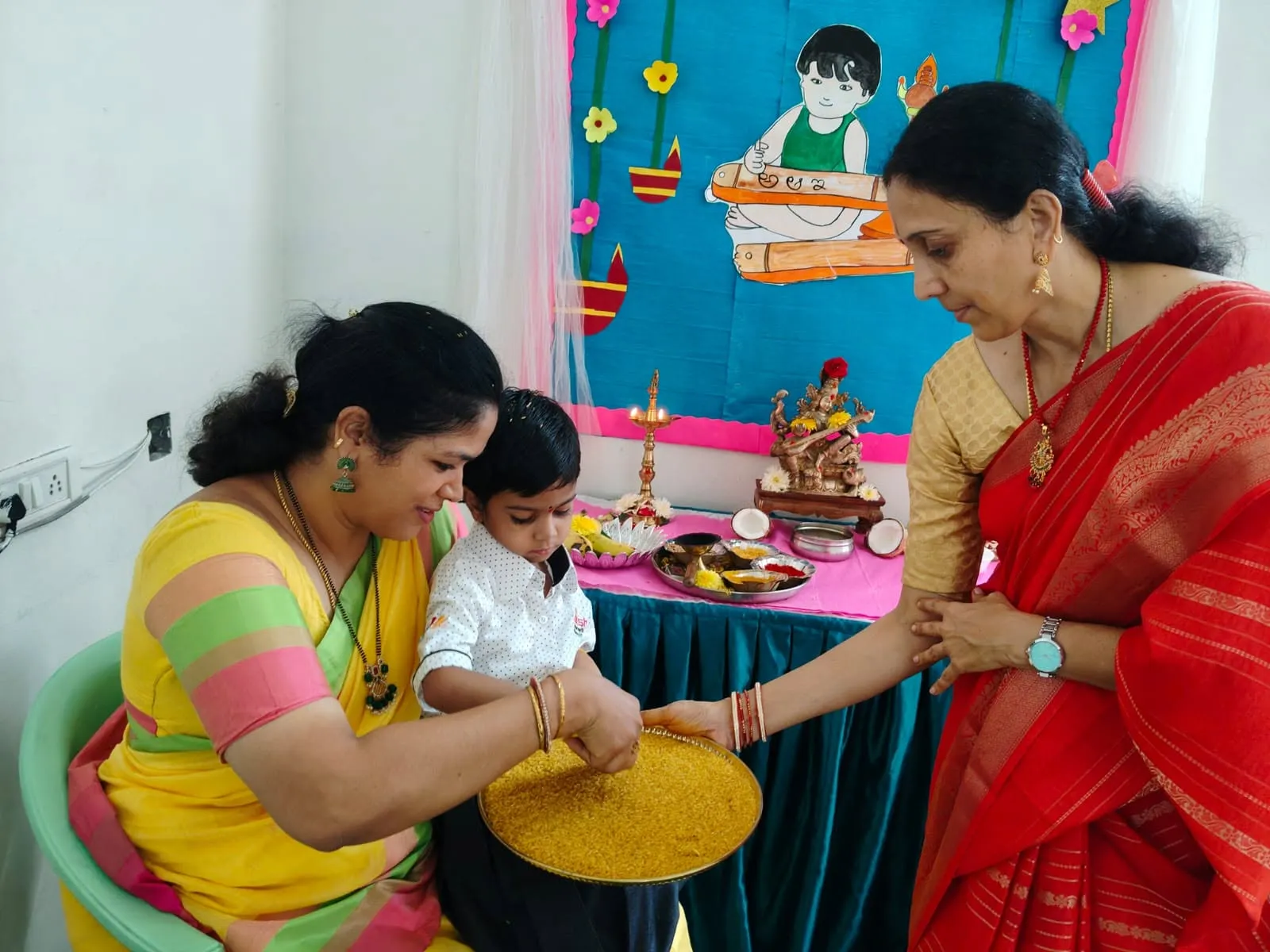
During the ceremony, temple priests guide the child’s hand to write the first letters of their name (Image: Facebook/Akshara International School)
5. Auspicious Occasions
Aksharabhyasam ritual happens daily at Basara. However, thousands of parents travel here during specific high-energy festivals like Vasant Panchami, Vijayadashami or Shravana Purnima.
ALSO READ: 5 Sacred Hindu Temples Where Non-Hindus Are Not Allowed And Why
Quick Guide For Parents Planning The Visit
If you are planning to visit the Basara temple, here is a guide that you can check for smooth travel and darshan:
Details | What You Need to Know |
Location | Basara Village, Nirmal District, Telangana (approx. 200 km from Hyderabad). |
Ideal Age for Child | 2.5 to 5 years (before formal school enrollment). |
Best Time for Ritual | Early morning (5:00 AM – 12:00 PM) for maximum spiritual serenity. |
What to Carry | Slate and slate pencil (often provided in ritual kits), new traditional clothes. |
Key Ritual Steps | Holy dip in Godavari, Special Seva Ticket purchase, Priest-guided tracing in rice, Goddess Darshan. |
FAQs
1. What is Aksharabhyasam?
Aksharabhyasam is a traditional Hindu ritual that symbolises the beginning of a child’s education.
2. What is the right age for Aksharabhyasam?
Children between 2 to 5 years are ideal for this ritual.
3. How much time does the ritual take?
It generally takes 15 to 30 minutes.