
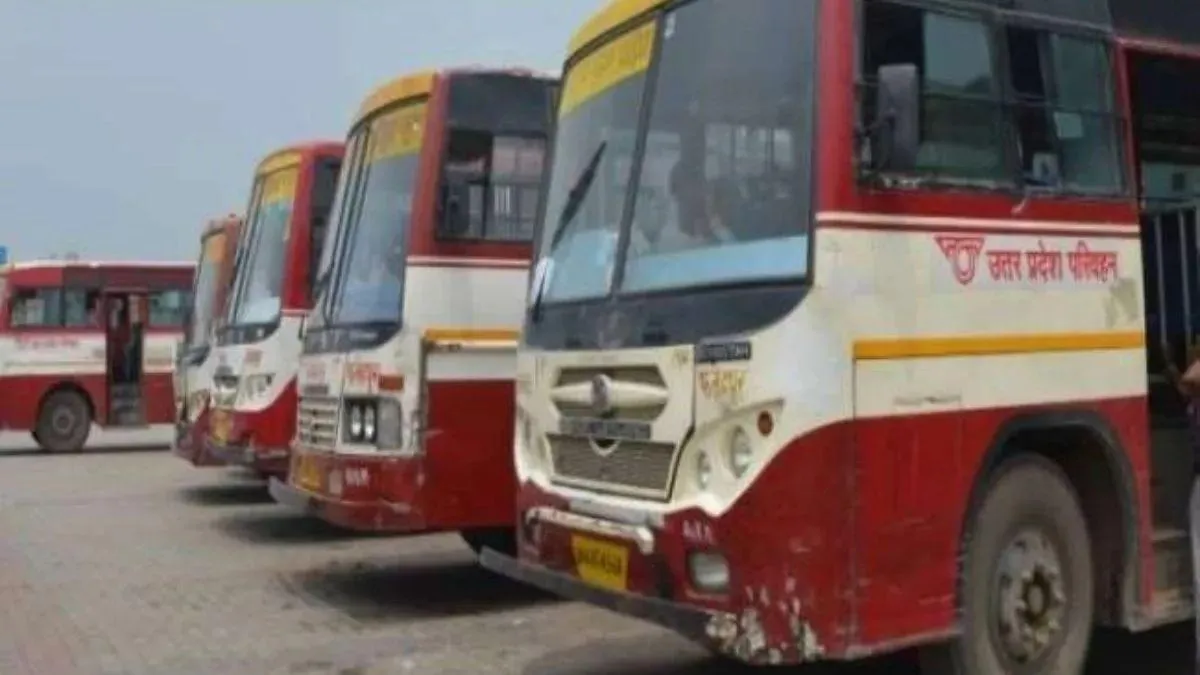
Following the lead of UPEIDA, the Transport Corporation has implemented stringent measures to prevent road accidents and ensure passenger safety during the winter season. The speed limit for over 13,000 Roadways and contracted buses has been reduced to combat cold and foggy conditions.
Minister of State for Transport (Independent Charge), Dayashankar Singh, announced the new directives, emphasizing that morning fog, slippery roads, and reduced visibility demand special caution.
Key Operational Directives
Speed Restrictions: Buses must not exceed a maximum speed of 40 km/h during cold weather and light fog. This is a significant reduction from normal operations, where buses typically run at 60 km/h on regular roads and 80 km/h on expressways.
Protocol for Dense Fog: In conditions of excessive fog and poor visibility, drivers must stop the bus at a safe location. Operations are to resume only once visibility improves. This echoes a precedent set on December 18, 2022, when operations were halted for the first time in the corporation's history following a six-bus collision on the Aligarh-Etah route.
Station Announcements: Continuous announcements will be made via public address systems at bus stations. These will advise drivers to maintain slow speeds and instruct them to halt operations if visibility becomes dangerously low.
Guidelines For Night Services And Maintenance
To mitigate risks associated with night travel, the Minister issued specific instructions regarding scheduling and vehicle fitness:
Service Reduction: Night services on routes prone to dense fog will be reduced. Furthermore, night services with a passenger load factor of less than 50% are to be suspended.
Authority To Halt: The bus station in-charge has the final authority to decide whether a bus is permitted to operate or must be halted due to fog.
Vehicle Checks: Long-distance and night service buses must undergo prescribed 13-point checks and periodic 31-point checks.
Equipment Mandates: Buses will only be dispatched if they have retro-reflective tape applied to the front and rear. All buses, including contracted ones, must be fitted with all-weather bulb fog lights and have fully functional wipers and windscreens.
Driver Standards And Enforcement
Staffing: Only experienced drivers with good, accident-free records are to be deployed on night and long-distance services.
Mandatory Rest: It must be ensured that drivers assigned to night duties have had a mandatory eight-hour rest period.
Sobriety Checks: Interceptor and enforcement teams have been directed to conduct alcohol tests on drivers using breathalysers during inspections.
Driving Protocols On Highways And Expressways
Minister Singh outlined specific driving techniques based on road types to minimize accidents:
Expressways: Drivers are warned against making sudden stops, as this causes rear-end collisions. Safe following distances must be maintained, and indicators used before lane changes.
Highways with Dividers: Drivers should keep to the right side of the road (along the divider) to avoid colliding with vehicles often parked on the left side.
Roads without Dividers: Drivers must always drive on the left side of the road.
Appeal To Passengers
The Minister has made a specific request to the public, urging passengers not to pressure drivers or conductors to increase the bus's speed during foggy conditions. Safety must remain the priority over arrival time.