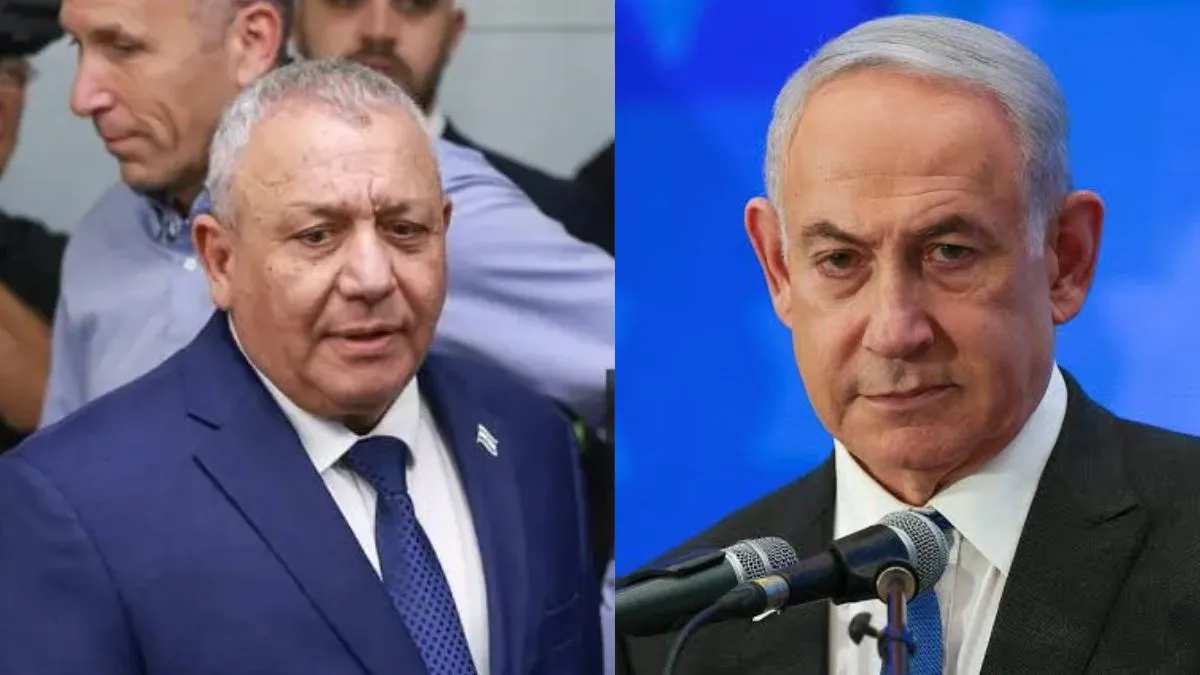
- Yashar-Likud unity talks ended without a breakthrough on Sunday.
- Major disagreements persist on judicial overhaul, military service, coalition partners.
- Eisenkot is also considering minority government amid ongoing political deadlock.
Israel Government Formation: Yashar Party leader Gadi Eisenkot has begun efforts to form Israel’s next government by holding talks with different political parties to secure a majority in the Knesset. However, the initial discussions have shown little progress as negotiations between Yashar and Prime Minister Benjamin Netanyahu' Likud party ended without a breakthrough on Sunday. The talks are taking place as Israel faces a political deadlock, with several parties divided over key issues that could decide the formation of the next government.
Yashar-Likud Talks End Without Breakthrough
Representatives of Yashar and Likud met on Sunday at a hotel for around four hours to discuss the possibility of forming a unity government. The meeting followed an earlier round of discussions between the two parties. After the meeting, both sides released a joint statement saying they had discussed "core issues" and would continue their talks. However, they did not announce any agreement or provide a date for the next meeting.
Likud was represented by Knesset faction leader Ofir Katz and Michael Rabello, a long-time lawyer for Netanyahu. Yashar's negotiating team included MK Chili Tropper and Yoav Horowitz. Naftali Bennett's B'Yachad party, which supports the idea of a unity government led by Eisenkot and including Likud, did not take part in Sunday's meeting.
Recommended For You
Major Disagreements Remain
According to Hebrew media reports, the latest meeting did not address who would become prime minister under a possible unity government or whether Netanyahu and Eisenkot would share the position through a rotation agreement. The talks focused on major policy differences, including Likud's proposed judicial overhaul, military service for ultra-Orthodox Jewish men, and the possibility of establishing a commission of inquiry into the October 7, 2023, attack on Israel.
The parties also disagreed over whether National Security Minister Itamar Ben Gvir's far-right Otzma Yehudit party should be included in the next government. While Yashar is said to oppose forming a government with the party, Likud doesn’t seem to leave it.
Progress In Talks With UTJ
While negotiations with Likud have remained difficult, Yashar has reportedly made some progress in separate discussions with United Torah Judaism (UTJ), an ultra-Orthodox political party. According to Channel 12, representatives of UTJ's Degel HaTorah faction described the discussions over military service for Haredi men as showing "positive progress." However, the sources also indicated that the two sides were still "far from exchanging" proposals.
Moreover, the question of which parties should support the next government has also created differences within Eisenkot's bloc. Avigdor Liberman, leader of Yisrael Beytenu party, has called for "painful compromises" with ultra-Orthodox parties, while Democrats party leader Yair Golan has argued that an Arab-supported minority government should remain an option.
What Happens Next?
Meanwhile, Eisenkot has also indicated that he may consider forming a minority government if efforts to secure a majority coalition fail. Such a government would probably depend on support from Arab parties outside the coalition to survive parliamentary votes. However, this idea faces opposition as many parties do not want to depend on Arab lawmakers for parliamentary support.
Eisenkot has time until December 6 to form a government. However, he can request an additional 14 days. If he fails, Netanyahu could receive another opportunity, with a 28-day period to try to put together a government.
You May Also Like To Watch: