
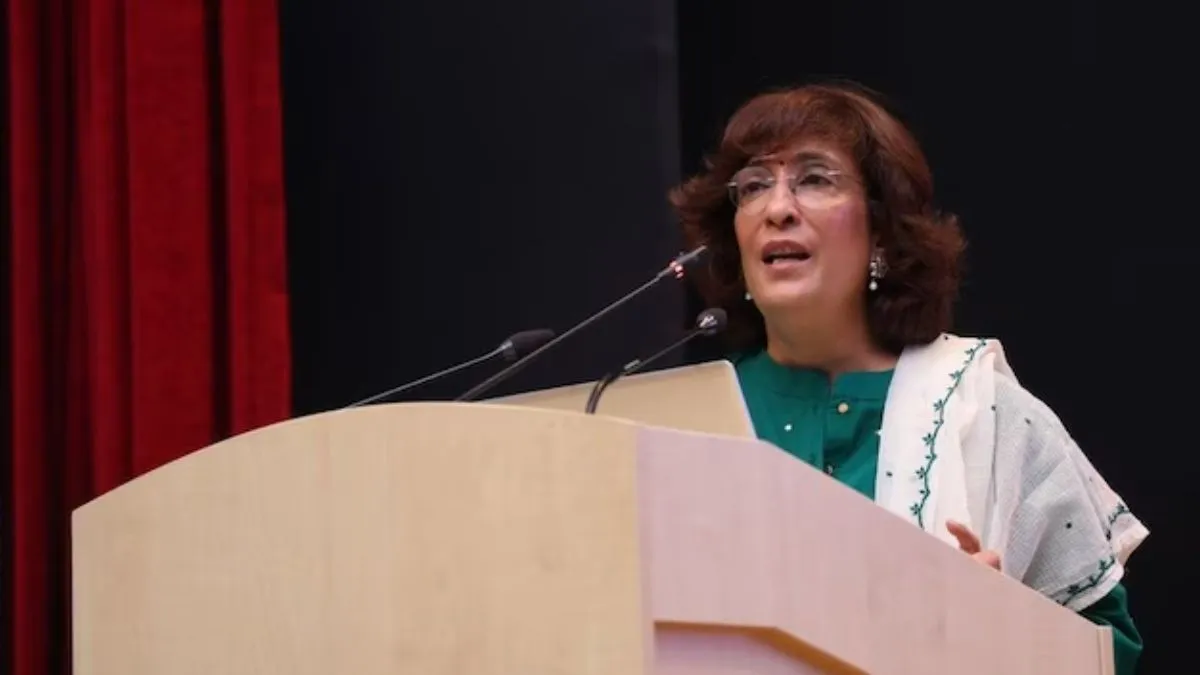
- ECI Tech Chief Seema Khanna scrutinised over-centralised electoral roll software.
- ECINet allegedly restricts statutory powers of Election Registration Officers.
- Goa incident saw 97 voters excluded due to database access issues.
Seema Khanna, the Election Commission of India’s IT Chief, has come under scrutiny, as two election commissioners have questioned the centralised control of the software used to manage electoral rolls. Election Commissioners Sukhbir Singh Sandhu and Vivek Joshi have flagged concerns over the alleged restriction of access available to statutory election officials dealing with voter rolls.
The alleged allegations have brought questions on Khanna’s control over the access and functioning of the software. The controversy broadened after the EC on January 22, 2026, introduced ECINet, a software which brought more than 40 apps and portals under one roof. According to Khanna, the platform would enhance transparency, credibility and public trust.
Sandhu and Joshi said that the new software has made the special legal powers assigned for the Election Registration Officers, or EROs, become centralised. As per the Representation of the People Act, 1950, and the Registration of Electors Rules, 1960, Electoral Registration Officers have statutory responsibility for adding, correcting and deleting names from electoral rolls.
The Goa Issue
The dispute widened when the EROs in Goa allegedly approved the addition of names of 97 voters. However, they were unable to add the data due to issues with database access, The Indian Express reported. The Goa CEO office wrote to the ECI eight times between February 11 and February 17, seeking a rollback facility. Deputy Election Commissioner Sanjay Kumar then wrote to Khanna that the IT system did not come in the way of action required under the Supreme Court’s directions.
The development in Goa came even after Deputy Election Commissioner Sanjay Kumar first wrote to Khanna on November 4, 2025, and again on January 2, asking the IT system to ensure that it did not restrict the statutory powers and functioning of EROs. The requested facility was not activated before the deadline, and the 97 voters were consequently left out of the final electoral roll, the report said.
Why is Seema being highlighted in the dispute?
Seema Khanna is the ECI’s senior technology official. The Commission’s own officers directory lists Dr Seema Khanna as Director General (IT). Her department is responsible for the technology infrastructure supporting electoral services.
ECINet, which integrates more than 40 ECI applications and portals, was presented by the Commission as a platform aimed at improving transparency, efficiency and public trust. The present dispute, however, is about who should control access to the electoral-roll database and whether software controls can limit powers assigned to statutory election officials.
The controversy also highlighted the internal differences in the Election Commission. Sandhu and Joshi wrote to Chief Election Commissioner Gyanesh Kumar and Cabinet Secretary TV Somanathan, raising concerns over the centralised control of the electoral-roll database and the access and powers available to field-level electoral officials.
The two claimed that the DG (IT) does not have the legal authority to control or restrict the powers and access of EROs, who are statutory authorities. They had called for the restoration of full digital access to field officials.
The issue has been raised by opposition parties, including the Congress, Trinamool, and the Aam Aadmi Party. Trinamool Congress leader Abhishek Banerjee had previously questioned Khanna’s role while raising questions about the speed with which electoral data were analysed. Banerjee then linked it to the concerns raised by Sandhu and Joshi. These are political allegations and have not been established as facts.