
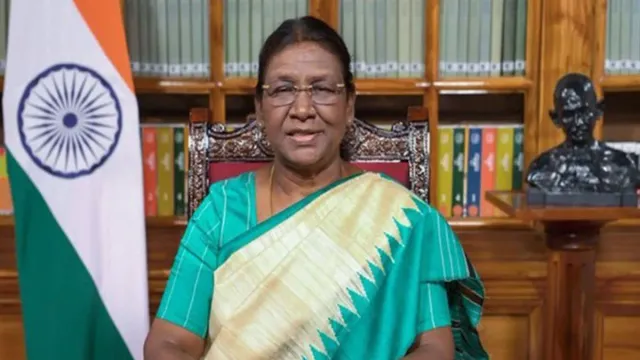
- President Murmu assents to Gujarat UCC Bill 2026.
- Mandatory registration for marriages and live-in relationships.
- Polygamy banned, strengthens women's legal rights.
President Droupadi Murmu has given her assent to the Gujarat Uniform Civil Code (UCC) Bill, 2026, clearing a key legal hurdle for the state to implement a common civil law framework governing marriage, divorce, succession and live-in relationships.
The Gujarat government notified the law as the Gujarat Uniform Civil Code, 2026, and published it in the state gazette on October 1. The law will be in force from a date to be notified separately by the state government.
Following the President's assent, Gujarat has become only the second state, after Uttarakhand, to introduce a Uniform Civil Code. The bill excludes Scheduled Tribes and those communities whose customary rights are safeguarded under Part XXI of the Constitution.
What Does Gujarat UCC Say?
The Code introduces common rules for marriage, divorce, succession and live-in relationships, irrespective of religion. It also makes registration of marriages mandatory. Couples will have to submit a memorandum for registration within 60 days of their marriage, with penalties prescribed for non-compliance.
The legislation also provides a legal framework for live-in relationships. Registration of such relationships will be mandatory, while details will also have to be submitted to the authorities when the relationship ends.
Children born from registered live-in relationships will be recognised as legitimate under the law. The Code also provides maintenance rights to a woman who is abandoned by her live-in partner.
Rules For Live-In Relationships
The legislation prescribes penalties for furnishing false information while registering a live-in relationship. Violations can attract imprisonment of up to three months or a fine of up to Rs 25,000.
It also contains stricter provisions concerning live-in relationships involving minors.
Polygamy, Forced Marriage And Divorce
The Code prohibits polygamy and lays down provisions against forced marriages. A person who forces another into marriage through coercion or force can face imprisonment of up to seven years.
It also states that a divorce obtained without an order from a competent court will be considered illegal and can attract imprisonment of up to three years.
The legislation further provides divorced couples with the right to remarry without unreasonable restrictions and prohibits practices such as halala.
ALSO READ: Surat-Udaipur Vande Bharat Express Bookings Open, To Link Vadodara, Ahmedabad; Check Route, Timings
Women's Legal Rights
The Gujarat government has said the legislation is intended to provide a common legal framework and strengthen legal protections in matters covered by the Code, including marriage, divorce and maintenance.
The law also provides maintenance rights to women abandoned by their live-in partners.
When Will Gujarat UCC Come Into Effect?
Although President Murmu's assent has cleared the Bill's constitutional approval process and the legislation has been published in the state gazette, the Gujarat UCC is not automatically in force yet.
The state government will have to issue a separate notification specifying the date from which the Code will come into effect.
The Gujarat UCC Bill was introduced in the state Assembly in March 2026. Its enactment makes Gujarat the second state in India, after Uttarakhand, to legislate a Uniform Civil Code.