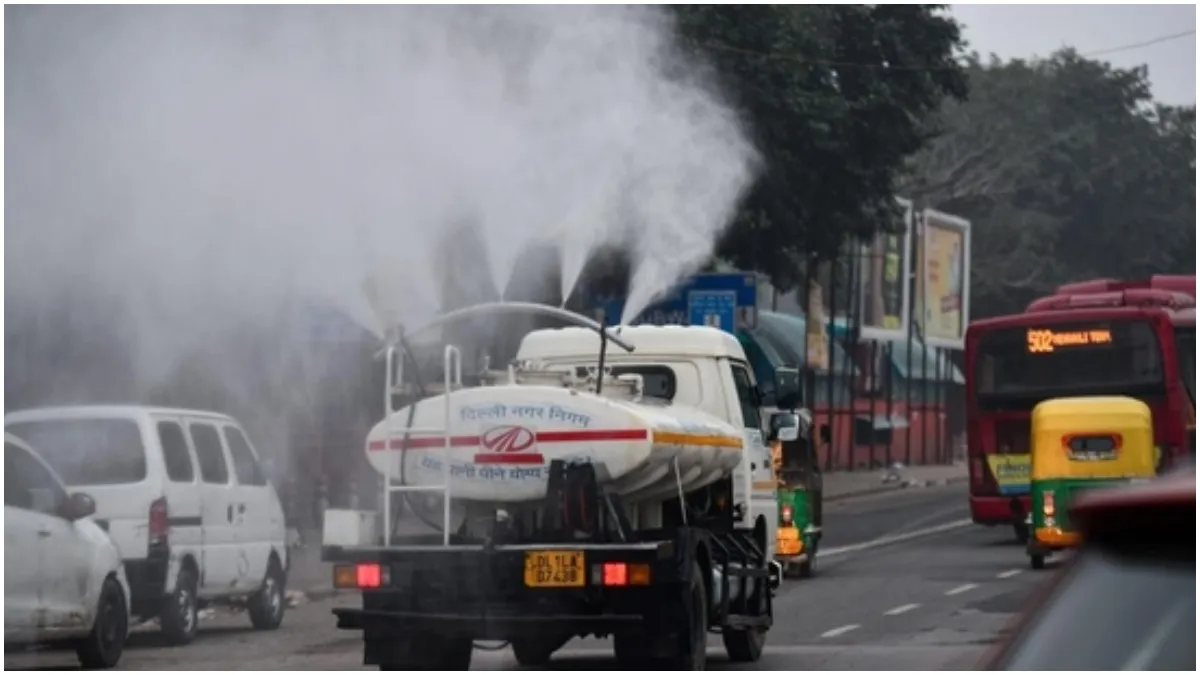
- 47 of 50 most polluted global cities are Indian.
- Hisar, Haryana, topped the list with hazardous AQI 518.
- Delhi's AQI soared to 663 post-Diwali, ranking 9th.
As Diwali pollution peaked, global rankings revealed that 47 of the 50 most polluted cities worldwide were in India, predominantly across the northern region. Hisar, Haryana, topped the list on Tuesday afternoon with a hazardous AQI of 518. Cities across Punjab, Haryana, and Uttar Pradesh dominated the highest pollution tiers.
One of the three cities was outside India, which was located outside India. China’s Xinjijang took the 42nd place, and Lahore in Pakistan secured the 43rd place, while the third place was secured by Kyrgyzstan's Osh in the list.
Delhi secured the 9th place, with an AQI of 355 (severe). Noida stood at 7 with an AQI of 357 (severe), which was followed by Ghaziabad, securing the eighth place with the severe AQI of 356.
ALSO READ: Delhi's Air Quality Improves After 5-Year High On Diwali, But Remains In 'Very Poor' Category
North Indian States Are Topping List
Haryana’s Hisar, followed by Rajasthan's Ganganagar, followed by Sirsa, Biwani and Rohtak in Haryana, were in the top of the list. The chart showed that pollution was not limited to the national capital or its neighbouring cities. From Ludhiana and Patiala to Budaun, Jaunpur and Gorakhpur, towns across the northern plains featured among the world's 50 most polluted places.
These numbers captured a wider snapshot of how widespread India's pollution problem has become and why focusing only on Delhi can obscure the scale of the crisis affecting the wider region.
Delhi’s Worsening Pollution Crisis
Delhi's weather worsened further following Diwali on November 8.The capital's AQI rose alarmingly after firecrackers were burst despite restrictions, with dangerously polluted air recorded across several parts of the city. On November 9, the morning after Diwali, Delhi's AQI stood at 663, marking a 69 per cent rise from the post-Diwali AQI recorded last year.
Recommended For You
The situation escalated as Delhi minister Kapil Mishra accused people of deliberately setting fields on fire in Punjab, pointing to a sudden rise in reported stubble-burning incidents. The Aam Aadmi Party rejected the allegations, while the two sides traded accusations over the causes of the pollution.
Curbs On Vehicles
Amidst the increasing pollution, the Supreme Court called for urgent intervention in the sharp increase in vehicular emissions, directing the governments of Delhi and three neighbouring states to apprise it about the steps taken to prevent the entry and operation of over-age vehicles within the National Capital Region.
The Supreme Court directed the governments of Delhi, Uttar Pradesh, Rajasthan and Haryana, the Municipal Corporation of Delhi; and the Delhi Police to file detailed responses indicating short-term and long-term measures proposed or contemplated to mitigate vehicular emissions and reduce their contribution to the deteriorating air quality in Delhi-NCR.