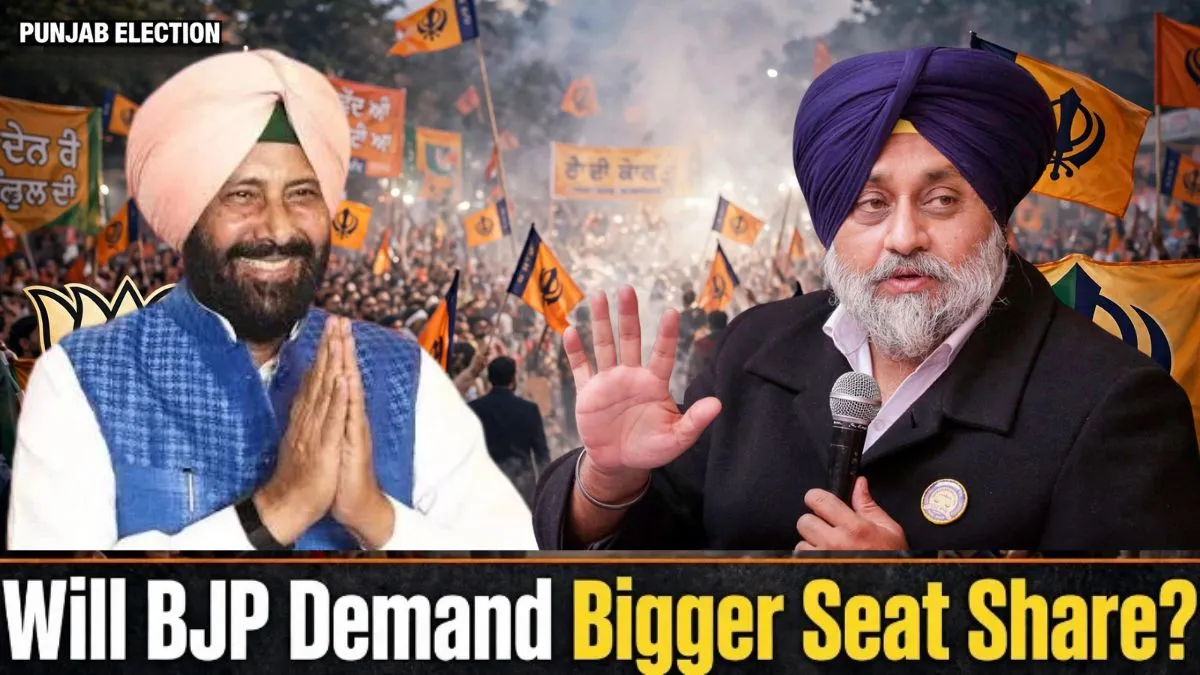
- BJP and SAD reunite for 2027 Punjab Assembly elections.
- Seat-sharing remains key challenge for the revived alliance.
- BJP eyes bigger share.
The BJP and the Shiromani Akali Dal (SAD) on Tuesday announced their alliance for the 2027 Punjab Assembly elections, marking the return of the BJP’s oldest NDA ally after a six-year gap. Union Home Minister Amit Shah indicated that the Akali Dal would remain the “elder brother” in the alliance and get the Chief Minister’s post if the coalition comes to power.
However, one major question remains unanswered which is how many seats will the two parties contest in the 2027 elections?
Although the alliance has been officially announced, the seat-sharing arrangement is yet to be finalised. The key question is whether the BJP will stick to its earlier share of 23 seats or demand a larger number this time.
Under their previous arrangement, which lasted nearly 24 years, the SAD contested 94 of Punjab’s 117 Assembly seats, while the BJP contested the remaining 23. The Akali Dal was the senior partner, with Parkash Singh Badal leading the coalition government when the alliance came to power.
However, the two parties parted ways in September 2020 over the Centre’s three farm laws. The SAD withdrew from the alliance amid farmers’ protests, and its leader Harsimrat Kaur Badal resigned from the Union Cabinet.
BJP May Seek a Bigger Share
This time, the BJP is looking to expand its political presence in Punjab. Reports suggest that the party may demand around 40 seats or more, almost double its previous share of 23.
Some reports have put the BJP’s possible demand at 46-47 seats, while others suggest it could seek as many as 50. However, neither party has officially confirmed these figures.
A bigger share would allow the BJP to contest more constituencies and strengthen its position in the state. The party may also argue that its political standing and organisational strength have changed since the previous seat-sharing arrangement. As a result, it may not want to continue with the old formula.
Recommended For You
Will SAD Agree to a New Seat-Sharing Formula?
Seat-sharing will also be a major concern for the SAD, which has traditionally contested the majority of Assembly seats and remained the senior partner in the alliance.
However, the party’s electoral performance has declined over the years. In the 2022 Punjab Assembly elections, the SAD won just three seats, while the BJP secured two. Both parties had contested separately.
ALSO READ: From 'Nau-Maas Da Rishta' To 6-Year Split And Now A Reunion: Tracing BJP-Akali Dal Alliance
Despite its declining electoral strength, the Akali Dal is likely to seek a larger share of seats and retain its position as the senior partner.
While announcing the alliance, Amit Shah made it clear that the SAD would remain the “elder brother” and that its leader would become Chief Minister if the alliance wins the election. This indicates that the BJP is willing to retain the Akali Dal’s leadership role in Punjab, even as negotiations over seat-sharing continue.
ALSO READ: BJP-SAD Alliance 2.0: Can The Old Winning Formula Work For Punjab Polls 2027
BJP-SAD 2.0: What Lies Ahead?
The reunion marks the revival of an alliance that lasted from 1996 to 2020. The two parties formed governments in Punjab in 1997, 2007 and 2012.
The renewed partnership gives both parties an opportunity to rebuild their political base ahead of the 2027 Assembly elections. However, the seat-sharing arrangement will be the first major test of their understanding.
Since the farmers’ protests, the BJP has faced opposition in Punjab, particularly in rural and Sikh-dominated areas. An alliance with the SAD could help the BJP improve its acceptance among rural voters and strengthen its grassroots presence.
While the BJP is likely to push for more seats to expand its footprint, the SAD will want to protect its position as the senior partner.
Apart from the Chief Minister’s post, which is likely to remain with the SAD, the BJP may also seek the Deputy Chief Minister’s post and key portfolios such as Home, Finance or Urban Development if the alliance forms the government.
Whether the two parties settle for a revised version of their old 94:23 formula or agree on an entirely new seat-sharing arrangement remains to be seen. The negotiations in the coming weeks will offer a clearer picture of how the revived alliance plans to contest the 2027 Punjab Assembly elections.