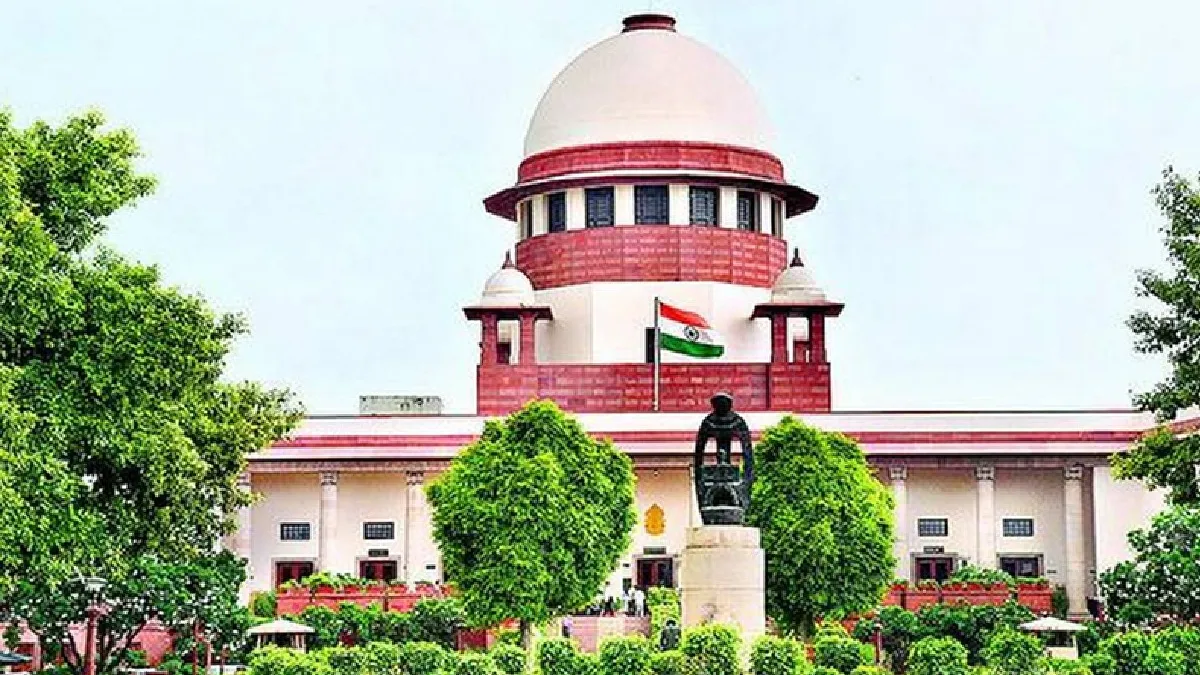
- Supreme Court seeks Centre's response on related marriage legislation.
- Plea highlights genetic harm from consanguineous marriages.
- Court emphasizes public awareness for informed marriage decisions.
The Supreme Court on Friday asked the Centre for its response on the "desirability" of bringing in legislation on marriages between those who are closely related by blood. While hearing a plea filed by Charvi S, a law student residing in Bengaluru, who urged the top court to consider whether the law should continue to permit a practice that exposes children to foreseeable and avoidable genetic harm simply because it is customary, the Supreme Court said it did not want to direct but only sensitise the government.
A bench of Chief Justice Surya Kant and justices Joymalya Bagchi and V Mohana also noted that the court can't regulate such 'consanguineous marriages'. It observed that regulating such marriages through social reform legislation falls exclusively within the domain of the legislature.
ALSO READ: SC Allows Bike Taxis To Continue In Karnataka; Highlights Safety, Affordability For Young Girls
"We are issuing notice for the limited purpose of impressing upon the Union of India to consider the desirability of bringing suitable legislation, or to ensure wide publicity through different channels, including a proper curriculum," the bench said.
The bench said the issues raised in the plea require public awareness as marriage is a matter of personal choice and one should be able to take an informed decision regarding marriage. Referring to an earlier case concerning marriage involving an HIV positive person, the bench observed the court had said it was a matter of personal choice.
Recommended For You
ALSO READ: Supreme Court Permits One-Time Karthigai Deepam Lighting At Thiruparankundram Hilltop On Nov 24
"We can issue notice for the limited purpose of impressing upon the Union of India to consider the need for suitable legislation. We will not direct them. We will only sensitise them," the bench observed.
What Is The Petitioner's Argument Against 'Consanguineous Marriage'?
During the hearing, the counsel appearing for the petitioner said recent medical studies indicate that 'consanguineous marriages' significantly increase homozygosity, which raises the likelihood of recessive genetic conditions, congenital malformations, sensory impairments, developmental disabilities, infant deaths, and other negative outcomes in children.
The plea stated that inter-generational equity and people should be informed about adverse consequences through wide publicity. The counsel said certain safeguards should be provided as the practice of 'consanguineous marriages' was increasing. The counsel argued that such practice occurs mostly in the rural areas where people marry their cousins within the family without being aware of the consequences.
The plea said the petitioner, who is suffering from 40 per cent visual impairment, is an "offspring of a first-cousin marriage, which was conducted in accordance with an age-old traditional practice in her community". It urged the apex court to "declare or alternatively interpret Section 5(iv) and Section 5(v) of the Hindu Marriage Act, 1955, to emphasise that the exceptions for marriage within prohibited or 'sapinda' relationships should always be carried out with prior public health safeguards". A sapinda relationship refers to a prohibited kinship or blood connection between two individuals under Hindu personal law.
The plea said these include counselling, risk disclosure, medically advised screening, and certification. "Without these safeguards, such practices are beyond the authority granted by Articles 14 and 21 of the Indian Constitution," it said.
(With PTI Inputs)