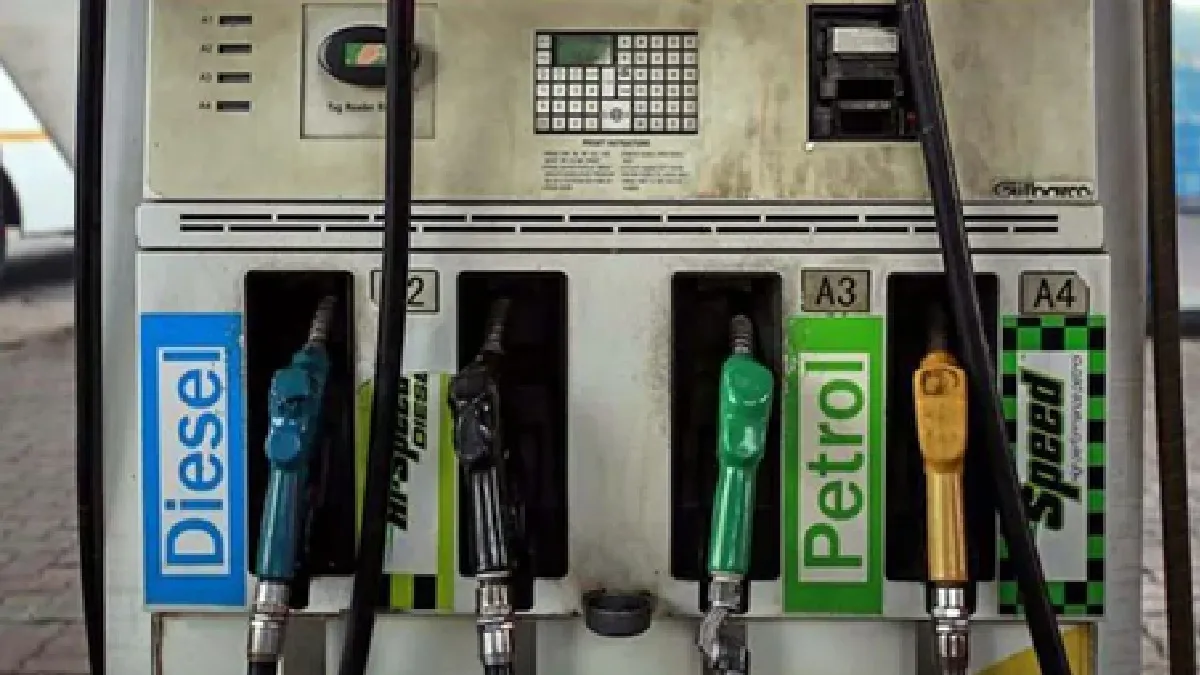
Fuel Prices: The general public has been shielded from the price heat, following the West Asian conflict in the global crude oil market, but that doesn't seem likely for much longer. Despite numerous measures taken by the government, the three state-owned oil companies (Indian Oil, Hindustan Petroleum, and Bharat Petroleum) are now finding it difficult to absorb the losses incurred in the sale of petroleum products.
The Petroleum Ministry estimates that between March and April alone, the three companies incurred a combined loss of Rs 30,000 crore. Had the Central government not helped them by reducing excise duty, this loss would have been Rs 62,500 crore.
Revenue Loss To Govt
Petroleum Ministry sources said when crude oil prices crossed USD 120 per barrel, they incurred a burden of approximately Rs 24 per litre on petrol and approximately Rs 30 per litre on diesel. The Central government has helped mitigate losses by reducing excise duty on petrol from Rs 13 to Rs 3 per litre and on diesel from Rs 10 to zero, but this has also resulted in revenue loss for the central government.
Recommended For You
The West Asia conflict has now entered its eleventh week, and the current system cannot be continued indefinitely. In any case, Indian consumers have remained protected from petrol inflation compared to the rest of the world.
ALSO READ: What Does '7700' Code Mean? Why Did US Refuelling Plane Trigger Alert After Vanishing From Radar
Fuel Prices Remain Stable In India
During this period, petrol prices have been increased by 25 per cent in Hong Kong, 30 per cent in Singapore, and 35-30 per cent in countries like Italy, Germany, and France. Meanwhile, petrol in India remains stable at around Rs 95-96 per litre.
Several smaller countries have taken even more stringent measures, such as Bangladesh implementing fuel rationing, Sri Lanka implementing a four-day work week, the Philippines declaring a national energy emergency, and restrictions in Pakistan and Taiwan.
What Will Be The Impact If Prices Don't Increase?
Officials also point out that if the petroleum business is not streamlined by increasing retail prices, energy security projects such as building strategic reserves of petroleum products, laying gas pipelines across the country, and increasing refinery capacity could be impacted.
India's current strategic petroleum reserve is only 5.33 million tonnes, equivalent to approximately 15 days of imports. There are plans to create a dedicated 30-day reserve for LPG. Following the West Asia crisis, these plans need to be implemented expeditiously. Refineries are operating at over 100 per cent of their capacity, which is not sustainable for long.
(With Jagran.com inputs)