

- By Bornika Das
- Sat, 17 Jan 2026 09:07 AM (IST)
- Source:JND
Food And Cultural Identity: I have always admired Aisha’s character, played by Konkona Sen Sharma, in Ayan Mukerji’s Wake Up Sid. She lived her independence in a rented one-room flat in Mumbai. She was strong, self-made and self-assured. While my life isn’t a scene-by-scene remake of Aisha’s, somewhere our journeys intersect.
I moved to Delhi for the first time in my life with eyes full of ambition and a heart heavy with hope. I came chasing a dream, working as a writer in a reputed media company, building a life of my own. I thought I was prepared for corporate routines, independence and that so-called adulthood that promises freedom. What I wasn’t prepared for were the real-life struggles that even my favourite, go-to movie failed to show.
Like most people living away from their hometowns, I expected homesickness. Missing my parents, familiar voices, my childhood bed, without which sleep once felt impossible. What I didn’t anticipate was how home-cooked food could feel exactly like homesickness.
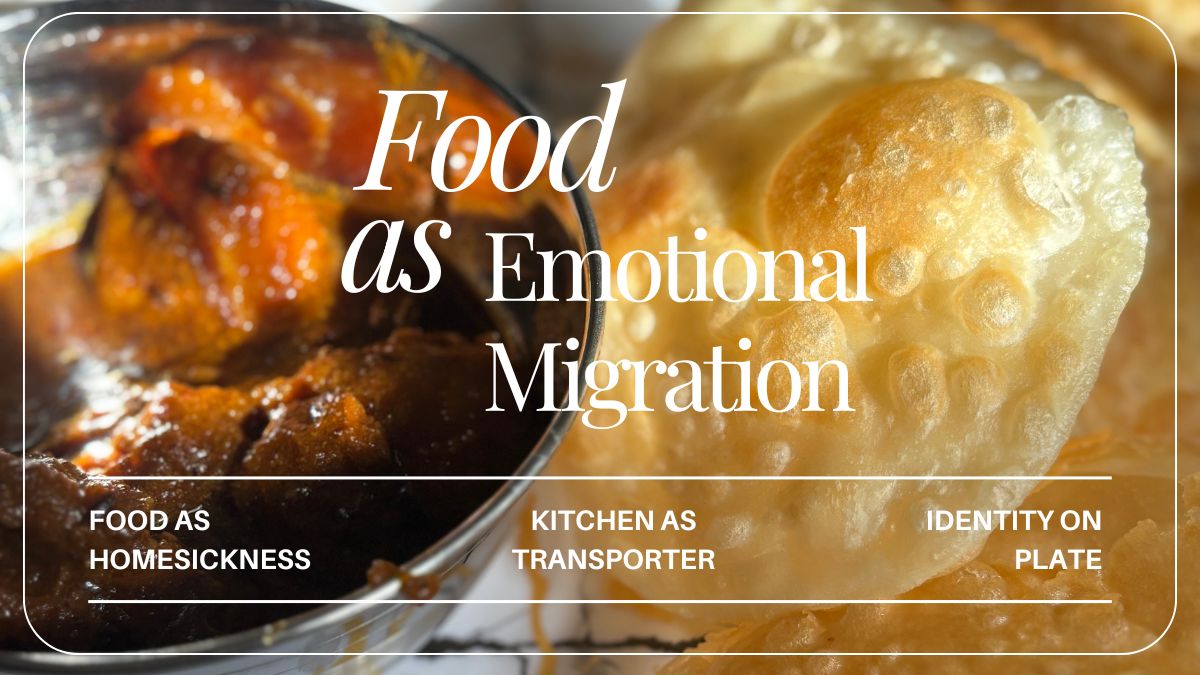
Food As Emotional Migration (Image Credits: The Daily Jagran)
ALSO READ: Easy Komol Puli Recipe: How To Make ‘Thakur Barir’ Special Dessert This Poush Sankranti 2026
Kitchen - The Transporter
My one-bedroom rented flat in Delhi isn’t anything special. There’s a narrow balcony, a bedroom, a bathroom and a kitchen. The kitchen matters most, because that’s where I spend my hours outside office. It’s also where Delhi quietly fades and memories of Kolkata (home) sharpen.
Every time I cook Bengali food, macher jhol (fish curry), mutton kosha (mutton gravy) or a simple payesh (rice pudding), I’m transported home. I’m suddenly back to Sundays when Maa cooked wholesome lunches. I still call her for recipes, even though they are available on YouTube.
As mustard oil heats and spices crackle, the aroma fills my rented space and for a few moments, it stops feeling temporary. It feels like home away from home.
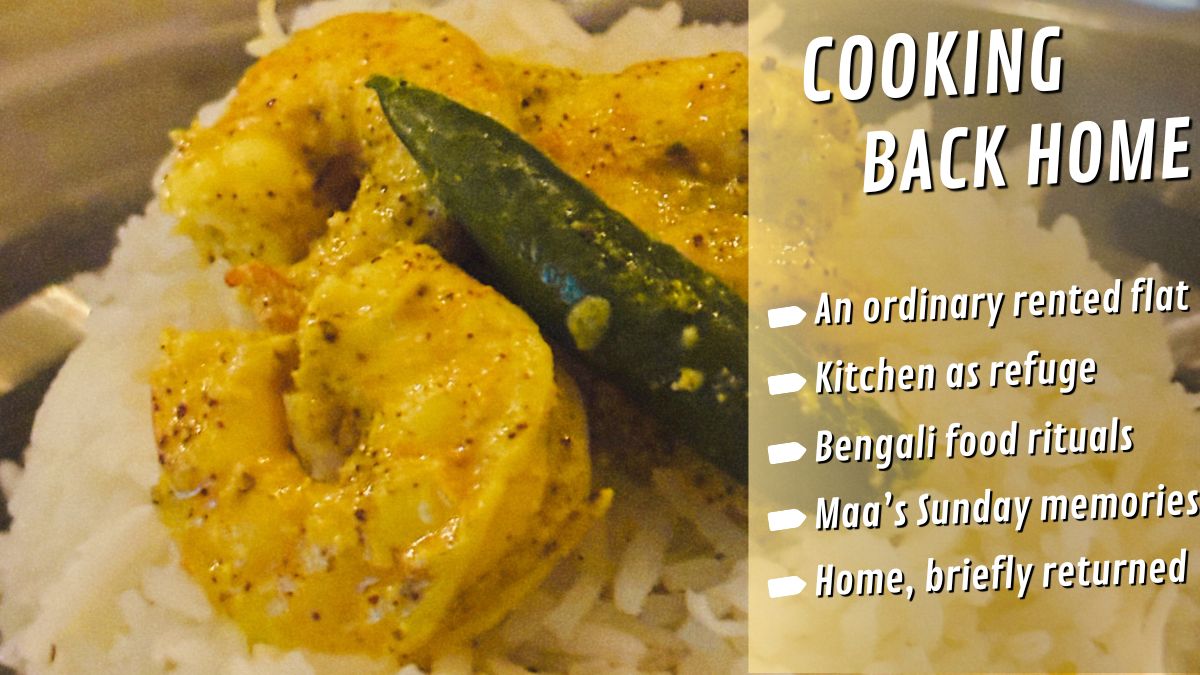
Cooking Back Home (Image Credits: The Daily Jagran)
When Food Becomes Memory
If you’re like me, living away from home, you’ll agree that nothing is missed more than “maa r hather ranna”(food cooked by my mother). Not even the world’s best chef could make ‘shorshe chingri’ (Mustard prawns) the way my mother does. And I certainly can’t. Shorshe chingri isn’t about prawns; it’s about my mother guiding me to cook from miles away. Aloo posto (Potato curry with poppy seeds) isn’t about aloo or posto; it’s comfort, in its simplest form.
In my Delhi kitchen, every Bengali dish I cook feels like an emotional migration. They are the small, imperfect ways of bringing home closer.

Markets, Memory And Migration (Image Credits: The Daily Jagran)
Delhi’s Markets, Bengali Eyes
Delhi’s markets don’t speak Bengali, but I’ve learnt to translate. I look for pointed gourds in my local market. I negotiate with vegetable sellers who don’t understand why I need “small potatoes only” for dum aloo.
Not everything tastes like home. Some greens are missing forever. But Delhi teaches adjustment without giving up. I cook with what the city gives me and somehow, it still feels like mine.
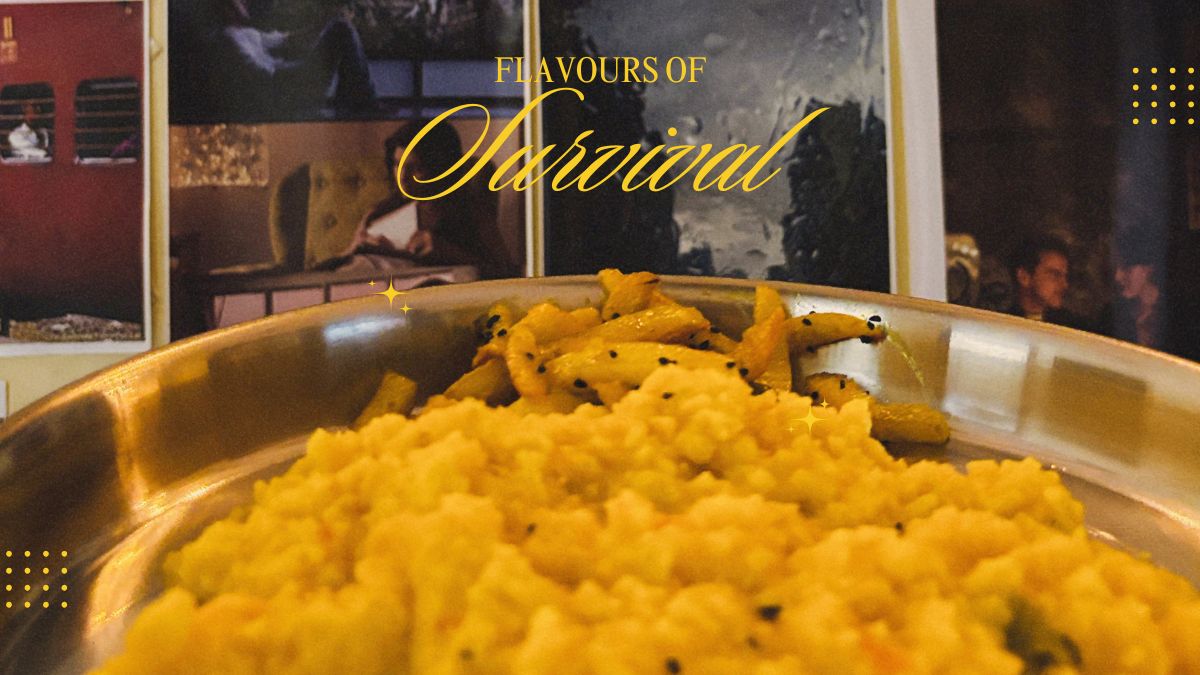
Flavours Of Survival (Image Credits: The Daily Jagran)
ALSO READ: Craving A Taste Of Bengal? Which 6 Breakfast Dishes Are A Must-Try?
Cooking With Adjustments, Not Compromises
I have always imagined independence through cooking meals. Living alone, the kitchen taught me patience, where it’s fascinating to watch the slow process of changing flavours, colours and taste. There’s no one to complain to if things go wrong. It’s me and my emotions.
Leaving my hometown for Delhi taught me that migration isn’t just about cities, it’s about identity. Every Bengali dish I cook in my one-room flat is a quiet refusal to forget where I come from.