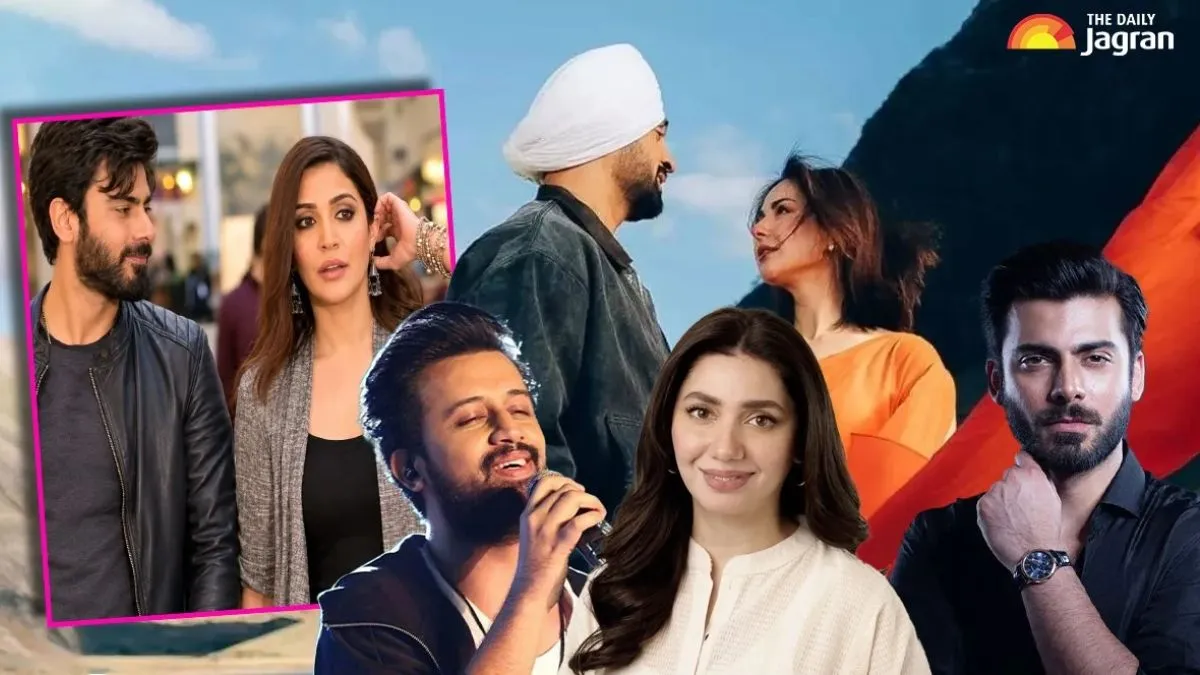
- Netflix series 'Jo Bachay Hain Sang Samait Lo' sparks fresh row over content.
- History of bans on Pakistani artists post-Uri, Pulwama attacks.
- OTT platforms face advisory restricting Pakistani content in India.
Netflix Pakistani Series Row: The discussion around Pakistani entertainment content on Indian platforms has returned to the spotlight with Pakistani series 'Jo Bachay Hain Sang Samait Lo,' which is scheduled to release on December 4 on Netflix, a popular streaming app. A row has erupted in India over the availability of the series as India has restricted the content originating from Pakistan from streaming in India. The issue has put the focus on the long history of tensions between Indian and Pakistani entertainment industries stemming from political developments.
From protests against Pakistani actors in Bollywood to cinema bans and restrictions on streaming platforms, cultural exchanges between the two countries have repeatedly come to a halt following major security and political developments.
A Look At How It Has Unfolded Over The Years
2016- When Uri Attack Brought Pressure On Bollywood
One of the biggest turning points came in September 2016, after the terror attack on an Indian Army base in Uri, Jammu and Kashmir. Following the attack, the Maharashtra Navnirman Sena (MNS) threatened protests against films featuring Pakistani actors. Back then, one of the films to get caught in the controversy was Karan Karan Johar's ‘Ae Dil Hai Mushkil’ which featured Pakistani actor Fawad Khan.
The issue soon spread across the film industry with the Indian Motion Picture Producers Association (IMPPA) passing a resolution asking producers not to work with Pakistani actors and technicians until relations between the two countries improved in October of that year. This added to the pressure on directors who were already facing demands to remove Pakistani artists from their projects.
Recommended For You
The restrictions entered the television industry also as several Indian broadcasters stopped airing Pakistani shows. To this, Pakistan responded by banning Indian TV and radio content through the Pakistan Electronic Media Regulatory Authority (PEMRA).
2019- Pulwama Attack Leads To Wider Industry Boycott
Tensions rose again after the February 2019 Pulwama terror attack. This time, several Indian film industry bodies openly called for Pakistani artists to be kept out of Indian productions. The All-Indian Cine Workers Association (AICWA) and the Federation of Western India Cine Employees (FWICE) announced non-cooperation measures against Pakistani artists.
They also warned producers and other industry members against working with them. This time, the impact was visible in the music industry as well. Many Indian music companies removed Pakistani singer's tracks or replaced their voices.
Pakistan too continued its restrictions on Indian entertainment. Following the Pulwama attack and the Balakot airstrikes, Pakistani exhibitors stopped screening Indian films. Later that year, after India revoked Jammu and Kashmir's special status in August 2019, Pakistan announced wider restrictions on Indian cinema releases and Indian cultural content.
2022-2023- The Legend of Maula Jatt Faces Uncertain Release
The restrictions continued to affect cross-border film releases even in the following years. A major moment came in 2022, when Pakistani blockbuster 'The Legend of Maula Jatt' (distributed by Zee Studios) starring Fawad was expected to reach Indian theatres. However, its proposed release ran into opposition from the MNS, which threatened protests against multiplexes screening the film. The release was then put on hold.
2025- Pahalgam Attack Brings Pakistani Content Under OTT Scrutiny
While theatrical releases faced restrictions, online platforms offered a different route for Pakistani entertainment to reach Indian audiences. Pakistani dramas, music and songs remained accessible through platforms such as YouTube and international streaming services. However, the situation changed largely after the April 22, 2025, Pahalgam attack and subsequent military operation by India.
On May 8, 2025, the Ministry of Information and Broadcasting issued an advisory asking OTT platforms and other digital intermediaries to stop carrying content originating from Pakistan. The advisory covered films, web series, songs, podcasts and other digital material, citing national security concerns and provisions under the Information Technology (Intermediary Guidelines and Digital Media Ethics Code) Rules, 2021. As a result, international streaming platforms, like Netflix, also came under the spotlight.
2025- Hania Aamir's Casting Opposite Diljit Dosanjh Sparked Row
Another major controversy erupted in 2025 when Pakistani actor Hania Aamir was cast opposite Diljit Dosanjh in the Punjabi film 'Sardaar Ji 3.' Directed by Amar Hundal, the film also featured Punjabi actress Neeru Bajwa. The film drew criticism from sections of the Indian film industry as it came after the Pahalgam attack. Hania also faced backlash over her social media remarks, while access to her social media accounts was restricted in India. While the film didn’t release in Indian theatres, it was released overseas.
From ban calls after Uri attack in 2016 to the OTT restrictions that followed the Pahalgam attack suggests that the nature of the India-Pakistan entertainment dispute has changed over time. What initially began with protests and industry-level boycotts, gradually extended to television, cinema releases, music and digital platforms.
You May Also Like To Watch: