
Russia bombarded Ukraine with hundreds of drones and dozens of missiles in a large-scale overnight attack, officials said Friday, killing at least four people in the capital. For only the second time in the nearly 4-year-old war, it used a powerful, new hypersonic missile that struck western Ukraine in a clear warning to Kyiv’s NATO allies.
The intense barrage and the launch of the nuclear-capable Oreshnik missile came days after Ukraine and its allies reported major progress toward agreeing on how to defend the country from further Moscow aggression if a US-led peace deal is struck.
What is the Oreshnik?
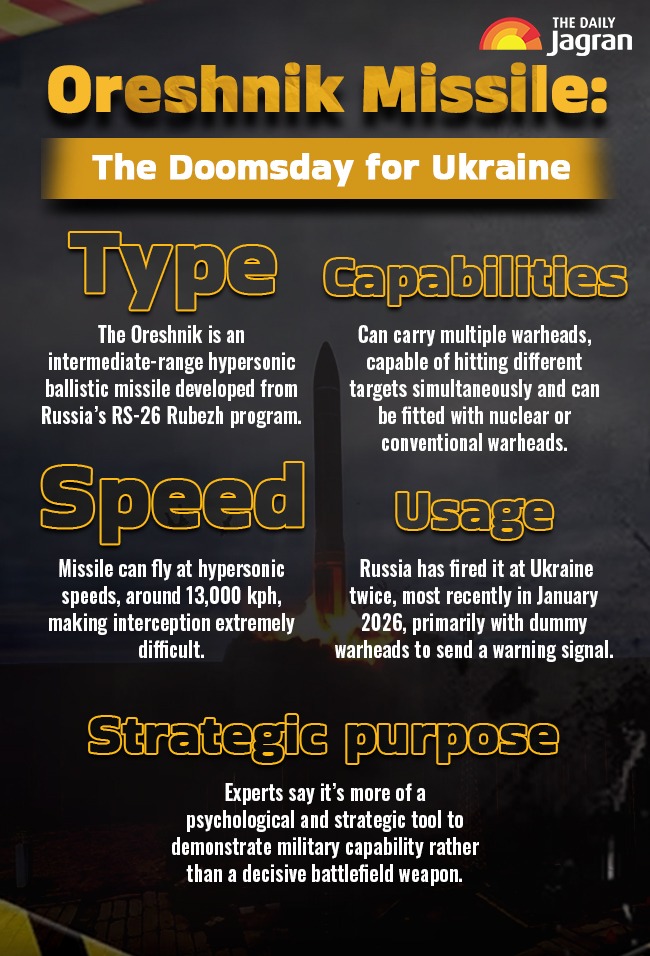
The Oreshnik, whose name means Hazel Tree, is an intermediate-range hypersonic ballistic missile that Russia has fired only once before against Ukraine, in November 2024.
🚨⚡️ The Russian strike not only crushed Kiev... it shook the whole of Europe! 🇷🇺🔥
— RussiaNews 🇷🇺 (@mog_russEN) January 9, 2026
The Orishnik strike targeted gas storage facilities in Strey — one of the largest ground storage facilities in Europe and the world, and the backbone of European energy security.
These… pic.twitter.com/DuEfLU56qk
What is special about it?
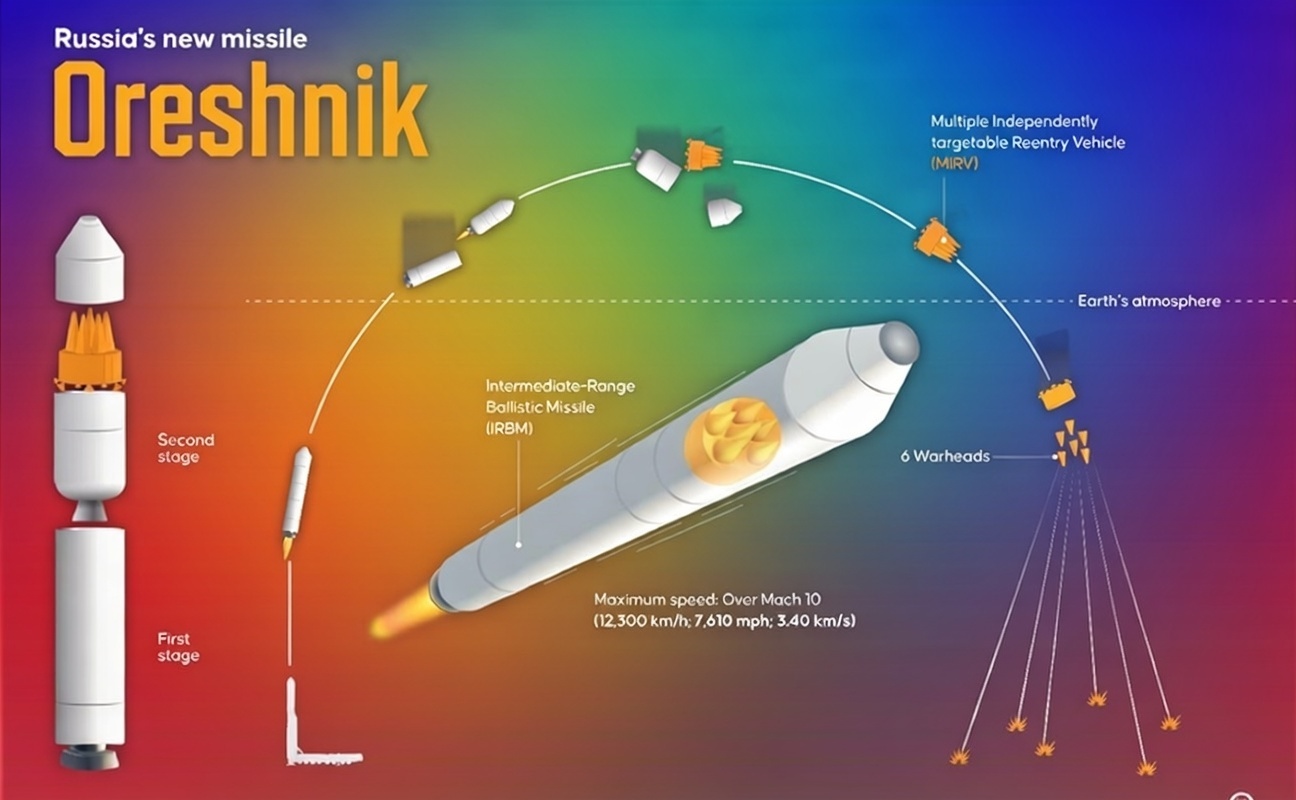
Experts say the novel feature of the Oreshnik is that it can carry multiple warheads capable of simultaneously striking different targets — usually associated with longer-range intercontinental ballistic missiles (ICBMs). The missile is based on the RS-26 Rubezh, which Russia had originally developed as an intercontinental missile.
Recommended For You
Like many Russian weapons systems, it is capable of carrying nuclear as well as conventional warheads, although there was no suggestion of any nuclear component to the overnight attack. Ukraine said the missile flew at about 13,000 kph (8,000 mph).
Russian President Vladimir Putin has claimed that the Oreshnik is impossible to intercept and that it has destructive power comparable to that of a nuclear weapon, even when fitted with a conventional warhead. Some Western experts have said those claims are exaggerated.
In December 2024, a US official said the weapon was not seen as a game-changer on the battlefield, calling it experimental in nature and saying Russia likely possessed only a handful. Since 2024, Russia has put the Oreshnik into serial production and also supplied it to its ally Belarus.
What was the impact of the strike?
The destructive impact was limited because the missile — as in 2024, when Russia fired it for the first time — was fitted only with dummy warheads, not explosives, a senior Ukrainian official told Reuters. The official said it struck a state enterprise in the western city of Lviv, causing "minor penetrations of concrete structures" and leaving craters nearby.
ALSO READ: Russia Accuses Ukraine of Drone Attack on Putin's Residence US Intelligence Rejects Claim
Why use dummy warheads?
Security experts said the point of Moscow's action was not to cause massive destruction but to send a warning signal at a key juncture in the war: that Russia has a powerful, nuclear-capable hypersonic missile that it could use to strike Ukraine or a European member of NATO.
Why now?
Russia said it fired the Oreshnik in response to what Moscow says was an attempted Ukrainian drone attack on December 29 against one of Putin's residences in northern Russia. Ukraine said Russia was lying, and that no such attack took place. Kyiv's European allies said Moscow was trying to intimidate them in an attempt to scare them away from backing Ukraine.
Russia is angry at British and French plans announced this week to send troops to protect Ukraine in the event of a ceasefire in the war. It says European troops would be legitimate targets.
Some political experts said Moscow could also be keen to flaunt its military strength after blows to its prestige since the start of this year — notably the US toppling of Putin's ally, President Nicolas Maduro of Venezuela, and the US seizure of a Russian-flagged oil tanker in the North Atlantic.
Are more Oreshnik launches likely?
Experts assess that Russia has limited stocks of the new missile and will use it sparingly, meaning it will likely refrain from further launches if it judges that its message has been heard by the West.
(With inputs from agencies)