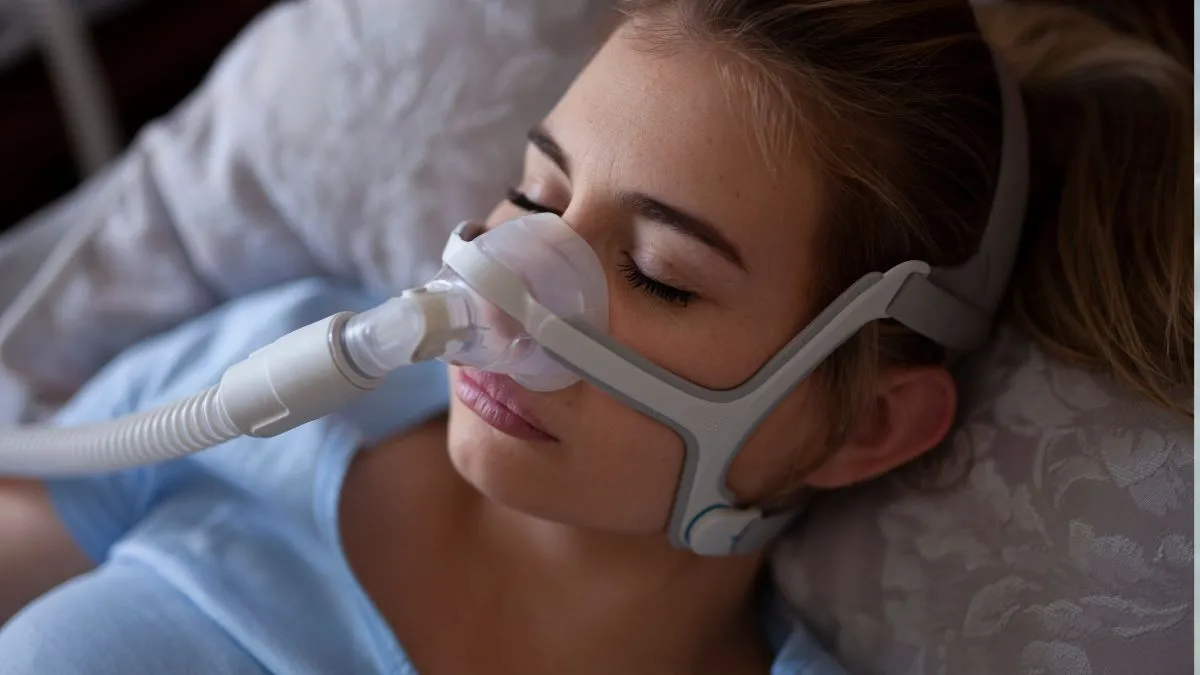
Obstructive sleep apnoea (OSA) is a widespread condition in which breathing repeatedly stops during the night due to a blocked airway. It often results in loud snoring, restless sleep, and excessive daytime sleepiness. Beyond these symptoms, OSA can also raise the risk of serious health issues such as high blood pressure, heart disease, and stroke. Standard treatment typically involves the use of a continuous positive airway pressure (CPAP) machine, which keeps the airway open by blowing air through a facemask throughout the night.
Blowing the conch shell, or shankh blowing, is an ancient Indian tradition dating back thousands of years, often associated with religious and cultural rituals. Now, research suggests it could also have therapeutic benefits. According to a small randomised controlled trial published Monday in ERJ Open Research, patients with moderate OSA who practised shankh blowing experienced better sleep, felt more alert during the day, and had fewer breathing interruptions at night.
Dr. Krishna K Sharma from the Eternal Heart Care Centre and Research Institute in Jaipur, India, led the study. He explained, “In my clinical practice, several patients reported feeling more rested and experiencing fewer symptoms after regularly practising shankh blowing. These observations led us to design a scientific study to rigorously test whether this simple, ancient practice could serve as a meaningful therapy for people with OSA.”
Recommended For You
How The Study Was Conducted
The study examined 30 adults aged 19 to 65 with moderate OSA, evaluated at the Eternal Heart Care Centre between May 2022 and January 2024. Participants underwent polysomnography, a comprehensive overnight monitoring test, and answered questionnaires on sleep quality and daytime sleepiness.
They were randomly split into two groups: 16 patients trained in shankh blowing and 14 patients taught deep breathing exercises. Each participant was provided with a traditional conch shell and given in-person training by the research team before starting home practice. They were instructed to practise for at least 15 minutes a day, five days a week, over six months.
Results And Future Possibilities
After the six-month period, the shankh-blowing group showed notable improvements in sleep patterns, alertness, and reduced breathing disruptions compared to the control group. Researchers say the technique is a low-cost, non-invasive method that could complement or, in some cases, reduce reliance on CPAP therapy.