
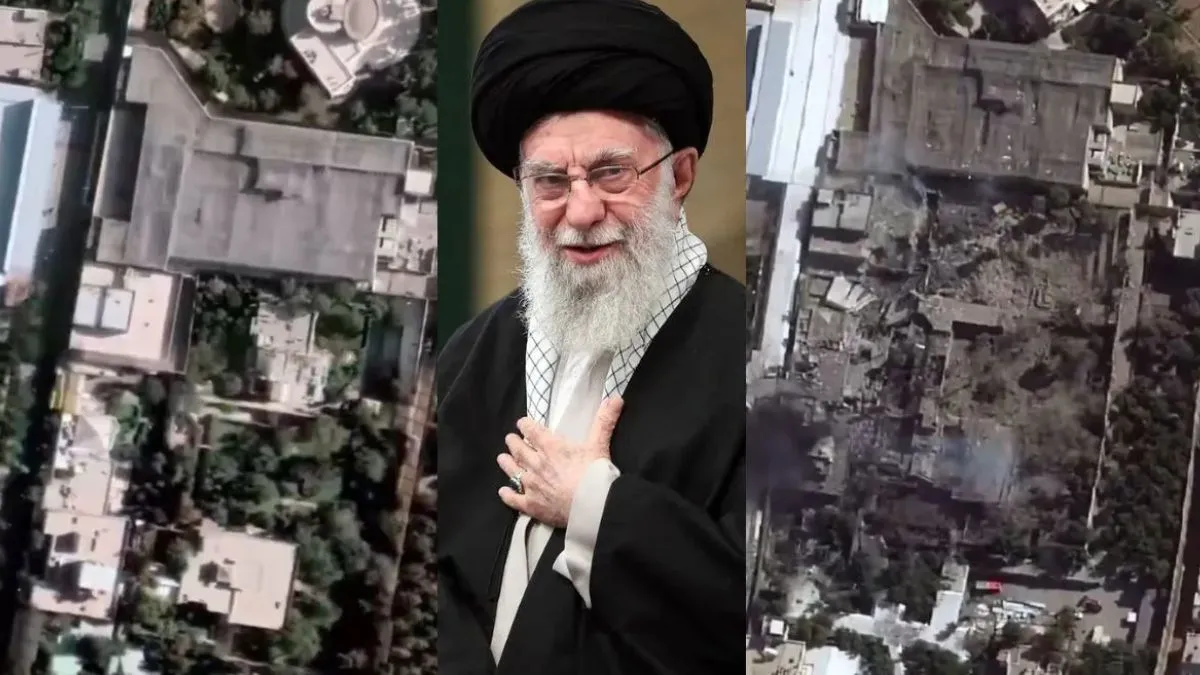
Amid the death of Iran’s Supreme Leader, Ayatollah Ali Khamenei, the power among the nation has been distributed among key leaders and public figures. The Iranian government has postponed the announcement of the new leader, citing that the leader might became target of elimination.
With the country entering a period of uncertainty, several influential figures are emerging as key players in shaping the future leadership.
Following Khamenei’s death, Iran is being run by an interim leadership council comprising President Masoud Pezeshkian, Chief Justice Gholam-Hossein Mohseni-Ejei and cleric Alireza Arafi.
Pezeshkian, considered a reformist leader, was elected president in 2024 after the death of former president Ebrahim Raisi. Although the Iranian presidency mainly focuses on domestic and economic matters, its role has become more significant as part of the interim governing body.
Mohseni-Ejei, a hardline cleric appointed by Khamenei, heads the judiciary and has long been associated with crackdowns on dissent and protests.
Arafi, who has strong ties with Iran’s religious establishment in the city of Qom, was selected by the Expediency Discernment Council to serve as the third member of the interim leadership.
Key Successors:
Among the possible successors to the supreme leadership is Mojtaba Khamenei, the second son of Ali Khamenei. Despite Iran’s official opposition to hereditary rule, Mojtaba has been widely viewed as a strong contender due to his close ties with the powerful Islamic Revolutionary Guard Corps (IRGC).
Recommended For You
Another potential candidate is Hassan Khomeini, the grandson of the Islamic Republic’s founder, Ruhollah Khomeini. While loyal to the system, he is often perceived as relatively moderate compared to many hardline clerics.
Ali Larijani, secretary of Iran’s Supreme National Security Council and a former parliament speaker, remains a key conservative insider with strong connections in both political and military circles.
His brother, cleric Sadeq Larijani, who previously served as chief justice, is also seen as a possible contender for the top post.
Parliament Speaker Mohammad Bagher Qalibaf, a former commander in the IRGC and ex-mayor of Tehran, has gained prominence following recent military tensions involving Israel and the US.
Within Iran’s military establishment, Ahmad Vahidi, a senior IRGC commander, is another powerful figure. He was recently promoted after the death of former IRGC commander Mohammad Pakpour during the early stages of the conflict.
Iran’s foreign policy remains under the leadership of Foreign Minister Abbas Araghchi, a seasoned diplomat who has led nuclear negotiations with Western powers while maintaining loyalty to the Islamic Republic’s core policies.
Meanwhile, cleric Ali Movahedi-Kermani heads the powerful Assembly of Experts, an 88-member body responsible for appointing and supervising the supreme leader.
As Iran navigates one of the most pivotal moments in its 47-year history, these political, military and clerical figures are expected to play a decisive role in determining the country’s leadership and future direction.