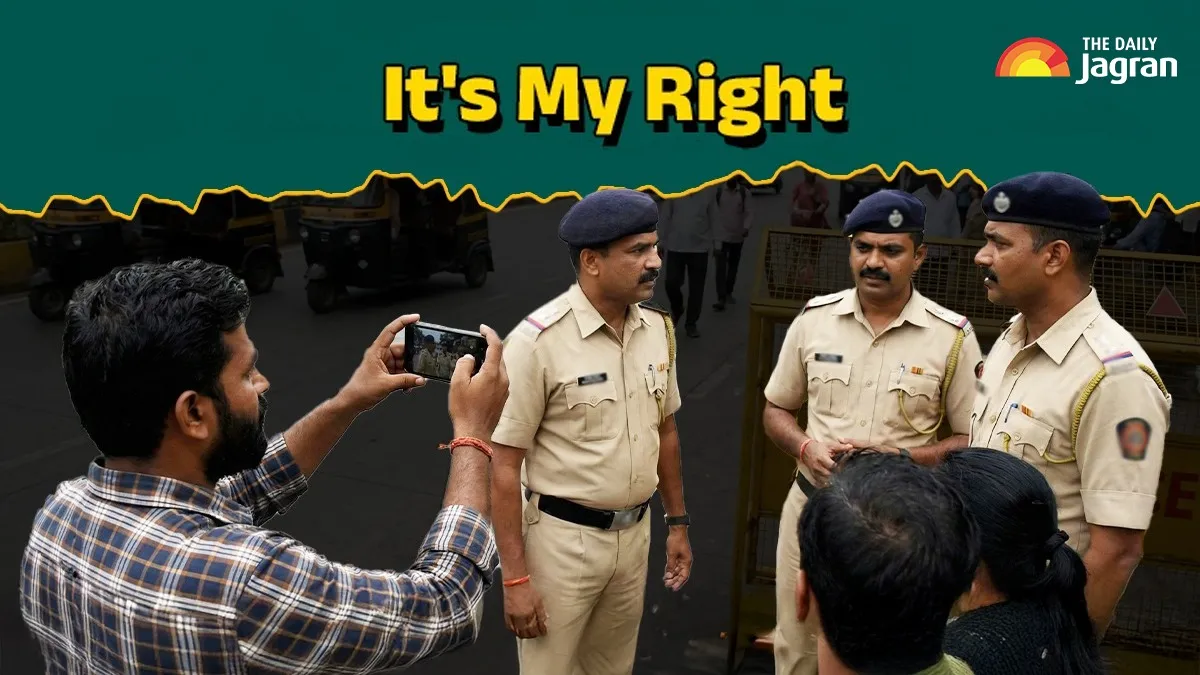
In the age of smartphones and instant sharing, citizens today play an increasingly active role in documenting public life. From traffic stops to public protests, interactions with law enforcement are now frequently recorded and circulated in real time. This technological shift has sparked an important legal question: Can an ordinary citizen legally record police officers while they are performing their duties?
Is It Illegal to Record Police Action?
Public scrutiny of police conduct has intensified in recent years, particularly due to viral videos exposing misconduct, excessive force, and abuse of authority. Many such recordings, taken by victims or bystanders, have later served as crucial evidence in judicial proceedings.
Police officers are often seen attempting to prevent citizens from recording them, sometimes even using force or threatening legal action. This creates confusion about the actual legal provision.
ALSO READ: It’s My Right: Understanding Legal Challenges In Era Of Decriminalised Adultery
What Does Indian Law Say?
In an interview with Daily Jagran, Nishant Kumar, Advocate and Senior Partner at Kumar & Malik Law Offices, clarified the legal position: "There is no statute in India that explicitly says 'citizens may record police action'. But equally, there is no law that prohibits it."
Recommended For You
Under Indian law, when police officers perform official duties in public spaces, they are acting as public servants exercising statutory authority. Such conduct is subject to public scrutiny. A public place carries no reasonable expectation of privacy, and therefore, recording events occurring there is legally permissible.
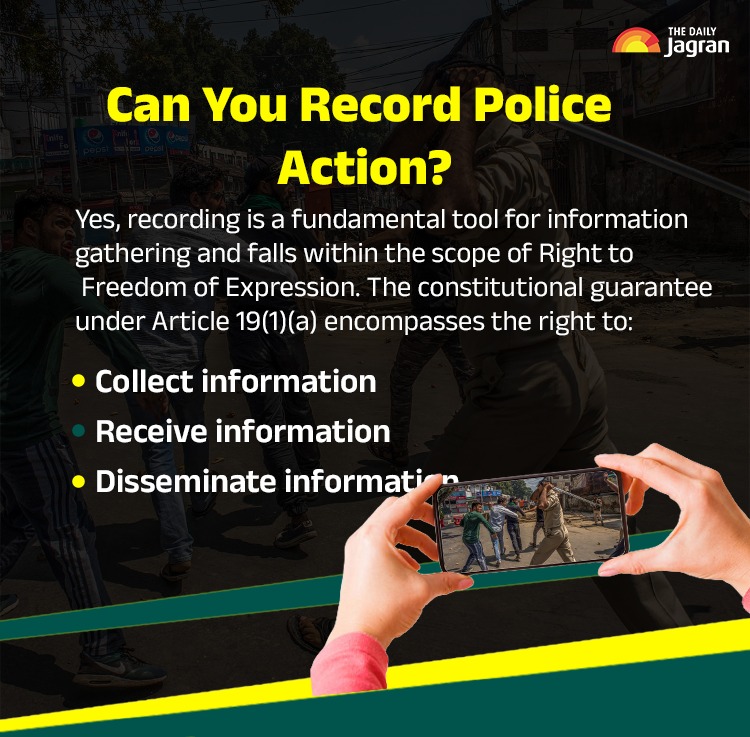
Further, Article 19(1)(a) of the Constitution of India guarantees freedom of speech and expression, which includes the right to gather information. In the absence of any statutory restriction, recording police action in public remains lawful and constitutionally protected.
Does Freedom of Speech Include the Right to Record?
According to Advocate Nishant Kumar, the constitutional guarantee under Article 19(1)(a) encompasses the right to:
- Collect information
- Receive information
- Disseminate information
Recording is a fundamental tool for information gathering and therefore falls squarely within the scope of free expression. The Supreme Court of India has repeatedly said that transparency, accountability, and informed public discourse are essential pillars of democracy, he said.
“When government officials perform their duties in public spaces, documenting their conduct strengthens democratic oversight and reinforces the rule of law,” Advocate Nishant Kumar added.
What the Law Permits And What It Does Not
While the right to record is constitutionally protected, it is not absolute. The right must be exercised lawfully and responsibly. Here's what you must know about recording police action:
- Recording must not disturb public order.
- It must not violate any existing law.
- It must not interfere with official duties.
The Indian Penal Code makes it an offence to obstruct a public servant in the lawful discharge of their duties. Therefore, recording is permitted only so long as it does not amount to interference or obstruction.
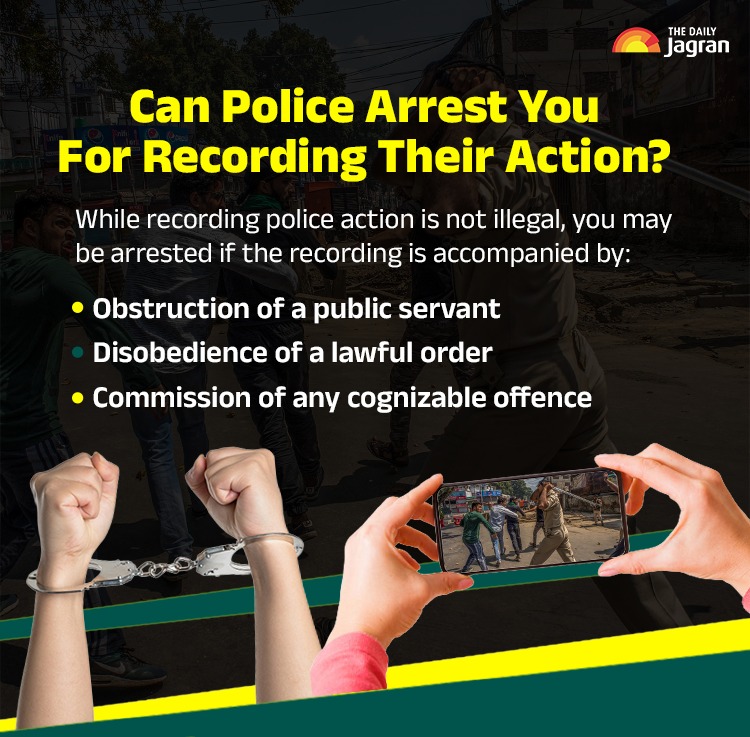
Seizure or confiscation of a phone is legal only in accordance with law, such as under Section 102 of the CrPC, when the device is genuinely suspected to be connected with an offence.
Any arbitrary seizure, forced deletion of footage, or coercive access to a citizen’s phone is illegal and violates constitutional protections.
Why Recording Police Action Matters
Recording police conduct plays a critical role in ensuring accountability, preventing abuse of power and protecting citizens from unlawful actions. It also helps safeguard honest officers from false allegations.
ALSO READ: It's My Right: Can Landlords Evict Tenants Overnight? What New Rent Agreement Rules 2025 Say
Courts have consistently recognised that visibility of state action strengthens public trust. In numerous cases involving custodial violence, illegal detention, or misuse of authority, video evidence has been decisive in delivering justice.
(Disclaimer: This article is part of the series 'It's My Right'. The views expressed in the article are for informational purposes only and do not constitute legal advice. To read more articles in the series, click here https://www.thedailyjagran.com/search/It's-My-Right)