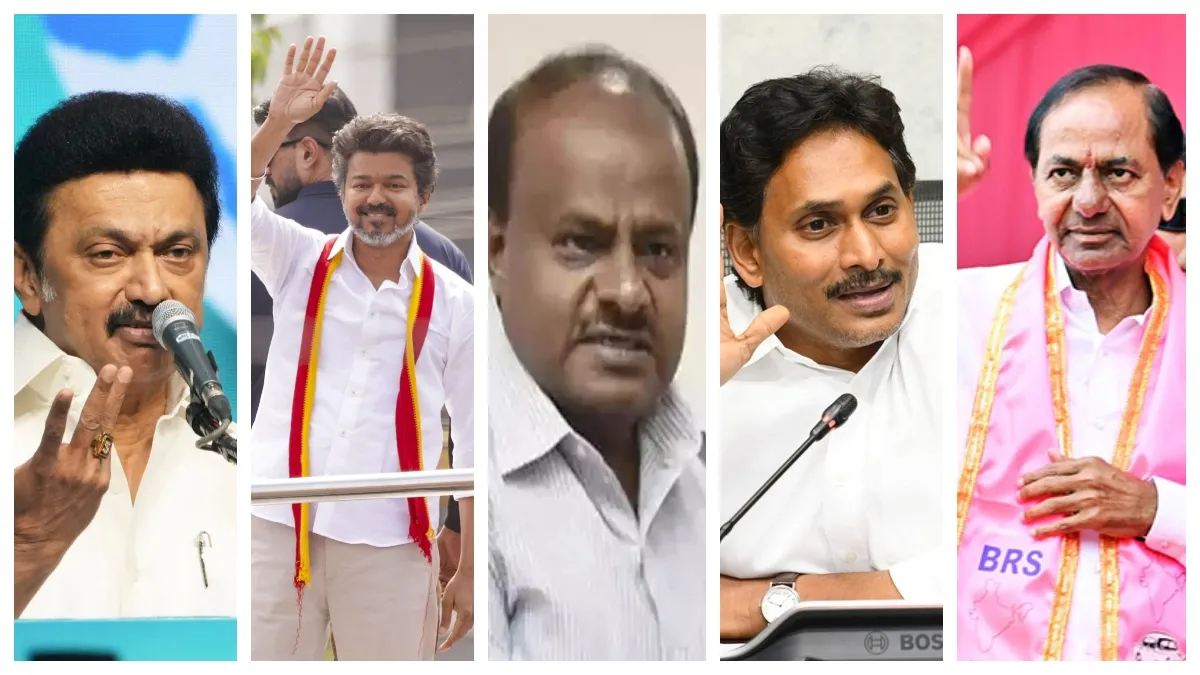
- Special Parliament session to reintroduce delimitation bill.
- Southern states fear reduced representation in Lok Sabha.
- DMK, CPI, Congress oppose bill; some NDA allies support.
Delimitation Row: The government's announcement to convene a special sitting of Parliament from November 30 to transact "essential" business, set stage for a numbers battle in the House as it is assumed that the government may reintroduce a constitutional amendment linking the rollout of women's reservation to delimitation. Now, all eyes are on the southern states as they vociferously apposed the bill in April, when the government brought it to Parliament first time.
The Lok Sabha has been reconvened on November 30 and the Rajya Sabha on December 2, hours after the government on Thursday proposed the special sitting.
The government has been keen to push through the Constitution amendment bill for a long time. It seeks to expand the Lok Sabha's strength from the existing 543 seats to a maximum of 850 through delimitation, paving the way for the implementation of 33 per cent reservation for women in Parliament and state legislatures ahead of the 2029 general elections.
Why Southern States Oppose The Delimitation Drive
The government's earlier move to pass the proposed legislation in Parliament was defeated in April due to a lack of numbers. Last time the strongest voice against the bill came from the Southern states as they claimed that the delimitation would reduce their representation in the Parliament and increase presence of MPs from the northern states, where ruling Bharatiya Janata Party dominates. These states asserted that they kept population growth rate in check, while fertility rate remained high in the North, which they claim a ploy to weaken their political strength in the nation.
Recommended For You
Here's State-Wise Stance Of Parties In South:
Tamil Nadu:
DMK: DMK president MK Stalin on Friday asserted that the his party is firm on the demands of a 7.18 per cent share of seats and proportion of representation. He said under no circumstances should Tamil Nadu's existing 7.18 per cent share of seats in the Lok Sabha be reduced. "No change in position, no compromise, the DMK will never compromise on Tamil Nadu's interests; nor will it depart from its principles," the party chief asserted. However, there is a buzz that it may support the bill if the government accepts its demands.
DMK Chief MK Stalin tweets, "...If the number of parliamentary constituencies is increased, under no circumstances should Tamil Nadu’s share fall below its current 7.18%! The existing proportion of parliamentary representation among States, as determined on the basis of the 1971 Census and frozen earlier, must remain unchanged for another 25 years! The DMK remains firm on both these positions today and will continue to do so... The speculation being spread in the media and the grumbling of backstabbers will not shake our position in any way... The DMK will never compromise on Tamil Nadu’s interests..." (Source: X/MK Stalin)
— ANI (@ANI) November 27, 2026
TVK: Tamil Nadu Chief Minister Vijay's TVK opposes the bill. In August, the TVK government passed a resolution in the assembly against the delimitation drive.
AIADMK: AIADMK supports delimitation drive. In August, the party MLAs walked out of assembly, when the resolution was passed in the assembly against the delimitation.
Chief Minister Joseph Vijay moved the government resolution on constituency delimitation. https://t.co/SJWrItuDsU
— Vignesh Theni (@Vignesh_twitz) August 12, 2026
Kerala:
CPI: CPI MP from Kerala P Sandosh Kumar on Friday cleared that his party would not support the Delimitation Bill in its existing form. "Our position is very clear. We support the implementation of women's reservation, but linking it with delimitation is unacceptable," he added.
#WATCH | Delhi: CPI MP P Sandosh Kumar says, "... We have already made our position very clear. We cannot support the Delimitation Bill in its existing form. We do not know whether a new draft has been prepared... This Bill was defeated in April this year, and almost all non-BJP political parties opposed it. If some political parties are now changing their position, they must logically explain why... Our position is very clear. We support the implementation of women's reservation. We wholeheartedly supported the Women's Reservation Bill, and the CPI and all other Left parties actively participated in the debate and supported it. It was passed unanimously. Now it is time to implement women's reservation. However, linking women's reservation with delimitation is unacceptable to us... We cannot comment on other political parties' positions, but we hope that, in the best interests of democracy, their parties and leadership will take a genuine position on this issue."
— ANI (@ANI) November 27, 2026
Congress: The grand old party, which is in power in Kerala, has been leading the opposition againt the proposed bill.
Andhra Pradesh:
TDP And Jana Sena Party: As part of the National Democratic Alliance (NDA), the ruling parties Chief Minister Chandra Babu Naidu's TDP and his Deputy Pawan Kalyan's Jana Sena Party support the bill.
YSRCP: Jagan Mohan Reddy's YSRCP supports the bill but with a condition. The news agency ANI, quoting sources, reported that the opposition party in Andhra Pradesh said it would extend its support, provided the government ensures "regional balance".
Telangana: The ruling Congress has already opposed the bill, while, KCR's Bharat Rashtra Samithi (BRS) has supported the delimitation drive. BRS spokesperson Ravula Sridhar on Friday said his party's support for the proposed bill is conditional on safeguarding South India's existing 24 per cent representation in the Lok Sabha.
Karnataka: Same scenario is with Karnataka. The ruling Congress is against with the bill, while NDA partner, JD-S backs it.
Puducherry: NDA is in power in Puducherry. Chief Minister N Rangaswamy's AINRC has not officially announced its stand on the delimitation. However, it has no presence in the Parliament so its stand would not impact in the House. The DMK is the main opposition party, which has already showed its stand.