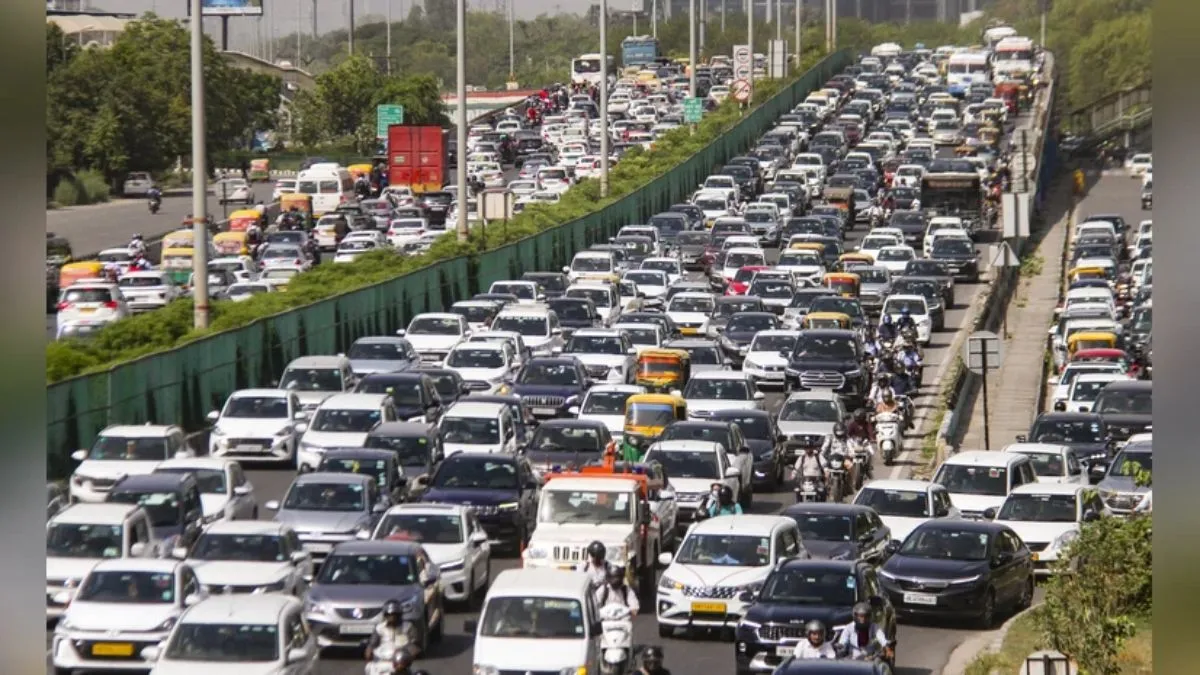
Delhi’s Ban On Old Vehicles: The Supreme Court is set to examine the controversial ban on older vehicles in Delhi-NCR on Monday, a policy that has stirred both public debate and political pushback. The Delhi government has filed a petition challenging the blanket restrictions on diesel vehicles over 10 years old and petrol vehicles older than 15 years. The state argues that the ban lacks solid scientific reasoning and calls for a more nuanced, evidence-based approach.
A bench headed by Chief Justice of India BR Gavai, along with Justice K Vinod Chandran, will preside over the hearing. A key question before the court is whether vehicles that comply with Bharat Stage VI (BS-VI) emission norms should still be subjected to fixed-age bans, even if their emissions remain within acceptable limits.
Delhi Government has urged the Centre and the Commission for Air Quality Management (CAQM) to conduct a thorough analysis comparing the environmental impact of age-based bans versus actual emissions. The plea seeks to establish whether the existing policy genuinely benefits air quality or simply penalizes vehicle owners based on arbitrary timelines.
Recommended For You
Background: Delhi’s Ban On Old Vehicles
The roots of the current restrictions go back to a 2015 ruling by the National Green Tribunal (NGT), which banned diesel vehicles older than 10 years and petrol vehicles over 15 years in the NCR.
"The vehicles which are more than 15 years old will not be permitted to be parked in any public area, and they shall be towed away and challenged by the police in accordance with the law. This direction would be applicable to all vehicles without exception, i.e. two wheelers, three wheelers, four wheelers, light vehicles and heavy vehicles, irrespective of whether commercial or otherwise," the NGT said in its November 26, 2014, order.
ALSO READ: Parliament Monsoon Session Live Updates: Lok Sabha Adjourned Till 12 PM Amid Uproar By Opposition
In 2018, the Supreme Court upheld this decision, citing severe air quality concerns and the pressing need to safeguard public health. Building on this, CAQM announced that starting July 1, 2025, fuel stations in the region would no longer serve these “end-of-life” vehicles.
Why Was It Paused?
Despite rolling out the "No fuel for old vehicles" policy on July 1, 2025, the Delhi government hit pause within just two days. The sudden reversal came after considerable public backlash and concerns over how the ban would be enforced on the ground.
Under Chief Minister Rekha Gupta, the administration acknowledged serious logistical issues, particularly in identifying and managing the large volume of vehicles impacted by the policy. The lack of a clear implementation mechanism led to the temporary halt.
Speaking ahead of the Supreme Court hearing, Delhi Environment Minister Manjinder Singh Sirsa questioned the rationale behind using a vehicle’s age as the sole criterion for pollution control.
"There are many vehicles that have aged, but because they haven't been used much, their pollution levels are lower. There are so many new vehicles whose age is less but have been used a lot; so we believe that the parameter to determine pollution levels must be the use of the vehicle instead of its age," Sirsa told ANI.