

- Dubai's "safe haven" image permanently tarnished by attacks.
- Gulf's energy security and economy severely impacted.
- Iran-Gulf relations face long, hostile freeze after conflict.
For decades, the Gulf's rise relaxed on two core assumptions: that its cities offered a "safe haven" in an unstable region and that vast wealth from uninterrupted energy exports would keep flowing. The ongoing Israel-US-Iran war has shaken both pillars at once. The videos and the grim pictures that the world has seen on social media will definitely haunt the region forever. The Iranian counteraction will be irreversible image loss for Dubai, Saudi Arabia and Qatar.
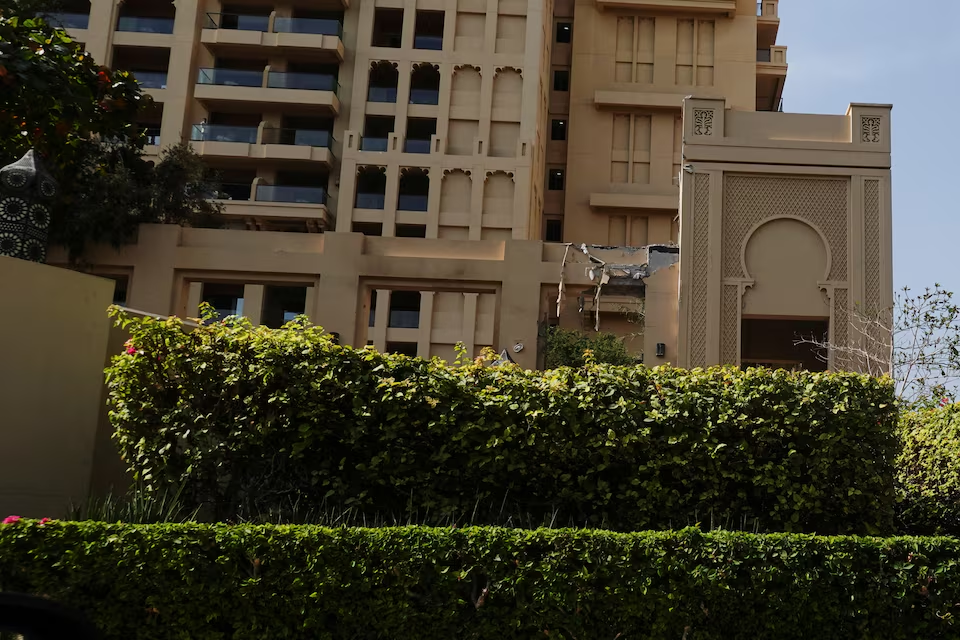
(Damaged Fairmont The Palm building in Palm Jumeirah after an Iranian attack, following United States and Israel strikes on Iran, in Dubai, United Arab Emirates on March 1 | CREDIT: REUTERS)
Duabi's 'safe heaven' image tarnished for forever
Dubai was built on the premise that turmoil stopped at its borders. But days of Iranian missile and drone strikes on airports, ports and luxury landmarks punctured that carefully constructed brand. UAE President Sheikh Mohammed bin Zayed tried to project business-as-usual as he strolled through Dubai Mall on Monday evening.
However, his action could not relate to the reality outside. The world has already seen that the flights were grounded, financial markets shut, and jumpy residents queued for supplies. Despite a bold move of moving out of the palace, his idea to dine at a shopping mall did not help in the world, witnessing how bombs dommed through the skyscrapers as air defences intercepted barrage after barrage.
The psychological blow raises doubts about whether cities like Dubai, Abu Dhabi and Riyadh - the success of which has been built on confidence, mobility and positive perceptions - can maintain premium appeal when they suddenly prove vulnerable to regional turmoil.
Economic blow: World's energy security in peril
The second rupture is economic, and deeper still. The closure of the Strait of Hormuz and the shutdown of QatarEnergy’s vast LNG operations – supplier of a fifth of global LNG and long proud of never missing a shipment – have unleashed a supply shock once considered inconceivable. Iraq has slashed production; Saudi Arabia is rerouting crude; hundreds of tankers sit idle near the port of Fujairah, which is still burning after an attack, without safe passage. Prices for oil, gas and related commodities have surged.
ALSO READ: US Consulate In Dubai To Qatar's Al-Udeid Air Base: Iran Hits US Where It Hurts
The Gulf’s ability to bankroll diversification, mega-investments and generous social contracts depends on secure energy exports. That assumption is suddenly fragile. Some of this damage cannot be undone.
Iran-Gulf relations' future in turmoil
But this war has unlocked a larger unknown: what will relations between the Arab Gulf and Iran look like after this? After years of shaky relations, Gulf Arab states had begun recalibrating ties with Iran, acknowledging geography and mutual interest.
ALSO READ: Iranian Drone Attack Sparks Major Fire At US Consulate In Dubai; Dramatic Video Surfaces
That fragile trust has now been ruptured. The scale of Iran’s attacks, striking civilian targets in six US-aligned states, has erased the political space Gulf leaders had carved out for dialogue.
Having been attacked directly, Gulf capitals must now confront a harder question: even if the fighting stops, can trust in Iran as a neighbour ever be rebuilt – or has the relationship entered a long, hostile freeze?
The implications are profound. The Gulf’s economic model, energy security and regional diplomacy – long treated as constants – have all been destabilised. Even if the fighting stops soon, the era of hedging with Iran is over. And a more guarded, security-driven Gulf lies ahead.
(With inputs from Reuters)