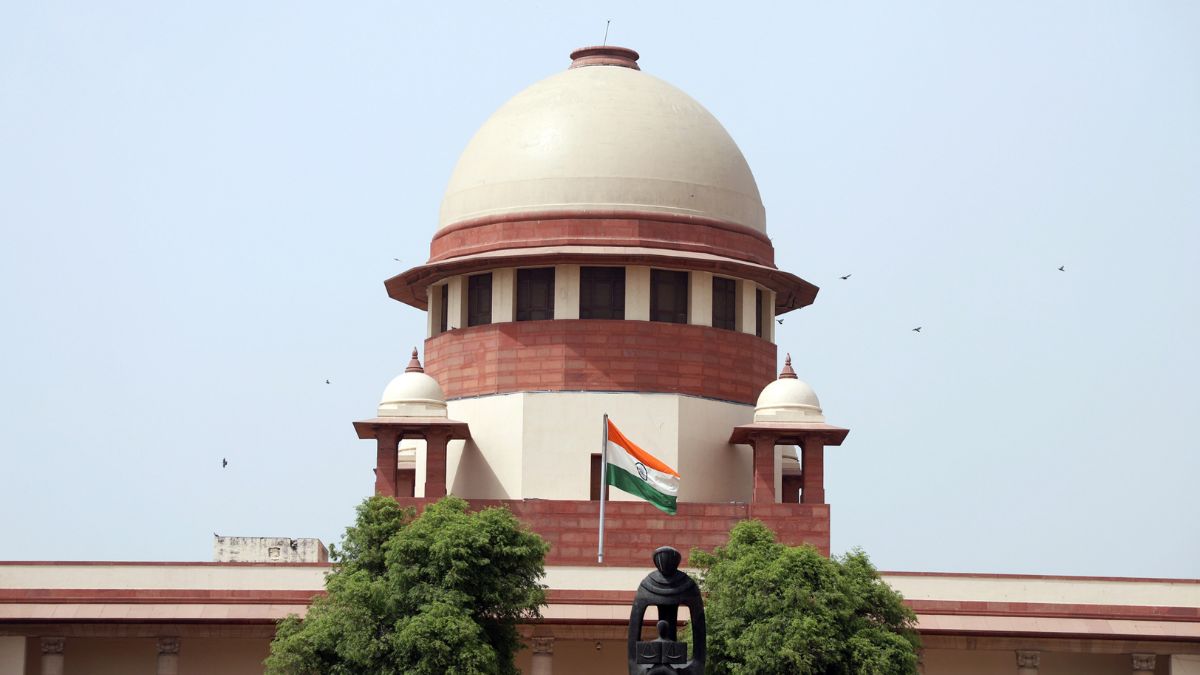
The Supreme Court on Wednesday said that it needs to be defined "what is a freebie" as it has asked political parties if providing access to drinking water and universal healthcare can be considered as giving freebies or if they are the basic "rights of citizens". The court made the remarks while hearing a plea filed by advocate Ashwini Upadhyay, who had opposed the practice of political parties to promise freebies during elections.
A bench headed by Chief Justice of India (CJI) NV Ramana said before banning freebies offered by political parties during elections, the definition of freebies needs to be defined. The court also highlighted that schemes like MGNREGA give dignity of living.
"One of the suggestions is that State political parties cannot be prevented from making promises to the electorate. Now it has to be defined what is freebie. Can universal healthcare, access to drinking water, access to consumer electronics be treated as freebie," the court said, as reported by Bar and Bench.
Recommended For You
"There are schemes are MNREGA which gives dignity of living. I dont think promises alone are not the basis of parties being elected solely. Some makes promises and even then they are not elected. All of you give your opinions and then after debate only we can come to a conclusion," it said.
In his plea, Upadhyay - a Bharatiya Janata Party (BJP) leader - also sought a ban on freebies by the Election Commission of India (ECI). However, the Aam Aadmi Party (AAP) opposed Upadhyay's plea, saying it is trying to use the device of the Public Interest Litigation (PIL) to "camouflage" an attempt to further his political agenda.
On Tuesday, it told the top court that targeting and regulating electoral speeches will amount to “nothing more than a wild-goose chase” if the concerns are over fiscal deficit due to the promises of freebies made during polls by political parties.
"Such a restriction or prohibition, executively or judicially imposed, would amount to a curtailment of the freedom of speech guaranteed under Article 19(1)(a) without the backing of legislative sanction," it said in its additional submissions.
"Further, if concerns over fiscal deficit and responsibility are indeed the point of the present proceedings (in the PIL), targeting and regulating electoral speech will amount to nothing more than a wild-goose chase," it added.