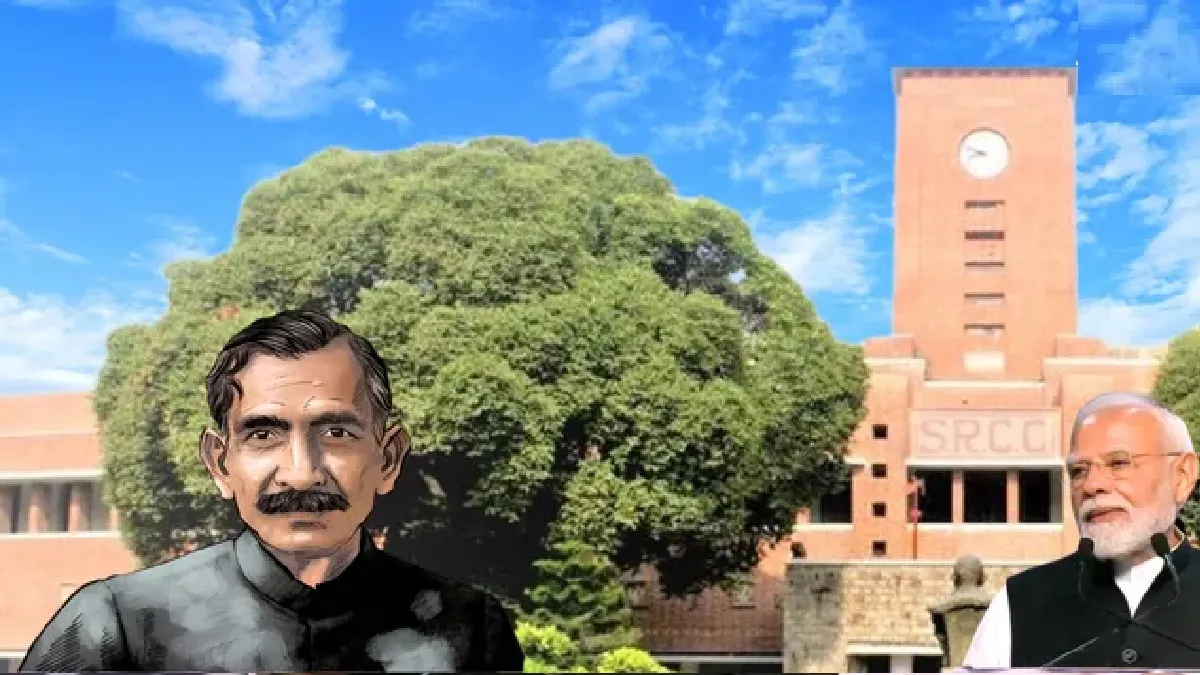
- Lala Shri Ram founded SRCC, Lady Shri Ram College.
- Pioneering industrialist behind DCM, Usha Sewing Machines.
- Championed employee welfare and research institutions.
SRCC Centenary Celebrations: Prime Minister Narendra Modi on Saturday addressed Delhi University's Shri Ram College of Commerce (SRCC)'s centenary celebrations, calling its students 'OG', a Gen-Z phrase, to praise youth.
Meanwhile, do you know the person who laid the foundation of SRCC college? It was the legendary Lala Shri Ram whose visionary initiative turned into an important education centre in the country. Today is the day we should remember the architect of one of India's premier educational institutions and largest industrial houses. But his journey to the top wasn't easy at all.
How Did A 'Failed' Entrepreneur Build Such a Huge Empire?
Born on Ram Navami, April 27, 1884, Shri Ram's education had humble beginnings. He passed his matriculation from a municipal school in Chandni Chowk and briefly attended Hindu College, but then the world of business drew him closer.
Before making a name for himself, he experienced bitter failures at a stationery store and a cotton-ginning factory. He spent the following years working as a muneem (accountant) for a contractor in Rawalpindi. When he finally joined his family's company, Delhi Cloth & General Mills (DCM), at the age of 25, he was grudgingly hired by his father, without a specific role or salary.
Recommended For You
ALSO READ: 'Exemplary, Herculean Feat': PM Modi Lauds India's Q1 GDP Growth As Economy Soars At 7.8%
What Was The Secret Of His Tremendous Progress?
Shri Ram's success came not from a single, drastic change, but from his consistent and personal involvement in the details of his work. He would start his morning at the mill gate, then visit the accounts department, and then oversee work on the factory floor. On his way home, he would stop at clothing stores and ask salespeople which garments were in high demand. He understood his business the way one understands Braille, touching, smelling, and deeply understanding every detail.
His real success came through a strategy of patiently accumulating shares during World War I. While the British directors were busy partying at the Gymkhana, Shri Ram quietly bought DCM shares from small investors who had lost faith in the company. Meanwhile, he persuaded his father to take a lucrative contract to manufacture tents for the army and used the profits to buy more shares. By the end of the war, his family had become the company's largest shareholder.
Why Was He Considered The Pioneer Of Indian Industry?
In the 1930s, Shri Ram expanded his business into sugar, vegetable oils, electric motors, and capacitors, deliberately focusing on items that India couldn't produce. When he launched Usha Sewing Machines, it wasn't just a business; it was also a manifestation of a vision. He tasked his engineers with dismantling foreign models and rebuilding them from the ground up to ensure they would function properly in India's harsh, dusty, and humid environment.
Beyond his products, his greatest asset was his employees. Thinking far ahead of his time, he established a provident fund for his employees in 1920 and introduced a profit-sharing bonus in 1931. He believed that a manufacturing plant is only as reliable as the people who run it.
What Is Lala Shri Ram's Legacy Today?
His vision of building a strong foundation culminated in 1947 when he launched the country's first independent, non-profit contract research house, the Shri Ram Institute for Industrial Research. Starting with the Commercial Education Trust in 1920, he expanded the institution to become the renowned Shri Ram College of Commerce (SRCC). In 1956, he founded the Lady Shri Ram College for Women (LSR) in memory of his wife Phoolan Devi.
When Lala Shri Ram passed away in January 1963, he left behind a vast industrial empire and educational institutions that continue to shape India's future. His life was a perfect example of his own words: "There can be no real or lasting success in any field of life unless one puts forth one's best efforts and works with a spirit of service."
(With Inputs From Jagran.com's Ashish Kushwaha)