

Almost everyone has played Snakes and Ladders at some point in their childhood. The thrill of climbing a ladder and the disappointment of sliding down a snake have made it one of the most loved board games across generations. But did you know this popular game has its roots in ancient India and was originally designed to teach religious philosophies?
Playing this game wasn’t just about winning or losing, but finding out how close you were to heaven or hell.
Spiritual Significance Of Snakes And Ladders
In ancient India, the Snakes and Ladders game was known as 'Moksha Patam', meaning 'the game of liberation'. It was designed to teach people the complex philosophical concepts of karma (action and consequence), dharma (righteousness), and moksha (liberation from the cycle of rebirth).
Each element in Moksha Patam- snakes, ladders, and the numbered squares- carries its own spiritual and philosophical meaning behind it. The motive is not merely to reach the final square but to teach players how virtues elevate the soul in attaining moksha and how vices, meaning bad deeds, pull it away from liberation.
Unlike games that could be won through skills, Moksha Patam emphasises how the ideas of fate and destiny influence and shape one’s journey.
Different religious traditions also developed their own versions of the game, including an 84-square Jain board, a 101-square Sufi board and a 72-square Hindu board, each incorporating its own spiritual beliefs.
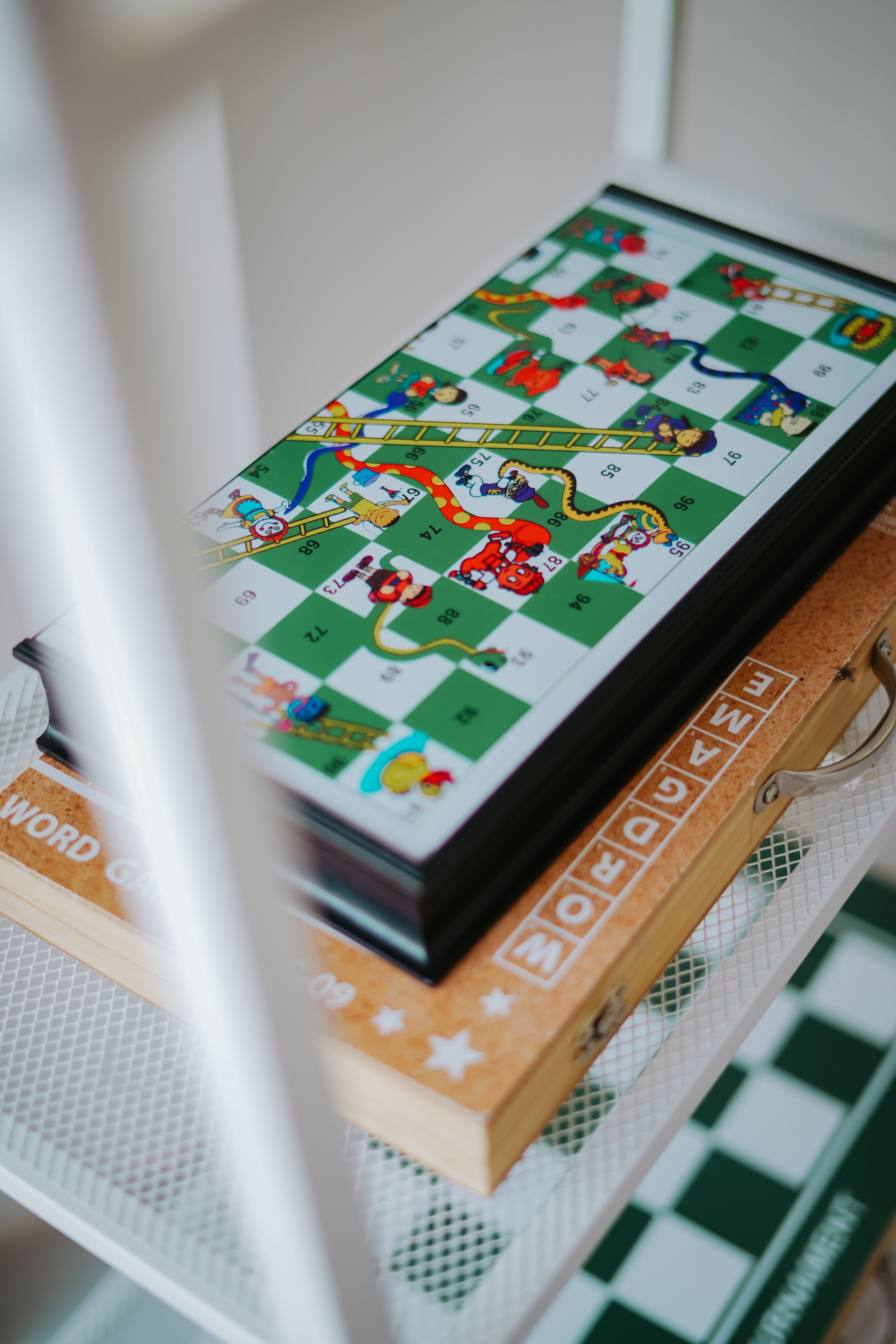
Snake and Ladders was created in ancient India to teach the spiritual concepts of karma, dharma and moksha (Image: Pexels)
ALSO READ: Why Do Women Wear Green Bangles During Sawan? It’s Spiritual Reason Might Surprise You
Spiritual Meaning Behind Each Element Of Snake And Ladders
1. The Cosmic Board
The traditional Hindu version of Moksha Patra consisted of 72 squares, each representing the soul's journey through multiple lifetimes.
The lower part of the board represents the earthly elements such as desires, existence and karmic action. The top part of the board represents moksha or Vaikuntha (Lord Vishnu's divine abode). This movement from bottom to top represents how the soul passes through all obstacles and then attains moksha.
2. The Dice
The dice through which the player moves forward in the game represents the role of karma and divine shaping of a person’s life.
Just as the player does not have any control over the dice, similarly, according to Hindu philosophy, individuals cannot control every situation they encounter, but they can choose how to respond to those circumstances.

The dice through which the player moves forward in the game represents the role of karma (Image: Pexels)
3. Ladders
The ladders in the game, through which the player reaches the top, symbolise virtues, meaning positive actions and qualities that help the soul reach liberation.
You must also notice that on the board some ladders are short while some are long. This placement is also deliberate to teach moral lessons to the individuals. The short ladder represents gradual spiritual progress, while the long ladders represent the highest virtues, like bhakti and gyana, which, according to Hindu philosophy, accelerate one’s journey towards moksha.
4. Snakes
The snakes represent vices, meaning negative or sinful actions that cause harm to the soul on its spiritual journey. The snake bite on the board is said to symbolise the karmic consequence of immoral behaviour.
You may also notice that there are more snakes than ladders. This symbolises how the path towards liberation is not easy. One has to control all their immoral desires like greed, attachment, pride, ego and jealousy to attain spiritual liberation.
ALSO READ: Why Do Devotees Whisper Wishes In Nandi's Ear Instead Of Praying Directly To Lord Shiva?
Moksha Patra (Snakes and Ladders) is more than a traditional board game. It represents the map of the soul’s spiritual journey. Every snake, ladder, square, and dice roll represents the relationship between actions and their consequences. It reminds the players that virtues lead them closer to liberation while vices create obstacles along the way.